
Show Notes
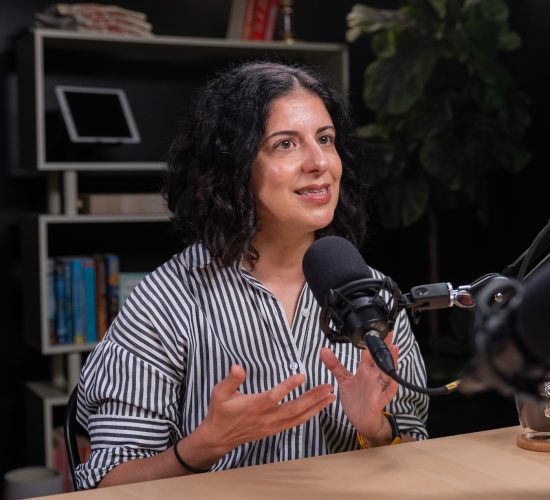
Running an independent bookstore in Birmingham is the dream for a lot of book lovers, but it is also one of the toughest small businesses to actually pull off. In this episode of The Localist podcast, host Carrie Rollwagen sits down with Kristen Iskandrian, co-owner of Thank You Books in Crestwood, to talk about what it really takes.
Thank You Books opened in December 2019, just months before the pandemic shut everything down. The team pivoted fast, adding curbside pickup, moving story time online, and learning how to ship books from a tiny back room that eventually became their first expansion in 2021. Now they are doubling their footprint with a second expansion into the old Total Joint space next door, where they will create more room for stationery, a bigger children’s area, and inventory that can finally breathe a little.
Kristen and Carrie get into why retail leases matter more than most people realize, why an independent bookstore in Birmingham has to be a community first and a retail space second, and how Thank You Books learned the business by combining bookselling bootcamps, small business classes, and a whole lot of field research at other stores. Carrie spent years in bookselling before The Localist as co-founder of Church Street Coffee and Books and manager of Jonathan Benton Bookseller, so the conversation goes deep into the realities of the trade.
They also talk about sideline items, signed first edition subscriptions, why bookstore margins are so thin, and how Thank You Books has positioned itself as a stop on the southern author tour route. Kristen is honest about which kinds of events work and which do not, why self-published events are the toughest, and what makes the difference between a packed signing and an empty room. If you have ever wondered what it takes to run an independent bookstore in Birmingham, or just love books and want to understand the business behind them, this episode is full of practical and honest answers.
Want to shop Thank You Books from anywhere? You can browse their full inventory and order online at thankyoubookshop.com, find their merch and local goods (including pieces by Hannah Mills) at MAKE Birmingham, subscribe to their signed first edition club Firsties, listen to audiobooks through Libro.fm, and shop their curated picks at Bookshop.org. Every purchase supports an independent bookstore in Birmingham.
Independent Bookstore Birmingham Topics Covered in This Episode
- Why Thank You Books is expanding for the second time in six years and what the new space will hold
- Why retail leases matter so much more than most small business owners realize
- How Thank You Books pivoted through the pandemic and came out stronger
- Why an independent bookstore in Birmingham has to be a community first, not a retail space first
- How Kristen learned the bookselling business through bootcamps, classes and field research
- Why hospitality matters as much as the product when you run a bookstore
- How Thank You Books takes care of staff and keeps turnover low
- Why bookstore margins are so thin and what sideline items do for the business
- How the Firsties signed first edition subscription works and why it is a labor of love
- Why each indie bookstore in Birmingham reflects its own neighborhood
- How Thank You Books curates sideline items and uses Faire to source them
- Why Indie Bookstore Day is the biggest day of the year for an independent bookstore
- How Thank You Books became part of the southern author tour route
- Why self-published events are the hardest and what makes any author event work
- How to shop Thank You Books online through their site, Bookshop.org and Libro.fm
Mentioned in This Episode
- Thank You Books
- Shop Thank You Books merch at MAKE Birmingham
- Thank You Books First Edition Subscription
- Thank You Books on Libro.fm
- Thank You Books on Bookshop.org
- MAKE Birmingham (local goods sold at Thank You Books)
- Hannah Mills (local maker featured at Thank You Books)
- Crestwood Pharmacy
- Red Bike Coffee
- Urban Suburban (Crestwood)
- Total Joint (Jimmy from Crestwood)
- Church Street Coffee and Books (Carrie’s old shop)
- Parnassus Books (Nashville)
- Ingram (book distributor)
- Paz & Associates Bookselling Bootcamp
- Co.Starters small business class (Birmingham)
- Alabama Booksmith
- Little Professor Book Center
- Bookmarked Birmingham
- American Booksellers Association
- Indie Bookstore Day
- Winter Institute
- Birmingham Mountain Radio
- Square Books (Oxford)
- Bookshop.org
- Libro.fm
Follow Carrie Rollwagen
Listen to The Localist on Spotify & Apple Podcasts
Thanks to Our Sponsor, Infomedia
The Localist is sponsored by Infomedia. They are a Birmingham-based web and digital marketing company. They help small businesses grow online. Contact Infomedia.
Join Us at Localist Lab
Localist Lab is a free event series for small business owners. It meets on the third Thursday of most months at Saturn in Avondale. Each session covers marketing tips you can use right away. Free tacos and coffee, too. See upcoming events.
Subscribe to Carrie’s Newsletter
Want more small business tips from Carrie? Sign up for her newsletter and get insights, resources and updates sent straight to your inbox. Sign up here.
FULL EPISODE TRANSCRIPT
Below is the full transcript of this episode of The Localist with Kristen Iskandrian of Thank You Books. This transcript is provided for accessibility and SEO.
Carrie (00:11): Welcome to The Localist, a podcast for small business owners, where we talk about the highs and lows of building community through entrepreneurship. I’m your host, author of The Localist book and small business consultant, Carrie Rollwagen. The Localist is sponsored by Infomedia, a digital strategy company where I work as Senior Vice President. At Infomedia, we help small businesses get big results online.
Carrie: Our guest today is Kristen Iskandrian. Kristen is one of the two co-founders, along with Elizabeth Goodrich, of Thank You Books in Crestwood. Bookselling is a business that is very near to my heart. As most of you know, I was co-founder of Church Street Coffee and Books, and I also used to manage another bookstore called Jonathan Benton Bookseller. Both of those are in Mountain Brook Village, so I really loved drilling down into the business of bookselling with Kristen today.
Carrie: If you’re interested in that, there is a lot there. Also, if you love books, we talk about why books matter, why they are a different product than most, the pros and cons of that. But also, if you’re just interested in small business and aren’t necessarily a book lover, I think we have a lot here for you too. Kristen talks about building community and why that matters, why that’s part of why we shop at local stores. She talks about how Thank You Books has responded to different changes along the way and why they’re actually expanding for the second time since they opened in 2019, which is so fantastic to hear for any business, particularly a book business. I was so excited to have this conversation. I love how it turned out. Welcome to the podcast.
Kristen (01:55): Thank you for having me.
Carrie (01:56): I’m so excited. I’m always excited to talk about books and bookselling. I like the business things that we will learn, but I’m also excited to get into something I miss being a part of.
Kristen (02:08): Yeah, always happy to talk about it.
Carrie (02:12): I kind of wanted to lead off with your expansion, because you guys are expanding into the space where the Total Joint was. Is that correct?
Kristen (02:20): Exactly. And Jimmy has been on the podcast before.
Carrie (02:23): Yes, Jimmy.
Carrie (02:26): Tell me about that. And also, this is your second expansion in a really short time.
Kristen (02:35): Honestly, in both circumstances it was really not premeditated, as I think so many things are not with small business. In the early days we had our one leased main store, which had been Elements. I don’t know if anybody remembers that. We got that lease in December of 2019, and then we all know what happened a few short months later. We became really busy in a very different kind of way and had to do the hard pivoting that so many other businesses had to do. We really felt the buoyancy of community during that era.
Kristen: There had been a business right next door to us. It was essentially offices at that point, but I think it had been a florist storefront. He left, and we used that spot unfinished. We did no build out. It was still very separate, as just our receiving room and storage. Obviously there was such a big uptick in online sales. We had anticipated going online eventually, maybe a 12-month goal, but suddenly we were in this position where we had to do things a lot sooner and faster, making lots of mistakes as we went.
Kristen: In January of 2021 we completed the build out to connect the two spaces. We basically busted down a wall and created a larger children’s area. Then Jimmy, who had been next door in Total Joint for a couple of years, told us he was leaving. Leases don’t happen very often. They’re usually three years, five years, sometimes longer. So when he told us he was leaving, it didn’t take very long for us to decide to jump on that opportunity.
Kristen: We had been feeling that we were outgrowing our space. We had this idea that we wanted the inventory we had to just breathe a little bit more. Everybody has asked, are you going to use the new space for events? But actually the space we use for events is still the largest space. The idea is more to shift everything out and let it breathe. More face outs, more merch, some more sidelines, and more books too. We’re not necessarily going to increase inventory per square footage. Our new children’s area will be in that new space, and it will be bigger with room for parents and grandparents and caregivers to sit down. We’d like to expand some of our young person programming. We’ll also have a dedicated space for stationery, because people can’t get enough of their notebooks and pens. I think it’s going to be a really good thing.
Carrie (07:31): There’s so much that you touched on that I want to dig into. Going back to the lease agreement. I think that’s something a lot of people don’t understand. When you rent an apartment, you might be stuck for a year, and even then you can kind of get out of it.
Kristen (07:51): You can sublet.
Carrie (07:53): That is not how retail space works. You’re very much locked in. That’s honestly how a lot of people go under. They commit to a business and they commit to a lease, maybe 10 years. So when you find a good space and people know where you are, and you have a decent working relationship with the landlord, and you can expand — I do think it’s a smart thing to do. My husband owns Ohm Jiu Jitsu, and we did the same thing. We used to be two doors down, and then C-section. We were outgrowing the space. We’re like, okay, it’s time. We can just extend on the same lease.
Kristen (08:36): That’s really important, that when you’re growing your business and your brand and all the things that go along with that, it’s really hard to shift gears. I salute Seasick for how beautifully they have managed to do it. Their people will follow them anywhere.
Kristen: But yeah, it is something to think about that I think some people don’t think about. Our process of finding our location was very fraught with all of those questions. Where do we want to be? What kind of store do we want to be? Your location really does leave an imprint on the kind of business that you run. I can walk to work, so that is not something I am going to let go of lightly. We love our neighborhood. There’s so many readers in Birmingham, I can’t think of really a horrible location. But I think ours is great.
Kristen: Just publicizing a change of address and answering all the questions that go with it — are your hours the same? Do you offer the same sorts of things? Will my gift cards be honored here? It’s a blessing that we have been able to grow where we are. We have watched our community grow along with us. There were babies who came to story time who are now going to kindergarten. It’s wild to see that. It’s wild to see kids learn to read at the store. So there’s something to be said for putting down roots if you can.
Carrie (10:47): I have to tell my random story. I was walking in my neighborhood and got stopped by a police officer. I was like, what did I do? He said, did you used to run the story time at Jonathan Benton Books? That is amazing about having a community store. I feel like that shopping center in Crestwood is at the heart of Crestwood.
Kristen (11:11): Yeah, it is.
Carrie (11:12): There’s so much in running a bookstore where so many people drive right past you. Tell me if this is true for you — but for special orders?
Kristen (11:24): Yes.
Carrie: I know with Church Street it’s hard to get people to come across town and say, well, I can get that book for you in a couple of days. They’re like, I’m not going to be back here. But for Church Street it worked, because they’re coming every morning to get coffee anyway. For you, a lot of people are driving from Crestwood into downtown UAB.
Kristen: Yeah, exactly. There’s usually a reason people are near that area. The other thing that I think people underestimate is parking. That was really, really big with me in the early days. I used to drive a minivan and I had young children. I think about those kinds of issues when it’s raining and you want to pick up your special order, or when you just have 20 minutes to kill. You don’t want to spend 11 of those minutes looking for a spot. Our parking lot at the center feels a little spicy sometimes. You really have to proceed with caution, but there’s plenty of spaces. That makes me happy.
Carrie (12:44): I think too many people forget about that. That’s a barrier for me. That’s my first question. I know that makes me sound elderly, but it is a concern.
Carrie (13:02): As far as the way you grew — it seemed like you could respond to what’s working in the space, like expanding your children’s section. If you had designed the store and you knew you would have the space you now have, would you have allotted so much of it to children’s? Or did you learn that from seeing how people respond?
Kristen (13:22): I think we learned as we went. We knew we wanted to create a general interest indie bookstore and serve kids all the way on up. But it’s hard to know what’s going to stick and what’s going to work for people. It’s hard to know what your demographic is until you start seeing that traffic week to week, month to month, year to year. There are a lot of families in the area. There has been an influx of young families, so we have seen children’s book sales steadily grow.
Kristen: We have story time every Saturday at 10:30. In the beginning it was one or two families, then three or four, and now it’s usually pretty full. On special days like Indie Bookstore Day it’s really full. Kids are moving. They’re not necessarily sitting and minding their personal space. So it feels right to think about strollers and two parents, or two parents and a grandparent. There are plenty of folks who come to the store who want a quiet browsing experience, who may or may not buy something. We’ve been thinking about the difference in shoppers. Having more space will allow families to have a good time, and the adults who want more of that library experience will have their needs met too.
Carrie (16:12): The other parts of owning a bookstore — how did you learn about those things? Because I know this is a dream business for a lot of people, but the actual business is different. I want to talk some about your Firsties first edition club. I want to talk about sideline items, which for people listening are the little stationery-type things. I bought a little sand timer from you guys.
Kristen (16:55): The non-book items. Those are big.
Carrie (16:55): Those are really important in bookstores because you get a better margin on those than you do on books.
Kristen (17:01): Sing it, sister.
Carrie (17:03): You basically get a better margin on anything than you get on books.
Kristen (17:08): Exactly. So it’s really cool when people come in and tell us, I could get this cheaper on Amazon. I’m like, how much time do you have?
Carrie (17:18): We get so much of that. My business partner Cal — somebody was complaining about how much the books cost, and he said, I’m using the money to feed my kids if it makes you feel any better.
Kristen (17:36): That tracks. I do know Cal.
Carrie (17:38): The way you’ve approached running a bookstore seems like you knew something about it from the beginning. Did you work in another store? Talk to store owners?
Kristen (17:53): I feel like we brought a mix of gifts and talents to the table. We also tried to the best of our ability to do our research and our homework. But there is so much you can’t learn until you’re in there doing the thing. My former partner and I took a bookselling bootcamp run by Paz. They have their own store in Florida and run this seminar. The one we took was in Nashville, so we were able to spend a lot of time at Parnassus and visit Ingram, which is one of the distributors that we work with. That was invaluable.
Kristen: I also took a Co.Starters class here in town, which was enormously helpful. It was not bookstore specific, but it was small business specific. It forced me week to week to refine and distill. The ideas are never the problem. Everybody is long on ideas. At a point you have to figure out what is sustainable and what is going to be the thing that you throw all of your effort behind.
Kristen: I’ve also spent a lot of time in bookstores. I visit bookstores the way I visit museums. I’m very interested in how things are displayed, the kind of curation, the sidelines, the demeanor of the booksellers, just what the vibe is. There is that element where you’re trying to find the immaterial stickiness of your business. The best research is just paying attention to that in yourself when you walk into a small business. How do you feel? How are you greeted or not greeted?
Carrie (21:00): I love everything you just said, but especially being interested in hospitality in addition to your product. That’s pretty essential for running a store. That’s what some people get wrong when they’re just talking about — I love books. Yes, you must love books, especially in something where the margin is very low.
Kristen (21:26): Yes.
Carrie (21:27): But you also need to love building a community to some extent, interacting with people, or at least creating a situation where they’re interacting.
Kristen (21:51): I had worked retail and other hospitality jobs as a younger person, and that stuff did come back. It’s still in there. For a while we did not hire anybody, and we were doing everything ourselves. So you start to think about the great bosses you’ve had and the not so great bosses you’ve had, and how you want your staff to feel. That’s a big part of it. You can’t run an authentically caring business if you are mistreating the people who are keeping it afloat. We’ve had very little turnover. Generally our folks will stay, and we really want to keep them. We want to keep our customers and we want to keep our staff.
Carrie (23:01): That’s so important. It’s hard for a lot of business owners because you tend to see your staff as an extension of you. That’s something we were always having to keep in mind at Church Street. They don’t have to sacrifice in the same way I need to sacrifice, because I own the store and they don’t. So how are they still a part of this and taking ownership?
Kristen (23:23): The buy-in.
Carrie (23:24): But also realizing they need more quality of life at the beginning. Then I have to protect that.
Carrie (23:33): Cultivating that vibe or community is the reason to shop in person. It’s essential, especially the way retail is now. And particularly with books, you are paying a lot more than you could pay because Amazon is selling books for less than they pay if it’s a loss leader. So we literally can’t sell them for that. But you are asking somebody to pay more, so there has to be a reason to do that. The community and feeling like a part of the space — the way you guys have accomplished that at Thank You Books is really important to cultivate, as important I think as your selection.
Kristen (24:27): Thank you. It’s funny. People ask, how much does this cost? And I’ll show them where the price is on the ISBN. We have to sell it for that price. We are ethically bound to. We have to understand that Amazon doesn’t operate like an ethical company, so we are held to a higher standard in certain ways.
Kristen: What other material things can we offer that go beyond the financial bottom line? You were talking about loving books, which of course we do. I think about the small businesses I love, and the thing that makes them special is that you go in there and you feel like this person knows what they’re talking about. It could be a doorknob, a shirt, a lamp, a broom. It is the thing that they’re passionate about. So you’re getting that expertise and that enthusiasm. We get a lot of resumes — people are like, I love books and I’ve always wanted to work in a bookstore, which is super fair. But there is this idea that we’re lounging behind the counter, reading Moby Dick, with a cat purring in the corner. The job is unfortunately not just reading books. We are going to make you work.
Carrie (26:43): Can you think of any of those things that feel like a dream of owning a bookstore, and then on the other hand things that don’t?
Kristen (27:06): On the dream side, getting to talk to people about books. Even if I’m in the back, scrunched over my computer, at least once a day I’m talking to somebody about books. That’s life-giving for me. Taking a five-minute walk and looking at the books, seeing what new displays are happening that week. There’s nothing like that feeling when we have a full store for an event. There’s nothing like that feeling when I’m able to participate in or witness an amazing author conversation. Those things really are pinch-me moments.
Kristen: What’s hard — toilets break and the air conditioning breaks. You might spend a day that you had 50 things on your list just waiting for the AC guy to get there. We have to say no to a lot of asks. We have to make tough decisions about how to use our space and how to use our bandwidth. There’s the occasional just difficult person or situation that requires a lot of sensitivity to navigate. And then there’s just sitting down and looking through an enormous catalog of books and deciding what we’re going to order. That may sound really fun, and there’s an element of it that’s fun. But it is also mind-numbing sometimes.
Carrie (29:47): I agree. Those people coming back in and saying they loved a book after Christmas, people coming back in and saying, oh, they were so excited to get these — that part is magical. But it is a very tough business.
Kristen (30:05): It’s tough. Most book people need a fair amount of alone time. I think most book people enjoy their quiet, their thoughts and opinions that they might not want to share. We love our book clubs, but book clubs aren’t for everybody. Sometimes you love a book so much and you don’t want to be in a group situation and hear somebody trash it. That requires a different muscle. That’s where your people skills come into play.
Kristen (31:19): But at the same time, there are moments where you see friendships blossom in the store. We’ve seen connections actually really happen and be sustained through the store. We can’t take credit for that. We made the space. We put a lot of heart and love into it, and then that energy begets its own magic. That’s the power of community.
Carrie (32:14): Tell me some about Firsties. Was it a thing of having a subscription service which can be helpful for the bottom line? Tell us how it works.
Kristen (32:43): On a very practical business level, what a subscription program entitles a business to is having guaranteed sales. We have a month to month subscription, three month, six month, and a year. You’re getting those sales. Also, at a certain point if you have enough subscribers, you are able to get signed copies of some really hot ticket items that publishers don’t want to sell in quantities less than X. So it’s a bit of a business challenge for us. We want to be a big dog and show those numbers. We also happen to really believe in the idea of the thing.
Kristen: The last data that came out — tens of thousands more books were published this year than in previous years. There are some obvious reasons for that. People are dealing with decision fatigue on a level in the book industry that we’ve never seen before. This is a way for us to cut through some of that noise and offer the same personal hand-sell recommendations we would if you were coming in and shopping with us, but on a subscription level. We pick one book a month that we’re really excited about, write a little letter about what we love about it, and then it’s a signed first edition. For collectors that means something. Over time they can gain value.
Carrie (35:17): There’s a market for that. Like Alabama Booksmith in town.
Kristen (35:23): Jake really put Birmingham on the map with his signed first edition club, which is also kind of his whole business. You can’t get a non-signed first edition at that store. So we wanted to think about it as an extension of the sorts of books that we champion. Books that we sometimes find difficult, books that challenge ideas, books that kept us up all night.
Kristen: It’s a labor of love. It’s not a small amount of work. There is a process to figuring out what’s coming out, what’s available to us to order. The authors generally are US authors, because it’s really hard to get books signed internationally. And of course they have to be good. We have to be able to honestly stand by them. So it’s a reading challenge for all of us, but we want to see it grow.
Carrie (37:39): Are most of those pickup in store or shipping?
Kristen (37:44): We ship a lot of them out. We have subscribers who live all around the country. Most people who subscribe might kind of forget that they’ve subscribed, so then it’s a surprise in the mail. Thank you, past you. Your future you will thank you. We do ship a fair number of them out.
Carrie (38:30): I think that gets tricky too, because when I was working in bookselling we were trying to figure out a book box. It’s just really hard to figure out how we can make this make sense.
Kristen (38:39): There are a lot of moving parts. You have to think not just about the actual sales, but the labor is significant. We’re reading the books, we’re spending a lot of time thinking about them, we’re thinking about who they’re right for, are they right for enough of our community that we would feel good about standing by it. We love to make people aware of it, because for some people it’s like, that could be my reading goal. I’m going to let somebody else pick it out for me.
Carrie (39:31): We have a weird number of bookstores in Birmingham. I do think most of our shops have a little bit of the character of — everybody’s going to have some books for every reader’s taste, but independents typically do better when they’re really reflecting the character of the neighborhood. Church Street at this point reflects more what Cal’s reading, and that’s a valid move. He’s a great read, he has great taste. Little Professor reflects Homewood. Bookmarked does a great job. You work best when you reflect the neighborhood and the character of that store.
Kristen (40:52): I think that’s another important small business takeaway. You can’t serve everybody all the time. To lock in and establish trust is the more important priority. We’re not just blowing smoke. We’re not going to say we loved something if we didn’t. We’re going to lean into our own tastes and preferences, but we’re also going to be good listeners and listen to what other people are doing and what is important to them.
Kristen: The special order business is so key, because if we see a couple people special order the same book we haven’t had on our shelves, we’re like, oh, we need to learn more about this. There’s a humility factor that’s important. You can’t take every suggestion all the time, but that interchange and that development of trust is really key. I want to shout out my partner Elizabeth, because her background — she’s a pastor by trade. I think about the important nature of the pastoral, really seeing people where they are. That’s also like reading the room.
Carrie (43:11): Tell me some about those sideline items again, because I think you do a fantastic job of that. In the business of bookselling it is very key. At Church Street it was different, because books were the sideline item. The percentage most coffee shops put into French presses and stuff we put into books, so we were a little bit flipped on that model.
Kristen (43:32): The majority of sidelines are ordered by our general manager Joyce McKinnon. She does a fantastic job, and she has been more recently working with Mackenzie, who is our front of house manager. Mackenzie has such a good eye for what people want. She is great at making notes when somebody says, oh, I wish y’all had the smaller kind of book light or something. We use Faire a lot for ordering sidelines and seeing what speaks to us on that visual level.
Kristen: Emily does our displays. She’s our visual manager and creates these nooks and crannies where specific things can live. So it’s making space for what we know is coming in, and it’s reconfiguring items to dream up possible space for other things. To put tea towels near the cookbooks is a good move, because if you just put a bunch of tea towels next to science fiction, what are we doing? So there has to be a spatial and design eye.
Kristen: A lot of it is what haven’t we seen a ton of. There are a few items in our store where you might go to Target and see something very similar. We just didn’t want to do a Target stationery aisle. We wanted to find a few things that had local cachet, or color ways, or trim sizes you wouldn’t necessarily find at CVS or Target. It’s beauty and function and space, and then cost. We’re always tweaking it. We don’t have a set number of items we just bring in every month. It’s more like, well, these book buddies sold really well, let’s double the order, or it took us a long time to get rid of these little matchbooks, let’s not order those again.
Carrie (48:01): It’s so funny now, because I’m like, well, we have to go on all these bookstores. I’m making notes either in my head or actually notes, like what am I doing? Old habits die hard.
Kristen (48:28): We had readers, we sold some hodgepodge of readers, and then Joyce and Elizabeth were at Winter Institute, which is the big industry conference that happens every winter. Winter Institute is such an important one, because you get a deluge of ideas from other professionals. There was a bookstore in Pittsburgh this year that had this beautiful display of readers that didn’t take up a lot of space and displayed it beautifully, and had a little mirror so you can try them on. We were like, yes, this is what we need.
Carrie (49:31): I do think those institutes are helpful. A lot of times the question after the talk would be the thing that unlocks something for me, or talking to somebody beforehand. Even being able to say later in the bookstore, oh, I met them for a second — even though it’s a signing line, it still had some cachet, at least with our clientele. Just being around people who are doing what you’re doing.
Kristen (50:22): It is the influx of energy. It’s like a shot in the arm. It’s taking your small business and bookseller vitamins. It’s all the adjacent conversations. It’s the stuff that gets shaken loose. I remember sitting at a panel for submitting event grids that was helpful, but it was actually talking to other booksellers after that where I felt like I was getting the real real. Those conversations have stayed with me.
Carrie (51:04): And it’s the only place I don’t have to explain to people why I don’t like Amazon. You’re just with family. And then a bookseller is treated like a big deal. It’s such a weird flip.
Kristen (51:18): It’s like Barbie World, like fantasy world for a few days. But it’s really great.
Carrie (51:25): As far as events go, how do you figure out which events are going to become traditions and which are kind of fizzling out? Or is that something that as time goes on, you have a better sense for?
Kristen (51:42): Indie Bookstore Day comes to mind as the day. That is Bookstore Christmas. We try to pull out all the stops. We definitely learn year to year what’s tracking and what’s not. Everything tracks on Indie Bookstore Day. It is such a phenomenon of ABA marketing wizardry.
Kristen: We started doing our summer reading kickoff several years back, and it was really successful. Summer reading is such a thing. It’s obviously a thing for kids in school, but it’s often when people read the most — they’re reading on planes, they’re reading at the lake. We wanted to make it a holiday. We do karaoke one year, Emily brings her perfect little decor, we do story time with Winston, we pull out the wine and the bubbly in the late afternoon.
Kristen: One time we did a summer reading kickoff and then a back to school party. The back to school party just did not really take off. People showed up, it was just a busy Saturday, but there was not that traction. We thought, we don’t have to continue this. The big tax-free weekend in Alabama is usually in July, and just the stress of families returning into new routines was plenty. We didn’t have to add something to that.
Kristen (55:33): From the beginning, we said our secondary mission, other than providing great service and making reading as relevant and cool as we know it is, was just trying to put Birmingham on the map as more of an author tour stop. We are seeing so many authors go to Nashville, to New Orleans, to Atlanta. Of course we have wonderful Square Books in Oxford, and we thought, we are right on that route. If anybody’s going to plan a southern regional tour, we want in.
Carrie (55:33): You’re like the Bottle Tree or the Saturn of books. Bring in like — that was definitely in our vision board statement. Come and see how cool this city is and how many people will be so happy to see you here. We put out our pitches for the big guys and gals. We also get asked to host events with different authors. Many of whom we’re thrilled to do, and then sometimes we can’t quite find a place for the ask. We’re not a rental space. We’re not just a space where you can pay us a little fee and we’ll host your event. We are really going to roll out the red carpet for anyone who does something at our store, and that requires buy-in from us.
Carrie (56:59): It’s really tricky, especially with self-published authors. It’s hard because it’s like, this is the dream, and I understand that, but you have to staff those things better. And honestly, if you’re just sitting at a table and everyone is avoiding you, they’re also avoiding that whole part of this.
Kristen (57:34): It’s hard. We have a couple request forms on our website. I review every single one. It is not a slush pile. We really do review them and take them seriously, but we have constraints of space and time and budget, so there are way more nos than yeses.
Kristen: We want to stay booked and busy. We don’t want so many things that it’s a blur for people to keep up with. We want each event to shine on its own merit. I’ve been on the other side of the mic. I’ve toured at bookstores, and I know the difference between being hosted with love and care and hospitality, and being kind of like, there’s your table, there’s your mic, good luck.
Kristen: Even established authors who are not from the South — I feel it’s important to tell them, or tell their publicist: you need to get butts in seats. We cannot conjure a crowd. We’re good, but we’re not that good. We’re going to do all the promoting. We’ve got our relationship with Birmingham Mountain Radio. We’ve got a wonderful newsletter. But if they don’t know you and you’re not necessarily from here, then it’s on you to really mobilize your troops.
Carrie (1:00:01): When people come with that, it is so helpful. The most successful signing we did while I was at Church Street was The Minimalist. They approached us, they approached local TV stations, they did a ton of promotion. And then when I did my book tour, I used that exact model. I said, hey, I’ve already reached out, here are the contacts at the local radio stations, here’s the press packet, here’s everything I can provide for you.
Kristen (1:00:37): It’s music to my ears to hear that. It really is. It’s often debut authors who might not know that, or people who haven’t spent a lot of time in bookstores. For some people it’s like, so I did my part. And it’s like, oh boy, that’s just the beginning. You have to be your own publicist, promoter, marketer. All of those jobs that people don’t think of. Some people are just naturals at it. They are equal parts performer and writer. That’s such a gift.
Carrie (1:01:48): That is the business side of promoting the book. I could talk forever. I want you to tell people how to get involved. Obviously come to the shop, but if they’re not in Birmingham, how to sign up for Firsties. I saw that you guys also have a Libro.fm. I listen to Libro audiobooks, they’re fantastic.
Kristen (1:02:28): Our storefront is located at 5502B Crestwood Boulevard if you’re local. We are in the big L-shaped Crestwood Shopping Center. We are behind The Filling Station, right next door to Crestwood Pharmacy, fabulous business where you can get your prescriptions filled and get amazing ice cream. There’s also Urban Suburban and Red Bike Coffee. You can really spend an afternoon there.
Kristen: Online we are at thankyoubookshop.com. There’s a lot of stuff on our website to explore. You can browse, you can order any book. The books that we have in inventory we could ship to you right away. If we don’t have it and it is still in print, we could get it and ship it to you. Or you can use our affiliate partner Bookshop.org, where you can choose a bookstore to support, like Thank You Books, and we get a commission of every sale.
Carrie (1:03:45): I’ve been so happy that exists. When I did things — now I just do a newsletter and put them on other books — I didn’t know where to link. Most bookstores don’t have a link for every single book that exists. It’s so nice for me to be able to link to Bookshop and feel good about it.
Kristen (1:04:03): It was also amazing that Bookshop.org sort of ascended right around the time we opened, and then right around the time COVID happened. As we were trying to get our ecommerce going, they were in position. They could fill in a lot of gaps for us.
Kristen: And then Libro.fm is a great way to break up with Audible, or if you don’t want to break up with Audible, you don’t even need to subscribe to Libro in order to order books from them. They have every audiobook you could think of. It’s an amazing platform.
Carrie (1:04:49): You’re not giving up anything. It’s a wonderful user experience. I listen every single day, same, and have for years. It’s really fantastic.
Kristen (1:04:59): It’s great. You choose an affiliate bookstore to support, and we get a percentage of each sale. Those are more passive ways to support, or to support from afar. On our website we also have FAQs and other information about our Signed First Editions program, which we think is great, and which we also think makes a really great gift for a reader in your life. We fulfill orders all over the country.
Kristen: There’s also a very active events page where you can see everything that’s coming up over the next few months. There is also a link to sign up for our newsletter. Those go out twice a month. You’ll be able to see what we’re reading and recommending. We do in-store events but we also do a fair amount of programming in the community. We will never spam you. It’s two pretty streamlined newsletters a month.
Carrie (1:06:13): Thank you so much for coming and talking.
Kristen (1:06:18): Thank you for having me. This was so fun, I appreciate it.
Carrie (1:06:21): If you’re in Birmingham and want to come to our live events, we would love to see you at Localist Lab. These events happen the third Thursday of every month. We meet at Saturn in Avondale. We have free tacos from our sponsor, Lady Bird Tacos. We have free June coffee. I invite experts in that I feel like are a really good match for exactly what small business owners need to hear right now. You can grab your free tickets in the show notes to this episode.
Carrie: The Localist podcast is written and produced by me, Carrie Rollwagen. We record right here in the Infomedia studios. Our showrunner is Taylor Davis, our outreach manager is Hannah Craigen, and our engineer today in the studio with us is Paul Bryant. I want to thank Infomedia for sponsoring this podcast and making what we do here possible. So until next time, whether you’re buying from a local business or running one, thank you for what you do every day to make our community even stronger.