
Show Notes
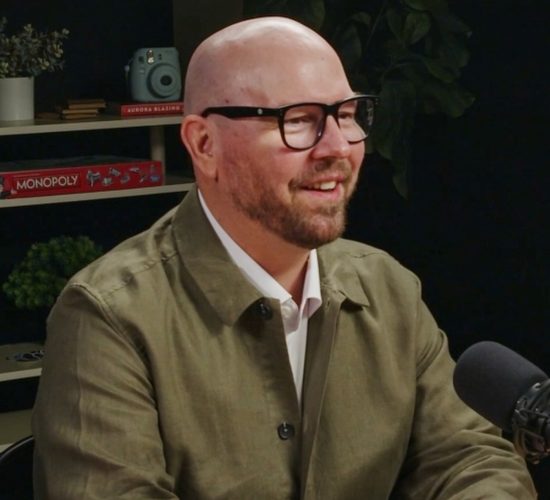
In this episode of The Localist podcast, host Carrie Rollwagen sits down with Dan Atchison, the creator of Tend+, an iOS app that helps people tend to the relationships already in their phone. Dan is not a developer. He vibe coded the entire app himself over Christmas break.
Tend+ solves a problem Dan was trying to solve for himself. After he changed jobs and lost the natural proximity he had built up with the people in his old role, he realized he was forgetting to reach out to people who genuinely mattered to him. He started building an app that would prompt him to stay in touch on a cadence he chose. Carrie has been using Tend+ for months and shares the stories of cousins she reconnected with the first week, including two who had babies on the way that she would not have known about otherwise.
The conversation gets into what vibe coding actually is, why every small business owner should know what it can do, and why the cost of getting an app on the App Store has dropped from tens of thousands of dollars to almost nothing. Dan walks through his tech stack (Claude Code, GitHub, Netlify, Supabase and the Apple App Store) and shares lessons he learned the hard way, including a moment when his first platform tried to charge him $500 for tokens he did not know he was burning.
Dan and Carrie also dig into the why behind Tend+. Why proximity used to do the work in our relationships. Why we should tend to people instead of managing them. Why the cost of delivery is directly tied to the value of the message. If you are a small business owner with an app idea, or you just want to be a better friend, this conversation has something for you.
Vibe Coding Small Business Topics Covered in This Episode
- Why Dan built Tend+ to solve a problem in his own life
- Why proximity used to do the work in our relationships and what to do when it stops
- How vibe coding is making app development accessible for small business owners
- Why you should never start with the code and always start with the idea
- How to scope and strategize before you write a single line
- The tech stack Dan used: Claude Code, GitHub, Netlify, Supabase and the App Store
- Why AI should do it with you, not for you
- How to ask AI to push back on you instead of just being a cheerleader
- When vibe coding makes sense for a small business and when it does not
- How Tend+ surfaces life events like grief and birthdays without making it weird
- Why we should tend to relationships, not manage them
- Why the cost of delivery is tied to the value of the message
- How Dan replaces pitch decks with interactive micro sites
- How to download Tend+ on the Apple App Store and what the free version includes
Mentioned in This Episode
- Tend+ on the Apple App Store
- Tend+ website
- Highlands College
- Claude (AI assistant)
- Claude Code
- Anthropic
- Famous.ai
- Base44
- Lovable
- Supabase
- Netlify
- Vercel
- GitHub
- Hattie O’Hara episode of The Localist
- Dan’s Substack: Truth and Wonder
Connect with Dan Atchison
Dan Atchison is a department chair at Highlands College and the creator of Tend+, an iOS app that helps people tend to the relationships already in their phone. He vibe coded the app himself starting at Christmas while he was bored. He also writes on Substack at Truth and Wonder.
Follow Carrie Rollwagen
Listen to The Localist on Spotify & Apple Podcasts
Thanks to Our Sponsor, Infomedia
The Localist is sponsored by Infomedia. They are a Birmingham-based web and digital marketing company. They help small businesses grow online. Contact Infomedia.
Join Us at Localist Lab
Localist Lab is a free event series for small business owners. It meets on the third Thursday of most months at Saturn in Avondale. Each session covers marketing tips you can use right away. Free tacos and coffee, too. See upcoming events.
Subscribe to Carrie’s Newsletter
Want more small business tips from Carrie? Sign up for her newsletter and get insights, resources and updates sent straight to your inbox. Sign up here.
FULL EPISODE TRANSCRIPT
Below is the full transcript of this episode of The Localist with Dan Atchison of Tend+. This transcript is provided for accessibility and SEO.
Carrie (00:12): Welcome to The Localist, a podcast where we talk about the highs and lows of building community through entrepreneurship. I’m your host, author of The Localist book and small business consultant Carrie Rollwagen. The Localist is sponsored by Infomedia. Infomedia is a digital strategy company where I work as Senior Vice President. At Infomedia, we help small businesses get big results online.
Carrie: Our guest today is Dan Atchison. Dan is currently a department chair at Highlands College. I actually knew him sort of way back in the day when he was working in video and I was writing, but I wanted to have him on today because he just launched an app to the app store called Tend, or Tend with a little plus sign if you are looking for the app. I find this app really useful and fascinating. I actually use it myself, and that is why I had him come on.
Carrie: The purpose of the app is to help you tend to the relationships you already have. After you download the app, you go into your address book and you select the people you want to keep in touch with that you do not always remember to keep in touch with. Then in the app you can choose the frequency you want to connect with them on, so maybe once a month, once a quarter, or once a year. Every day when you open up your Tend app, it kind of prompts you to do a few different people. You can swipe up to text them and say hi, just check in, how are you. You can swipe down if you want to move it to another day or ignore it.
Carrie: It is so useful to me, because there are so many people in my life that mean a lot to me, but if they are not coming up on my social media, or I am not seeing them every day, they do not always come to mind. I wanted to share it with everybody. I also wanted to have Dan on because he launched this app, but he is not a developer, and he did not use a developer. He actually used vibe coding, which we will get into later. This really makes something like developing an app accessible to people who do not necessarily know how to code. It also makes it accessible to so many small businesses, because before it used to cost ten, twenty, thirty thousand dollars to produce an app, and now with AI, that is a lot more in reach. Welcome to the podcast.
Dan (02:54): I’m glad to be here. It’s fun.
Carrie: I’m actually a huge fan of your app, but for people who are listening, I want you to explain what it is, and then I’ll jump in and say why I love it.
Dan (03:04): Like anything, you’re trying to solve a problem for yourself. Our devices distract us. I’m not going to be the old curmudgeon, but everybody’s on their phone. I think we are more aware of it now. The whole idea was, instead of being a distraction, can the app actually prompt real life interactions, whether through digital, just texting somebody, or in person. I think our intent is that we want to reach out, we want to be a good friend, a good son, a good brother, a good coworker. I needed a way to systematize the people that actually matter. When I started counting, there were a ton of them.
Dan: I had a job change. I went from being a pastor at a campus where I saw people week in and week out, into higher education. The proximity of seeing people went away. About a month in I realized, I have not really talked to James in a bit. It was not even just the role I played in his life, he was a friend. Over Christmas I got bored and said, I wonder if I can just build an app. So I started vibe coding.
Carrie: We have that in common. Our friends and family are like, can you stop?
Dan: I was in grad school, and one of the guys in my cohort was the Vice President of Innovation at the university. He was talking about the speed at which you can iterate. You can build an app right now. Months later at Christmas, I just gave it a shot. Now we have an app on the App Store. It’s only on the Apple Store right now. Sorry, Android users.
Carrie: Are you a green text person or an Apple person?
Dan: I’m an Apple person. It depends who I’m texting.
Carrie: We think it’s politics that divides the nation.
Carrie (05:43): That is always a challenge for anybody developing an app. You kind of have to do it twice.
Dan (06:19): I’ve always been kind of tech forward. An early adopter. Do you know what an Apple Newton is?
Carrie: I’m familiar.
Dan: I had the first Apple Newton. That tells you how old I am, and how much of an early adopter I am. With AI, depending on where you sit, that’s a whole different conversation. So much has changed since I built the app back in December. I put it down for about eight weeks. I was learning a new rhythm as a department chair, building courses, being with students. Then I said I needed to finish it. I needed to ship it. That has always been a bit of a thing for me. You want it so refined and polished, perfect. It’s the whole Seth Godin thing. Just ship it.
Carrie (07:37): Minimum viable product. That’s it.
Dan: Yes-ish. It grew, though. You start tinkering, having fun. You’re like, I wonder if I can make it do this. And then scope creep starts. It’s like a book or a movie. It’s never finished. You just have to abandon it and say, okay, it’s time.
Carrie: Digital products are like a book and movie, but different, because you can keep iterating on them. I came from traditional publishing where it’s out there and you can’t change it. With a website or an app, you can fix it, launch a new iteration. We have a lot of clients at Infomedia we work with on that, because they want to get everything perfect. You can’t do that. The launch is a little bit the soft launch.
Dan (09:00): I think I was on build 132 when I actually shipped. Part of that was the learning curve. Even though I was vibe coding, and I’m not a coder at all, I learned a lot in the process. I started with one platform, then switched.
Carrie: Can you tell us which one?
Dan (09:21): It was Famous.ai. The reason I chose it is because they push it to the App Store and go through the whole process. I had no clue what I was doing. They have subscriptions. I was cooking along and got an email basically saying it’s in app jail, you owe us $500. There was never a meter saying you’ve run out of tokens. Thankfully they refunded all of that. I downloaded the code and started cooking in Claude.
Dan: There are other platforms out there too, Base44 and Lovable. So much has changed even since I started. I started in Famous.ai, pulled the code down, and then just kept saying, can we do this, can we do that.
Carrie (10:32): To explain to people what vibe coding is, because a lot of small business owners have heard of it. Would you say this is correct? You can speak in English to the AI, and it kind of interprets it as code. You can see what’s being created and say, oh, I didn’t want this, I wanted this other thing. Where before, at Infomedia we have developers. I joke that I’ve been vibe coding for years. I’ve just been using real devs. I’m sitting next to a dev. They code something, I’m like, I love it, can we make a little more space. So it’s kind of like that, but instead of sitting next to a developer, you’re just explaining it to an AI like Claude.
Dan: And it never needs a break or has to go to the bathroom. Sometimes it’ll fight you. Sometimes it’ll push back. I’m squarely on Anthropic now. There’s something new every month, but I have found that Claude, specifically Claude Code, but there’s so much other stuff. I still sometimes am like, explain it to me like I’m a five year old. I stumbled my way through this whole thing. But I was just trying to solve a problem for me.
Dan (11:58): Here’s what I did learn: don’t start with the coding. If you’re a small business owner with a problem to solve, work the problem. A problem well defined is a problem half solved. If you go straight to the coding, you’re going to have to do a lot of backward stuff. One thing I did right from the beginning was I just worked in a chat. I said I have an idea, here’s the problem, here’s what I want to do. I worked for hours creating a document. Then I said, now I need you to create the document, like I was handing it to an app developer. Then I basically handed it back to Claude in a different tab.
Carrie: That is something I think people who haven’t worked a ton with AI don’t understand. I’m looking at it and I’m like, well, you’re all Claude, you should understand. But I’m in cowork saying, okay, I need you to explain this to Claude Code. Or I’m starting another skill in cowork. I need you to write up whatever we talked about in this chat. Then I need to connect to that other one.
Dan: Yeah. Sometimes it’s still not perfect. It’s still early honestly in the whole thing.
Carrie: The funny thing to me is I’ll throw up an error, and I’ll just copy the error and say, hey, this error just happened. It’s like, oh, let me fix it. And I’m like, you didn’t know you were talking to yourself.
Dan: You didn’t think I was just going to copy and paste? Well, it’s because also we’re not devs. We approach it like it’s human, because in so many ways it does interact like a human. We expect it to act like a human. But it isn’t. So that’s not actually how it works.
Dan (14:00): And then you want to yell at it. I should probably be more kind to the bots, because one day they’re going to take over and remember.
Carrie: I always say please and thank you. I think the habit is just good to be in. We’ll see what happens. I heard a news story yesterday where somebody pretty high up at Anthropic said we’re afraid the AIs are going to read the science fiction and then get the idea of rising up. It’s like a self-fulfilling prophecy. Like the Matrix. My way of looking at it is, I get weirded out, like, am I treating it like it’s human? But I want to stay in the practice of treating humans like that. So I don’t want to be out of practice.
Dan: It’s not what it does for the tech, it’s what it does in here, right? My wife is hilarious because we have Alexa everywhere in the house. She hates it. She’s not on any social media. She’s like, we should just get rid of all of it. I’m like, give them your social security number, they already have it.
Carrie: In every relationship there’s a person who will and a person who won’t. There’s always an AI evangelist and a Luddite. I’m actually the Luddite in my relationship.
Dan: I’m around college students, and at commitments they’re booing anytime AI is mentioned. For me it’s that AI should do it with you, not for you. We’re still the ones that have to create. That’s where the human part is. You suck the soul out of something if you’re not bringing your perspective.
Dan (16:50): Coming back to the app, it was, I need this to solve this problem, so that the human interactions actually happen. I got an email this morning from a guy who said, hey, I love the app, it’s helped me stay connected. And then he said, hey, here are some bugs. I kind of haven’t touched it in a bit, which is a problem, because it could be a full-time job.
Carrie: Yeah.
Dan: I just want to ship it. I probably need to hand it off to somebody else. But you can iterate quickly. Yesterday on the app, it popped up and reminded me a friend lost her mom three years ago. I would have never known that. It popped up. And a dad who lost a son back in 2005. Every year that friend texts me the day before. We lost Josiah. For whatever reason, the fact that it’s the day before just does something. So I texted, hey, I know that you’re thinking about your mom tomorrow, just want you to know I’m with you. Marie, I care for you, value your friendship. That sort of thing means the world. That’s what we lose when we get distracted, we lose that attentiveness to the story of the other people that are around us.
Carrie (17:19): Within the first two days of using the app, I texted one of my cousins. I mostly use the app to keep track of my cousins. I love my cousins. I want to keep that relationship. It’s important to me. But for most of them, what reason do I have other than their birthday to be like, hey, that’s right. Having the app to say, once a quarter, I want to just send a text and be like, I’m thinking about you, hope you’re doing well.
Carrie: One of them, his wife was going into surgery that day. He thought I knew. He was like, thanks for checking in, it means a lot. I was like, oh wow, I got credit for something I didn’t know. Then I know about it, I can follow up. Then two of my cousins, their wives were pregnant, and I had no idea. One of them, everybody else in the family knew. One of them, I was the first to know, just because I sent a text saying, hey, thinking about you, hope you’re doing well. That was the powerful moment for me. These connections are just here waiting for you.
Carrie: There’s so much talk about, I think about this with local business too, we romanticize that time, or kids in college now talk about the 90s and how they wish they had that no-tech thing. It’s almost like there’s a curtain. It’s just behind the curtain. All of these relationships were literally there waiting for me. I just had to say, hey, hope you’re doing well. The most basic check-in.
Dan (19:14): You came up online today, thought of you. Sometimes we get weird about it, like I don’t really have a reason. Because we’re so utilitarian. The reason is, man, you mean something to me.
Carrie: For me, I put cousins in the app, and friends from college. People who really mean a lot to me. I don’t want to go two years without talking to them. My roommate in college had a child, and I didn’t know. It seemed so bizarre to me, because we were close in college, but life moves really quickly. Unless you’re following each other on social, but even that is only a certain segment of what’s going on, or it’s people who are really active on social media.
Dan: The proximity used to do the work. If you change jobs, you’re no longer in college, the proximity used to do the work. This closes that gap. At least that’s the intent.
Dan (21:18): Going back to social media, it’s a marketing thing. The perceived value is directly related to the cost of delivery. That’s a Seth Godin-ism. If the cost of delivery is nothing, an email, the message is not very valuable. If I say happy birthday on Instagram or Facebook, where does that go? I can have a text or a voice memo or a video. How about just a phone call? I don’t want to just cold call. But those interactions, when you remove the technology, are more human.
Carrie (22:30): If somebody says happy birthday on a social media that I know reminded them that it was my birthday, that’s not a lot. Thank you, but especially if it’s only happy birthday. When it is texting, it just means more.
Dan: People want to be known. In our world it’s easy to not truly be known. Like your cousin’s wife being pregnant, that’s a huge milestone. To be able to check in, hey, how are things going, I’m excited for you, you now are connected to their story. I needed that. I wanted that.
Carrie (23:33): I had been trying to figure something out. I’d added birthdays and anniversaries into Google Tasks. But the check-ins, I was like, how do you automate that? Am I just going to go in every day and say, I’m going to text Blaine every third month? That seems weird and clunky. Maybe I should do a spreadsheet. I couldn’t figure out how to do it, but it kept being on my list. Then I saw your post, and this is exactly what I wanted. I already set the frequency. It’s a manageable number every day. I can be like it’s easy, swipe up, swipe down, wait until later. Just be like I organically talked to them yesterday, so I can swipe through.
Carrie: I appreciate that. Especially for somebody who is not a UX designer, it is really good UX. It’s very easy. You can swipe up to text them, swipe down to skip it, or send it to tomorrow. And then you swipe left or right.
Dan: Not as weird as Tinder.
Carrie: It’s an app. So tell us, why Tend?
Dan (25:18): I picked the name because relationships are to be tended, not managed. That was, for me, the problem with all CRMs. It’s customer relationship management. I’m not trying to manage you. I’ve actually had people say, what if we did this, could you track this? That’s a CRM. No.
Carrie: People want LinkedIn. They want to put their sales contacts in it. You’re like, no, this is not that.
Dan: This is for you to care for them, not for what you can get from them. That was a philosophical line I wasn’t going to cross. I built it for me, and I use it every day.
Dan (27:14): It’s the special days and all that stuff. Streaks too. I’m a streak nerd. I’m on the chess app. I have to do a chess puzzle today to keep my streak. The app has streaks, but it’s all tending to relationships. Relationships are cultivated, not managed. I was teaching this in one of my classes. We reach for machine language when we talk about the human experience. If somebody’s broken or they’re of a dysfunctional family, they are a functioning alcoholic. We do that because we actually remove the humanity from it. But we get wounds. You have to tend to people. You tend to. Especially in a counseling role, teacher role, you want to fix. Even in a spousal relationship, stop trying to fix me. Even fix is machine language. So there’s something about tending to people. You sit with a wound, you sit with somebody hurting. I think we need more of that in our world.
Carrie (28:32): I love that. It’s a different facet to why social media universally has not had a positive impact on relationships. We look at it in machine terms. You’re interacting through a machine. With Tend you also are, but the point is to make the personal connection. The point is when I see my cousin at a wedding in person, I will have checked in and I know what’s going on. We can have a deeper connection.
Dan: Even with the younger generation, all the analog hobbies, knitting, throwing a frisbee. There’s a pushback on it.
Carrie: I was taking a walk with my husband. It started raining. I was like, this feels so weird to just be out. I feel like a kid, because when am I walking in the rain? You’re trying to avoid everything.
Carrie (30:18): Let’s talk about the piece of, did you do this just because I like it, or were you thinking I’m going to monetize it? Are you monetizing it?
Dan: There are some subscriptions. It’s like anything else, freemium. I did want an app. I put a lot of time into it. Then you start thinking, this is actually a product, this has value. You don’t want the cost of entry to be a barrier. I would pay $50 a year for at least the premium version. There’s a free version up to about 30 people. You get some groups and stuff. It’s useful free.
Carrie: I started with the free version, with cousins and college. I’m going to try the free version and see, do I keep up with this. It does make it doable. I love that you can choose how often you want to connect.
Dan: It’s weekly, monthly, quarterly and annually. The frequency matters.
Carrie: Quarterly is perfect for me for most people. There are some people I’m closer to, so once a month.
Dan (32:32): Where it starts shining is when you actually start using it. There’s a setup cost, not monetarily, but a time investment to get it the way you want. Maybe 10 minutes. It imports straight from your contacts. For someone like a friend who just lost his dad yesterday, the app will serve his card up more for the next two months. So two weeks from now I can say, hey, thinking about you. Then it tapers off and goes back to the quarterly frequency.
Carrie (33:48): Let’s talk about the strategy and scoping process. An idea for an app, everyone has a million ideas. Do you have a plan, that’s a different thing. The planning stage. Did you work with Claude to do that?
Dan (34:36): My prompt engineering, I’m just going to speak, there are other people who are going to listen and go, this guy has no clue. And you’re right. I give it as much as I can. I start with an idea. I’m trying to solve this problem. Help me think through what would actually solve the problem. Then I basically have it create a markdown file. That’s where the scope comes in. What do I name it? What does it look like? What does it feel like? Here’s what I need it to do. If you’re doing an app for the App Store it’s different from a web app. So much has changed even since I started in December. I pushed it in March.
Dan: Now Claude Design is around. Before, it wouldn’t even do the design first. If you’re a small business owner with an idea, start with the idea and let it be messy. Sometimes on the way to work I’ll voice record. I’ll say, hey, this is a kickoff voice memo. I brain dump for three to five minutes, like a kickoff for a project. I’ll transcribe it, dump it into a chat, and work with that. Just my projects are in cowork. It’s so powerful what it can do now. For the app, I kept cooking and said, now I’m ready to build it. So wrestle with the concept. What problem are you trying to solve? Wrestle with the content first.
Carrie (37:11): Do you ask it to push back on you too?
Dan: Yes. They are programmed to please you. I’m in a doctoral program right now. I’m wrestling with this concept for my dissertation. It just kept saying, yeah that’s great. About 90 minutes in, just me wrestling with it as a thinking partner, it dawned on me this is being way too affirming. I literally typed, how much of this are you being a cheerleader because you’re programmed to make me happy. It hit back about 70% cheerleader, 30%. I said, don’t do that. I need you to poke holes in this. This is doctoral work. So it tore into it. Then it made me angry. I was like, you’re not the one. I’m just going back. Then it said it’s sorry for coming on too. No, don’t cave now. Have a perspective. You have to train it. Where’s the friction in the UI? Where am I not thinking? You have all the context and passion. The people out there using it don’t have that story. They don’t have that baked in.
Dan (39:51): AI in general, if you’re going to use it, is powerful, but it should do it with you, not for you. So many people are just like, write this. You can tell there’s no soul in it, no heart. You’re not actually editing it. Wrestle with the concepts. Then you can say, turn this into a brief I can give to a web developer. Either Claude Code or cowork now will do a lot of the basic stuff.
Carrie (40:04): After you’ve got the code, what are the next steps? How do you get it from Claude to the App Store?
Dan: The actual app has 60,000 lines of code. I don’t know that I’ve ever looked at any of it. You’ve got the code just sitting there, and I had no clue how to get it up there. So I just asked it. It said, you’re going to have to have a database. Supabase has a free version, and you’re not going to max out that free version. I signed up on Supabase. Then, how am I going to host it? Netlify was what it said. Vercel is another one. I’m the one going, here’s my social security number, authorize, here are the keys to all of it. If you’re in cybersecurity you’re probably breaking out in sweats. It just pushes it. The tech stack is Claude Code pushes to GitHub, then Netlify pulls from GitHub, then it’s connected to Supabase, then all of that is wired into the App Store. Anytime I have a new version, I’m 90% in Claude. I don’t touch the other stuff once it’s wired up.
Carrie (41:46): That’s similar to a podcast. I connect to Apple or Spotify once, then push out through an RSS feed. I think security makes sense. It depends on what you’re looking for. You’re saying, I want this app to connect me to people. You’re taking phone numbers, but those are out there.
Dan: It’s all encrypted. With Supabase, all that stuff is encrypted. The data is safe. It’s in the terms. You have to do your due diligence. Get a lawyer to look it over. Especially if it starts growing. The integrity of people’s information was important to me. It is phone numbers and names, but it’s all encrypted both ways.
Carrie (42:57): When we talk about pros and cons of vibe coding, it depends. If you’re a small business and this is a somewhat limited thing, versus if you were Amazon vibe coding an app, that’s a lot more problematic. There are security things. Whether it makes sense to vibe code depends on what you’re doing, what information you’re taking. You’re not taking financial information. There are plenty of app developers who code something with vulnerabilities. Humans do too. If you tell AI what you need, it’ll walk you through it.
Dan (43:50): One thing I’ve started doing, even at the school, is not doing pitch decks anymore. You can say, here’s an idea, here’s all my content, and then do a little micro site. It’s as quick to output an interactive HTML page. If you do a pitch deck, you know you’re being pitched to. There’s friction. I’m an idea guy, almost to a fault. Instead of saying, here’s my idea, I’ll say, spend 30 minutes with this micro site. That lowers the resistance. We feel like we’re being pitched. Now I can click on what I want, and it’s just a one pager. In 90 seconds it’ll wire up a decent looking strategic memo. It’s interactive.
Carrie (45:02): The differentiator is what you talked about, really thinking it through yourself, having those ideas come from you, asking it to push back. When I see it done well and badly, the difference is, was the idea yours? Did you have the concept? Did you think through it, or did you just say, I want a website. You’re not going to get something very good.
Dan: You have to work with it. You have a perspective. I don’t like that, I like that. It’s a partner. The idea, the content, still has to be quality.
Dan (45:55): People can pick up on em dashes. I used to use em dashes. I love em dashes. Now you can’t use them because everybody’s like, AI wrote that. I just like em dashes.
Carrie: I was originally using semicolons. But semicolons are stuffy. I switched to em dashes because the grammar rules around them are more fuzzy, more conversational. Now I’m back to not using em dashes. So I’m back to the semicolon, which is where I wanted to be in the first place. I was using a brand voice guide for Carrie Rollwagen. It said, you use em dashes a lot. I told it, that’s because a lot of this is old. Because of AI, I can’t use em dashes anymore. So give me all the sections where I used em dashes, and I will rewrite them.
Dan: Full circle.
Carrie (47:00): I would love to go on forever. The last episode my guest said she was the most prepared. I have a hunch you went for the opposite.
Dan: By the time this all gets edited, this may be the shortest pod you’ve ever had.
Carrie: You’re talking about Hattie. She also listened to podcasts I’ve been on. Hattie is amazing. We’ll link to her episode. So tell people, do you want them to connect with you on Instagram or LinkedIn, and also how to get the app?
Dan (47:41): I haven’t really marketed Tend+ yet. I built it for me, then put some stuff out there. I’ll pick that back up when things slow down. I’m in a doctoral program. I do think it’s a value add. I think it could help make the world a better place. That sounds cheesy, but it’s true. That human connection. I’ll pick it back up and try to market it. Not just for monetization, although I wouldn’t hate that. It has value. So I’ll probably pick that back up later this year. I say all that to say, tendplus.app is the website. I’m on Instagram, Facebook. I write on Substack at Truth and Wonder.
Carrie (48:54): For people listening, if they’re looking in the App Store, it’s Tend and then the plus sign. It’s a green sage green.
Dan (49:02): It’s just a plus sign green. I’m colorblind.
Carrie: Well, it works. You’re matching my brown jacket on today. We’ll put all this in the show notes. Thank you so much for coming.
Dan: Thanks, Carrie.
Carrie (49:24): If you enjoyed this episode of The Localist and you want to join us in person, I would love to see you at our Localist Lab events. These are every third Thursday at Saturn in Avondale. We have free breakfast tacos from our sponsor, Lady Bird Tacos. We have free June coffee. I bring in experts from Infomedia and our sister companies, Uptick and Tempo. We really share very specific marketing skills that small business owners need to know.
Carrie: The Localist is written and produced by me, Carrie Rollwagen. Our showrunner is Taylor Davis. Our outreach manager is Hannah Craigen. Our sound engineer, not in the room with us today, is Erin Duncan. Thanks to Infomedia for sponsoring the show and making everything we do here possible. We also record right here at Infomedia Studios, so if you’re interested in doing your own podcast or social media clips, we would love to help. Until next time, whether you’re buying from a small business or running one, thanks for everything you do every day to make our