
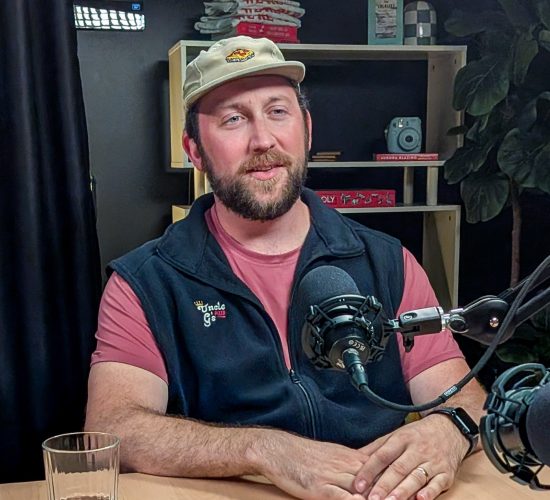
Show Notes
AI for small business is one of the most divisive topics in entrepreneurship right now. In this episode of The Localist podcast, host Carrie Rollwagen sits down with George Gilliam, owner of Uncle G’s Pizza in Birmingham, to talk about how he is using AI to give himself back the time he needs to actually run his business and connect with his community.
George has pivoted Uncle G’s more than once. The business started as a food truck in Pelham, then moved into Birmingham, did a brick and mortar in Riverchase that recently became takeout only, and now operates two food trucks and a commissary kitchen that supports up to 12 other Birmingham food trucks. Along the way, George has built one of the most engaged small business social media presences in Birmingham, with a focus on giving back, donating pizza parties to first responders and community groups, and creating content that does not feel like a sales pitch.
George and Carrie get honest about AI for small business. Where George uses it (the back end of the business, building a website that would have cost $10,000 five years ago, brainstorming, payroll processes) and where he stays away from it (creative work that needs his actual voice). They both acknowledge the AI conversation feels risky to have publicly right now. They both believe small business owners who refuse to engage with the technology will get left behind. And they both agree that AI slop on social media is easy to spot and bad for any brand.
The conversation also covers short-form video and what actually works on social media, why the tattoo for a slice a day promotion is paying off in ways everybody predicted it wouldn’t, how the Riverchase commissary kitchen is filling a real gap in the Birmingham food scene, and how George is balancing doing good in the community with running a sustainable business. If you are a small business owner wondering where AI for small business fits in your work, or just love a good pizza story, this is the episode for you.
AI for Small Business Topics Covered in This Episode
- The pivots Uncle G’s has made from food truck to brick and mortar to takeout only
- How the donate a pizza party feature works and why it performs on social
- Why authentic, fun social content beats stylized product photos every time
- How short form video became a sea change for the business in the last year
- Why thrown-together videos sometimes outperform meticulously edited ones
- Where George uses AI for small business: payroll, spreadsheets and back end automation
- Why he vibe coded the Uncle G’s website and what that would have cost five years ago
- Where AI for small business does not work: creative work that needs your real voice
- Carrie’s framework for what she will and will not use AI for
- Why training AI on long-form writing produced better social captions
- Why the AI conversation feels risky to have publicly right now
- The data center fight in Birmingham and why regulation matters
- Why AI slop on social media is easy to spot and bad for your brand
- The tattoo for a slice-a-day program and why people called it a horrible idea
- How the Riverchase commissary kitchen serves up to 12 other Birmingham food trucks
Mentioned in This Episode
- Uncle G’s Pizza
- Donate a Pizza Party
- Hop City Birmingham
- Trim Tab Brewing
- Ghost Train Brewing
- CapCut
- Adobe Premiere Pro
- Google Gemini
- A. Studio That Works / Andrew Thomson (designer of the King Pep mascot)
- Noah Stalcup (illustrator of the King Pep mascot)
- Andrew Jackson Hood (designer of Ohm Jiu Jitsu branding)
- The Camel music venue (Richmond, VA)
Follow Carrie Rollwagen
Connect with Uncle G’s Pizza
Uncle G’s Pizza is George Gilliam’s Birmingham pizza business, serving New York and Detroit style pizza at the Riverchase takeout location, the food truck at Hop City and the mobile trailer at events around town. The Riverchase location also serves as a commissary kitchen for other local food trucks.
- Uncle G’s Pizza website
- Donate a Pizza Party
- Uncle G’s Pizza on Instagram
- Uncle G’s Pizza on Facebook
Listen to The Localist on Spotify & Apple Podcasts
Thanks to Our Sponsor, Infomedia
The Localist is sponsored by Infomedia. They are a Birmingham-based web and digital marketing company. They help small businesses grow online.
Join Us at Localist Lab
Localist Lab is a free event series for small business owners. It meets on the third Thursday of most months at Saturn in Avondale. Each session covers marketing tips you can use right away. Free tacos and coffee, too.
Subscribe to Carrie’s Newsletter
Want more small business tips from Carrie? Sign up for her newsletter.
FULL EPISODE TRANSCRIPT
Below is the full transcript of this episode of The Localist with George Gilliam of Uncle G’s Pizza. This transcript is provided for accessibility and SEO.
Carrie (00:12): Welcome to The Localist, a podcast for small business owners, where we talk about the highs and lows of building community through entrepreneurship. I’m your host, author of The Localist book, and small business consultant, Carrie Rollwagen. The Localist is sponsored by Infomedia, a Birmingham-based digital strategy company, where I serve as Senior Vice President. At Infomedia, we help small businesses get big results online.
Carrie: Our guest today is George Gilliam of Uncle G’s Pizza. I am a big fan of Uncle G’s, just because I love the pizza. I like their Detroit style. It is like deep dish, just super delicious. I like the product anyway, but I also wanted to have him on because he has really pivoted a lot with his business. They have a couple of food trucks now and a takeout location, but he has also just been really honest about the journey and the realities of owning a small business.
Carrie: Today we talk about those pivots and the changes they have made. We also get into the specifics of building a social media presence. We nerd out on the tools. Before we recorded, George asked me if I was willing to talk about my own views on AI publicly, which threw me for a loop. But his point was a lot of small business owners are experimenting with AI, and a lot of people are either very pro AI or very anti AI, and we are kind of stuck somewhere in the middle. I did not expect to be getting into AI in a pizza conversation, but I really loved it. Welcome to the podcast.
George (02:35): Sounds good.
Carrie: I’m so excited to hear from you in person, because you’re on social so much, as the business but also just as you. You share so many open thoughts about small business ownership, which is what we’re trying to do here.
George: I’m excited to be here.
Carrie: Uncle G’s has evolved a lot. The COVID word for it was pivot. For people listening, what is the current state of Uncle G’s?
George (03:22): We started as a food truck in Pelham, then moved to Trim Tab, where a lot of people first found us in Birmingham. Then we were at Ghost Train for a little while. Then we opened our brick and mortar in Riverchase, which is currently still open but primarily as a takeout spot. We have two tables, first come first serve. We have two food trucks still. One is at Hop City seven days a week. The other is our mobile trailer that goes around and does events.
George: We’re trying to be as active in the community as we can. It’s hard to do social media and marketing in ways that aren’t completely self-serving. It’s very easy to get stuck in this loop of here’s why my product is awesome, here’s why it’s better than the competition. I think people are tired of being sold to on social media. So I wanted to introduce another element that wasn’t just throwing our product in your face but also doing some good for the community. I am just trying to make a positive impact, give away a lot of pizza, and hopefully sell a lot of pizza too.
Carrie (05:28): The pizza party concept. Tell people how it works. Essentially I could go and say I want to buy pizza for a group I feel is doing great work, so I could donate toward that. You actually show up. You bring the pizza.
George (06:05): On our website there are two channels in the donation page. One is requesting a pizza party for someone, nominating a group of people. We try to hit people at work doing a job where maybe they don’t get as much credit as they should. Firefighters, NICU, Salvation Army. Then there’s the other feature where you can donate money toward pizzas for those parties. Right now I’m keeping track of people’s names and on the next video shouting them out, saying this person donated three pizzas, this person donated two.
Carrie (07:02): The first time I saw that, you had done a very transparent post saying we need money, and one way you can do this is, did you know you can also donate? I was like, this is cool, because I’m at home, I’m not going to drive to the food truck. One or two slices is great, but it doesn’t do as much as saying, okay, right from here I can feel good and just buy a whole pizza.
George: If you’re feeling generous, you can buy a pizza for someone, and you can physically watch the pizza going into people’s hands on social media.
Carrie (08:21): The world is weird right now. Maybe it’s always weird, but it’s very weird right now. Just doing something physical, like donating money somewhere, when you have enough to donate a pizza, when you’re scrolling on social and the world is a mess, doing something actually does make me feel better.
George: You are supposed to do it because it makes you feel better. Connection makes people feel good. Doing positive things for other people makes you feel good.
Carrie (08:47): It’s a brilliant strategy because it gives people another way to buy from you when you’re not in Riverchase or at Hop City, and it gives you social content.
George (09:21): We have to be honest with ourselves about social media. Everything you see on social media is marketing, at least if it’s coming from a business.
Carrie: Even as a person we’re marketing ourselves, whether we’re thinking about it strategically or not.
George (09:50): We’re never going to pretend that we’re not marketing the business. We get people who comment and say stop doing things for clout, just do things from the heart. It doesn’t really bother me, because I know we’re doing something positive. Even if it is marketing, I want my business to stay alive, but I also want people to know we’re connected to the community. That’s how people support you.
Carrie (10:43): It is really fun to watch. The social content feels organic and fun. Younger generations want more authentic content and are tired of being sold to. If you’re doing something more social and about connection, that’s going to perform better.
George (11:42): The videos we do with a surprise element, where people are caught off guard like, wait, what is going on here, those videos perform really well. People want to see things they’re interested in. If it can be something positive that’s not at the expense of anyone, then it’s a good thing.
Carrie (12:29): Another thing you’ve done is talk to camera a lot. Some are from Uncle G’s Pizza and some are from your separate account, usually as a collaborator post. It seems like people are connected to your business because they’re connected to you.
George (13:00): I have no idea what I’m doing.
Carrie: One thing I’ve noticed in business is people think business owners know what they’re doing. Generally business owners are just more comfortable with chaos. They don’t know what they’re doing. They’re just willing to jump in and handle it. Even at the top levels.
George (13:27): Now it’s a little bit more transparent. I am figuring it out as I go. Social media has been a big part of the business’s success since day one, but I never really gave TikTok a fair shot until within the last year. Starting to make short form video content with TikTok and Reels in mind. Before I was more focused on messaging or putting out a beautiful photo of our product. Now getting into video editing and telling a story is a very fun form of media.
George: I’ve learned so much in the last year just messing around in CapCut. I’m hoping to take an Adobe Premiere class at some point. But I am just throwing stuff at the wall and seeing what sticks.
Carrie (15:13): You kind of have to be okay with that if you’re running a small business and posting on social media. You can do everything right, and sometimes it just doesn’t hit.
George: There’s no rhyme or reason to it sometimes. My wife has been posting on her personal account. She’ll post a video that I think is so funny, and it’ll get 200 views. Then this random one will get 35,000 views. I don’t know what the difference is. There’s an element of constantly trying to decode the algorithm.
Carrie (16:54): Do you have a whole library of B roll that you pull from? Are you really organized?
George (17:08): I want to be organized. I have aspirations of being organized. But no, it is so chaotic. I should probably have a big external hard drive with folders. Right now it’s pretty much all in my phone or in the cloud. I’m setting up a tripod and letting it rip.
Carrie: People forget that you can do that. I tend to be a person who wants to make the whole plan and then I don’t do anything. For social, it’s more like just get something out there. Done is better than perfect.
George (18:00): The videos I just throw together tend to perform better than the ones I’m meticulously selecting the music for. There’s a happy medium. But it is frustrating getting into a creative pursuit when you don’t have the technical ability yet and you have a vision you can’t execute. Pushing through that uncomfortable couple of weeks of learning the craft is key. When you finally start developing the skills, that’s when the creative juices come alive.
Carrie (19:46): We were talking before the podcast about AI. Is it factoring into what you’re doing, with social, or the back end of the business, making plans, working on financials?
George (20:12): I am dabbling in AI and agentic types of automated stuff in the back end. I’ve always been interested in automation and making things more efficient. Data entry, data management, customer information. AI is extremely helpful. Going into Google Sheets and using Gemini to rearrange the sheet, that’s so helpful and saves so much time.
George (21:02): In terms of creative stuff, I haven’t found it super useful. I think it can be a very good brainstorming tool. I don’t think people should be afraid to use it. It was a scary thing to talk about. Think back to the Hollywood writers strike. That was the first big backlash. I posted an AI, a crappy kind of photo thing maybe a year and a half ago, and got roasted online by locals here. Someone messaged me and said you could have gotten an artist to do this, they probably would have even taken pizza instead of money. That got me thinking. What is my place in this AI thing? Is it bad? Is it good? It is still scary to talk about because nobody wants to get canceled.
Carrie (22:38): Booed at your commencement speech.
George: Exactly. There are a lot of problems with AI. The legislation needs to come down on it. A lot of these tech CEOs are out of control. But the technology itself can be very useful, as long as we’re not poisoning our water supply and building data centers in people’s backyards. Once we get that tamped down, maybe beautiful things will happen from humans not being so tied down doing data management. There are a lot of things I am now able to do with my time because AI agents are doing things in the back end for me.
Carrie (23:57): Before we recorded, you said, I want to hear your thoughts on it. I thought, oh no.
George (24:07): I did a little research on you. I found and listened to some of your talks. I thought you’re one of the first people in a creative space around here that I’ve heard openly talk about the potential benefits of AI. I thought that was a really interesting position to take and I want to back you up on it.
Carrie (24:33): Thank you. My background is in writing, so that is very creative and also one of the first places AI came after.
George: It still kind of sucks at making copy. You can make it sound like you, but it takes a decent amount of effort to train it to do that and to get it to drop the em dashes and all the ChatGPT-ish stuff.
Carrie (25:08): I still have personal lines. For example, I’m working on a novel. I don’t use AI with that at all. I wouldn’t even say using it for ideas is bad, it’s just not what I’m trying to do. I’m trying to discover things about myself by writing the novel.
Carrie: Even with The Localist, I’ve been pretty open that we use it for show notes. Show notes are not where people are going first. They’re listening to the podcast or watching clips on social. Show notes are a utility. That’s a perfect use case, because it was extremely time consuming. Hannah, my assistant, runs the AI for it. She uses AI to get the transcript and then to do the show notes. We would not be able to hire her to do that if we couldn’t afford to pay someone to write transcripts.
Carrie (27:08): Social media is a little bit of a blend. I have found AI does a better job when I have an agent I’ve trained on my brand voice and the motivations behind The Localist. I uploaded tons of social captions I actually wrote, and examples of my longer form work. AI has my book on its list of trained materials. When I train it on a chapter or an essay, it understands better what I’m going for and writes better social captions.
George: Because it has more data to pull. It can connect more dots.
Carrie (28:44): I still rewrite the captions. It doesn’t get to where I’m like, this is perfect, sounds exactly like me. But it’s closer than starting from scratch, and writing a caption for me is like banging my head against a wall.
George (29:11): It’s a utility. I’m not going to Reels to read your captions.
Carrie (29:19): For my newsletter, that’s important to me, that it sounds like me, so I don’t use it for that.
George (29:26): Every week I type out my newsletter and I leave in messed up punctuation. I want people to know a human wrote it.
Carrie (29:36): What forced me to engage with AI is my job at Infomedia. I run a tech company. Naturally I’m more of a Luddite. I still write on paper for some things. But it’s my job to make sure we have 35 people working here. I want them to have jobs. So I can’t ignore this major tech advancement. I needed to decide, do I move on to a different job, or do I say I need to learn about this. That helped me get out of my head about it earlier on. Because I work in tech, I have easy resources to ask people what this is really doing. But it is hard to talk about, because there is so much backlash.
George (30:44): These companies have been given free reign to do whatever they want by the federal government for the next 11 years. I didn’t agree to that.
Carrie (31:04): I should probably write about this. With tech, we often just completely turn off, like well, I don’t understand the tech. Amazon went for years without paying sales tax because it was an e-commerce business. They acted like they couldn’t possibly understand e-commerce. You don’t have to understand the way a server works to understand a business should pay taxes. AI is the same thing. Some things are clear that you do not have to understand the technology to legislate.
George (32:15): People are getting pretty mad about these data centers here in Birmingham. It’s nice to see people out passionately campaigning for what they believe in. The backlash is valid. But I don’t think we need to throw the baby out with the bathwater.
Carrie (32:56): For small businesses, if you’re an artist making your living as an artist, I totally understand choosing not to learn it. But if you’re making your living in a lot of other ways, if you’re not engaged with it enough to make those decisions, we’ll just get left behind.
George (33:32): For me as a business owner, it’s extremely useful in the back end. I’m teaching it to run payroll for me. It’s not taking jobs from anyone other than me. It’s doing stuff I would ordinarily be doing that takes a lot of time. Getting that time back is crazy.
George (34:03): I see the other argument. I just rebuilt our entire website with AI. Five years ago that would have been a $10,000 website. That could have been money going to a local web designer. I would love to do that. I can’t afford to do that.
Carrie (34:40): So often for small businesses, you do one version and then eventually when you can afford it you do another. AI puts more of that within reach. If you hadn’t built it with AI, you wouldn’t have had $10,000 set aside.
George: I just would have had a crappy website.
Carrie (35:12): I run a website company, but for most startups something like AI or a page builder is usually your first step.
George (35:33): I would imagine you still have a job, but you’re just able to do 10 times as much.
Carrie (35:48): There’s still a need for complex coding. Less so for smaller sites. We’re often building sites for $5 million plus companies with five subsidiaries, complex security needs, sites that have to talk to each other. A vibe-coded site would cause major issues for them. So that’s where they would choose Infomedia.
Carrie (37:00): But if you have a pizza calculator, whatever. Are we going to see the little Uncle G is putting your pizza in the oven?
George (37:14): I would love that. Everything Domino’s does with their website is incredible.
Carrie: Vibe coding puts that within your reach. There aren’t huge security risks. If you’re hacked and it looks like you’re putting the pizza in the oven when you’re not, the stakes are not super high. AI makes it so small businesses can compete a little bit more.
Carrie (37:50): You’re also personally thinking it through. That’s what matters. We see a lot of small businesses where everything they put out, you can tell by looking at it.
George (38:09): It’s just slop.
George: What you post, you’re curating, whether you realize it or not. If you have bad taste, people aren’t going to subscribe to what you’re putting out. A lot of AI-generated imagery is still just slop and you can tell. Business owners tend to be scrappy and use whatever’s at our disposal. So if you don’t have a strategy and you’re just putting out AI-generated stuff, it looks sloppy and feels sloppy.
Carrie (39:18): And it doesn’t perform. So many people look at social media like, I checked the box, I posted on Tuesday. What’s the point if no one’s interacting because it was bad?
Carrie (39:48): We’ve gotten deep into the tools. The biggest questions I asked people at work about when we said Uncle G’s was coming on, they asked about the tattoo promotion.
George (39:58): Really? I stole this idea from a music venue in Virginia called the Camel. They had a stamp they would put on your wrist when you went into a show. The owner said if you get that camel tattooed anywhere on your body, you get into shows for free for life. I thought that was so cool, because it’s a tangible way for people to support you and be connected to you.
Carrie (41:01): So you get a slice a day for life if you have Pep, the pepperoni king, tattooed?
George: Yes. The King Pep mascot was designed by Andrew Thomson at A. Studio That Works, and illustrated by Noah Stalcup. Both incredible.
Carrie: My husband owns Ohm Jiu Jitsu and Andrew Jackson Hood did our branding. We have a little electric eel and a little skull.
George: Noah figured out how to get a GIF of the King Pep with the bouncing crown into the Instagram emoji repository. I throw it in there. I think Instagram penalizes me when logos are in video. But the tattoo promotion has been a lot of fun. People come in with their tattoo and show it. People said it was a horrible idea, you’ll lose so much money. We don’t feel it at all. It’s just another one of those things that’s positive.
Carrie (42:57): Typically maybe four days out of five they’re getting their free slice. The fifth day they’re buying more stuff. You’re probably going to buy more than one piece of pizza.
George (43:18): If they like us that much to tattoo our logo on their body and come four or five days a week for their free slice, Uncle G’s is part of their life. They’re probably talking about it to their friends and recommending it.
George (43:32): That’s the other thing with community outreach. I try to say yes to as many people that ask for donations as possible, because those people getting donations for raffles and fundraisers tend to be really loud in the community and sort of connectors. When we say yes and donate, it creates a positive relationship. I hope they go out into the community and talk about how we donated. It is strategic marketing in a sense, but it’s bad business if you don’t ensure some ROI. It can be good business and good for people at the same time.
Carrie (44:49): So is the Riverchase location now being used as a commissary? Tell people what that is.
George (45:06): The Riverchase store is pretty big, about 4,200 square feet. Honestly too big for us. Probably shouldn’t have signed that lease, but we’ve made it work. It serves as the home base hub for our food trucks. We have two full-time dough prep people. They just come in and make dough. Dough factory. Anytime you walk by you’ll see pans stacked up to the ceiling.
George: Since we have all that space, we rent prep space to other food trucks. We’re sort of a big commissary. The health department made us jump through a bunch of hoops. Currently we’re allowed 12 food truck tenants. We have to provide space for them to store and prep. That was a pivot. When the dine-in centric model wasn’t working for us, pivoting to that has helped keep us alive. We’re providing a service that’s really needed. There should be more commissaries.
Carrie (47:24): We had people at Church Street using our prep kitchen on off hours. It is still hard to find a place in Birmingham where you can prep food legally. You can’t make stuff in your home kitchen and sell that. Just legally finding a place is extremely difficult here.
George (48:05): The health department doesn’t help.
Carrie: There’s not really anyone. You have to get in and talk to people and ask questions.
George (48:11): It is extremely hard and very scarce. We have people beating our door down for spots. We get at least one or two inquiries every day.
Carrie (48:34): There’s a theme with all the things you’re doing. You’re finding ways to be helpful, but it’s also good for business. You see that with the pizza parties, with how you pay people. You pay people a living wage, and then you’re able to keep good people.
George (49:00): It feels like a nonprofit sometimes.
Carrie: We’ve had several guests who are like, am I a nonprofit, am I not. That’s a whole other deal.
George (49:17): It’s like trying to find a place in this capitalistic society where we’re not just sucking blood, because there are so many people sucking blood and draining resources. To build something that has the potential to make profit and provide a living for me and my family and maybe my kids through college, without doing it at anyone’s expense, but also building community. That’s the ultimate win.
Carrie (50:10): I would want to keep talking, but we’re out of time. Thank you so much.
George (50:20): Thanks for having me.
Carrie (50:21): Tell people how to get in touch with you.
George (50:28): Hop City is open seven days a week. Riverchase is takeout only, with an expanded menu. We do 16 inch large round New York style pizzas up there because we have a bigger oven. Big calzones, big stromboli. Follow us on social media: Uncle G’s Pizza on TikTok, Instagram, Facebook.
Carrie: We’ll put all those links in the show notes. And everybody listening, you can donate a pizza party too on the website. Just unclegspizza.com and click the donate tab.
George (51:30): Thank you.
Carrie (51:32): If you like The Localist and want to learn more about how to work on your own marketing, we have an in-person event for you. On the third Thursday of every month, we meet at Saturn in Avondale for Localist Lab. I bring in different experts from marketing and websites and all the different things that small business owners have to grapple with. We hear a presentation on a topic that is perfect for small business owners. Free breakfast tacos and free coffee. Tickets are free.
Carrie: The Localist is written and produced by me, Carrie Rollwagen. Our outreach manager is Hannah Craigen. Our showrunner is Taylor Davis. Our sound engineer in the studio with us today is Erin Duncan. We record at Infomedia Studios. Thank you to Infomedia for sponsoring the podcast and making everything we do here possible. Until next time, whether you’re buying from a small business or running one, thank you for everything you do to make our community stronger every day.