
Show Notes
How to Use AI Without the Internet Turning on You | Laine White of Uptick Marketing
Using AI for social media can save a small business hours every week, and it can also get you dragged in your own comment section. That is the strange spot small business owners are in right now. This week, Carrie Rollwagen sits down with Laine White, Head of Client Strategy at Uptick Marketing, to talk about where the line actually is, and how to stay on the right side of it.
Laine is a good person to ask, because she is not on either extreme. She uses AI constantly in her work, and she also has real ethical concerns about it. She has a psychology background, and she is married to an artist. Her advice comes out of that tension, not around it. Her rule is simple, and it is the most useful thing in this episode: Use AI to plan, to strategize, to organize, and to analyze. If you’re using it to produce the content your customers actually see, either make sure nobody can tell, or be ready for the consequences.
We start with what happened to Uncle G’s Pizza, which got called out in the comments for an AI-generated post, and we follow that story all the way through. Laine explains the pipeline from an angry comment to the Birmingham subreddit to what your neighbor repeats at dinner, and why one negative data point sticks in a customer’s brain even when they say they do not care much about AI either way. Then we get practical. Laine breaks down what captions really need on Instagram, Facebook, LinkedIn, and TikTok, why naming your city still helps, and why keyword stuffing does not, and why the comment section on TikTok matters more than anything you write. We talk about where AI graphics can pass and where AI posters get you caught, how she uses Claude as a design coach rather than a generator, why a brand kit from a human designer makes a real difference, and why ChatGPT keeps quietly editing the photos you hand it.
We also spend time on the cheaper, more human options: handing the camera to your staff, why lower-quality video often performs better than polished video, Hattie O’Hara’s one-Reel-a-week approach, and the free and low-cost tools that get you most of the way there. And Laine answers the question every owner is afraid to ask out loud. You already posted the AI thing, people are mad, and now what? She walks through what to say, what not to say, why a performative gesture backfires, and why saying nothing is the worst choice on the table.
AI for Social Media Topics Covered in This Episode
- Why AI for social media is so polarizing right now, even among people who use it
- The difference between using AI to plan and using AI to produce
- How one angry comment thread turns into a Reddit thread and then into word of mouth
- Why customers hold small businesses to a higher standard than big corporations
- What a negative comment does to a neutral customer, from a psychology perspective
- Why handwritten posts keep outperforming AI-assisted ones
- Burstiness, and why AI writing reads as bland even when nobody can prove it is AI
- What captions actually need on Instagram, Facebook, LinkedIn, and TikTok
- Naming your city in captions, and why keyword stuffing is over
- Why the comment section matters more than the caption on TikTok
- Where AI graphics can pass, and why AI posters get you caught
- Using Claude as a design coach instead of a generator
- How a brand kit from a human designer makes AI design look less like AI
- Why ChatGPT quietly edits the images you give it, and how that gives you away
- False AI flags, disclosure rules, and manipulated images
- Why Laine will not generate images at all right now
- AI video, B-roll, and the AI-generated Bama Rush experiment
- Why lower-quality video often performs better for local businesses
- Empowering your staff to make content, and how to do it without handing over the login
- The camera Carrie recommends, plus Edits by Instagram and CapCut
- Letting AI read your analytics and suggest what to make next
- What kinds of graphics actually perform, and why low design often wins
- Serving before you sell, and a better way to post a review
- Exactly what to say if you used AI and got called out for it
- Why saying nothing is the worst response you can choose
Mentioned in This Episode
- Uptick Marketing
- Infomedia
- Uncle G’s Pizza
- Uncle G’s Pizza on Instagram
- Saturn Birmingham
- Cala Coffee
- Cember Studio
- Hattie O’Hara on Instagram
- The Localist episode with Hattie O’Hara
- Laine’s first Localist episode: A Practical Guide to Influencer Marketing
- DJI Osmo Pocket 3 Creator Combo
- The Birmingham subreddit
Follow Carrie Rollwagen
Connect with Laine White
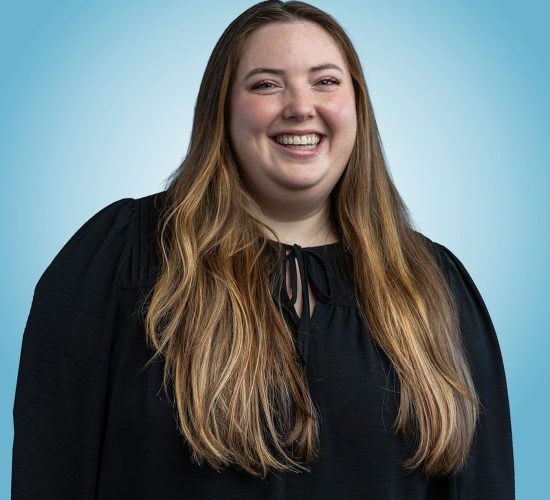
Laine White is Head of Client Strategy at Uptick Marketing, the sister company of Infomedia. She works with small businesses on social media, websites, and strategy, and she has a psychology background that shows up in how she thinks about reputation and word of mouth. She uses AI every day and still has real concerns about it, which makes her a good person to ask where the line is.
Listen to The Localist on Spotify & Apple Podcasts
Thanks to Our Sponsor, Infomedia
The Localist is sponsored by Infomedia. They are a Birmingham-based web and digital marketing company. They help small businesses grow online.
Join Us at Localist Lab
Localist Lab is a free event series for small business owners. It meets on the third Thursday of most months at Saturn in Avondale. Free tacos and coffee too.
Subscribe to Carrie’s Newsletter
Want more small business tips from Carrie? Sign up for her newsletter.
FULL EPISODE TRANSCRIPT
Below is the full transcript of this episode of The Localist with Laine White.
_______________________________________
Carrie (00:12): Welcome to The Localist, a podcast for small business owners where we talk about the highs and lows of building community through entrepreneurship. I’m your host, author of “The Localist” book, and small business consultant Carrie Rollwagen. The Localist is brought to you by Infomedia. Infomedia is a digital strategy company based here in Birmingham, where I work as senior vice president. At Infomedia, we help small businesses get big results online. If you own a small business or you work for a small business, you’re already having to wear a lot of hats, and it can be really tempting to use AI to save some time. That’s not necessarily bad, but if you’ve used AI in your social media, you may have already been called out by people who are frustrated that you did that. Or you may be using it and seeing other small businesses get called out for it, and you’re worried that’s going to be you. Today we’re going to drill down into using AI for social media. We’re going to talk about whether that’s okay and how to use it effectively. We’re also going to talk about whether you may just want to do more authentic content on your own or hire local artists. We’ll talk about why people care so much, and even how to respond if you’ve used AI and gotten called out for it. Our guest today is Laine White. Laine is Head of Client Strategy at Uptick Marketing. If you haven’t already followed Laine on Instagram, definitely do it. We’ll put her link in the show notes. She’s really great at strategy for social and for websites, and really just for business in general. She regularly does series where she drills down into different issues that are appropriate for small business owners, and this is definitely one of them. So many small business owners I’ve talked to have wanted more content about AI and about social media, so I think this episode is going to be a really great one. I hope you enjoy it. Welcome to The Localist.
Laine White (02:09): Thank you.
Carrie (02:10): I’m excited to have you back. I get very good responses when you come on, so this is purely selfish.
Laine White (02:15): Well, I’m delighted to hear that.
Carrie (02:16): So the topic we’re getting into today is using AI for your small business, because we’re in such a weird place. On the one hand, it can be a really powerful tool for small businesses because you have to wear so many hats, so why not pile some of those hats onto a robot? But then other times, people are kind of getting slammed for using it. I actually wanted to start with the example of Uncle G’s, because George was on The Localist and he was talking about how he used AI to do a social media post. He said, “I got slammed for it in the comments.” Among other things, somebody said, “Hey, you could have hired a local artist for this. I bet they would have even accepted payment in pizza.” And he wasn’t disagreeing with it. I think he does heavily use AI. He’s really open about that, and he wanted to talk about it. But he was like, here’s where we use it now, and maybe here’s where we’re not. Are you seeing examples of people using it? We could start with the realm of social media.
Laine White (03:26): Yeah, and I think that’s a place where people are very polarized about it. To start off, I think we have to talk about what the story is around AI, because there are lots of people who are kind of neutral about it right now. The thing is, there are also a group of people who are very vocal about it, for and against, and those people often just are the most vocal, especially on social. And they’re vocal for good reasons. People who are for it are really excited about it changing their lives and making things so much easier, probably like Uncle G’s was talking about. But the people who are against it, there are some ethical considerations that are super appropriate for all of us to have. I have those concerns too, and I use AI pretty regularly. Those things are really big emotional things for people. It’s things like environmental concerns, or concerns of human beings being replaced, like in the case of Uncle G’s with local artists. For those of us who really do care about local businesses and real humans and not just a bunch of robots, we want to preserve that human beings still get to do great work. I always say I think AI is an expander of your own capacity. It’s not a replacement for another human being. But realistically, especially in the art world, there are a lot of people who are being replaced right now. So the thing you have to know is that if you’re using AI in a way that’s obvious, and it’s going to be obvious pretty quickly as everyone uses it, people are going to say something about it. They may say something on your posts themselves. They may also talk about you online elsewhere. You’ll see a lot of shade thrown on Reddit or forums or chat conversations, and then there’s also chatter that happens in person. I care about that too, because especially for small businesses, reputation and word of mouth really matters. I’ve worked a lot with small businesses on their social media lately, and my standard advice is this: I’m totally fine, even if you have an audience that really cares strongly about this, if you use AI to help you plan, to help you strategize, to help you organize. But if you’re using it for your actual content production, you better make sure nobody knows that you’re doing it, or you better be prepared for the fallout.
Carrie (06:04): I totally agree. You highlighted this, but for people listening, there’s a pipeline here. People may be very vocal on your social, which isn’t great in and of itself. But when we’re only talking about social, it’s not even necessarily bad, because people hating your posts are also pushing that post. They can be driving up your numbers. If you’re looking at influencers, for an influencer that’s not necessarily a bad thing. They’re getting paid, their whole business is getting traffic and getting people reacting to that post. So negative reactions are not necessarily bad if that’s all you’re doing. But as you pointed out, if you’re a local business, that’s not really where you’re making money.
Laine White (06:48): Not at all.
Carrie (06:49): You may not lose followers. You may even gain followers. But most of the people, or a big segment like you said, are going straight from social to Reddit. They’re going to the Birmingham subreddit and they’re trashing your business, which is basically what that subreddit is. But you know who doesn’t like local businesses? Now they’re going to be trashing me. Reddit, Carrie, coming for you next. Nobody feels like going after Amazon on the Birmingham subreddit, but somehow one misstep as a local business. Anyway, so they’re going there, and then people are reading that, and then they’re going out, just like you said, talking to other people. So by the time it makes it to those other people, they’re just hearing, “I heard this business doesn’t like artists,” or “they want a data center everywhere,” or whatever. I love that you described that, because that is what is happening.
Laine White (07:51): That’s what’s going on. And even talking about the Birmingham subreddit, you bring up something interesting. Why are people so against and frustrated and aggressive towards small businesses? Because if there’s anybody who’s just doing their best, it’s local small businesses. The thing is, we expect big corporations to do things we don’t like. No matter what side of the aisle you sit on, there’s some level of, oh, the man, and we’re the people. But with small businesses, we feel like it’s our neighbors and our friends and our community, and so we hold them to a higher standard sometimes. There’s this other piece that, again, word of mouth is so big. I have a psychology background, so I always think about this from a psychological perspective. When you introduce a negative thought towards someone, that in your brain is a data point. To your basic lizard brain, it’s a data point in one direction, and our brains aren’t super effective at being accurate. But our brains are geared to attend to strong emotions and strong feelings, because it’s how we survive. If you’re an ancient human being out in the woods and you have a bad experience, that bad experience is probably a saber-toothed tiger trying to kill you, and that’s a big deal. So when we have negative experiences with businesses that we work with, even as consumers ourselves, it does color our future interactions with that business. Maybe a large majority of your audience doesn’t feel super strongly about AI. Maybe they just aren’t really sure how they feel yet, which is probably where most people sit right now. But they go to your post and everybody’s bashing you, and even if they say to themselves, “Well, I don’t really care that much about it,” it’s still a data point that goes into their brains. I just really caution people, because there are ways to avoid that. There are ways to prevent that story from being told, even if you still are a huge AI user.
Carrie (09:48): And most people aren’t really reading through it. They just see that these people are mad at the business. They’re not even necessarily stopping to dig in. I know, because I do that too. You’re just scrolling. You’re not thinking, let me dig into what is really going on here. So you don’t want those negative connotations. You touched on this a little bit, but behind-the-scenes AI isn’t necessarily going to get attacked.
Laine White (10:17): Well, if they can’t tell, if they don’t know, then they don’t have anything to fuss about. And there are lots of ways to do that. I use AI to help me with my social media sometimes too. It’s not posting for me and it’s not writing for me, but it’s curating for me, or it’s editing for me, or helping me strategize. I read a piece of yours recently that was talking about coming up with title ideas and stuff. You still threw most of them out. There are ways to help your brain get to a better result without compromising on something that may also impact your reputation.
Carrie (10:53): And that’s a huge thing for me: social media captions, titles, those kinds of things. Like you said, I still end up writing them. Now I’m in a phase where I kind of go back and forth. With social captions, I’m back to just handwriting them, because I just can’t get it dialed in. It sounds so AI to me that at this point, I just write them.
Laine White (11:12): I ran an experiment on LinkedIn for a while where I was using AI to generate a lot more content, and it gave me the energy to do more of it. I posted a lot, but all my posts that were exclusively handwritten, typos and all, always outperformed. And it was frustrating to me only because sometimes I questioned my own ability to write. I would not consider myself a writer. But I always liked the output I got with AI, because it felt more cohesive or organized or strategized. At the same time, people just didn’t resonate or connect with it as much as my raw, unfiltered thoughts, even if they were kind of chaotic.
Carrie (11:47): And sometimes it’s not that people see it and are turned off. It’s just that it’s bland. I don’t want to get too into the weeds with this, but I’m going to do an AI talk soon for a writers group, and then watermarking text came out, so I’ve been deep diving into that. One of the many things that goes into looking at whether text is written by humans is my new favorite word, which is burstiness.
Laine White (12:18): Ooh, I have not heard that one before.
Carrie (12:19): I know. It’s essentially how long your sentences are and how they’re structured. Humans tend to write with high burstiness, and AI tends to write with low burstiness. When I’m writing, I’m not thinking through this consciously, but I am varying the length of the sentences and the way I’m talking. Some of that is because I’m trying to keep the attention of a human, and I’ve done this for a long time, so I’m just doing that naturally. As people, we do that anyway, because when you’re writing that LinkedIn post, you’re thinking through it and typing it out as you think through it. You’re not then polishing and polishing and polishing until all the rough edges are out, and that’s kind of what AI is doing. It becomes boring and bland. And I could be wrong, but I think LinkedIn was prioritizing posts that were in that LinkedIn voice.
Laine White (13:18): It certainly seems like it.
Carrie (13:19): A little kitschy thing, three takeaways.
Laine White (13:23): And it’s funny, because some of that predated all the AI stuff. I was working with entrepreneurs five or 10 years ago, before we were really using AI, and I still joked about the entrepreneur voice. It was all one sentence, and then another sentence. So there are patterns and trends. It’s not that those things are going to go away, and AI is going to get better at writing like human beings. I think everyone has said there is some inevitability of that. So today’s problem is what we’re having to deal with, because it may be a different one tomorrow.
Carrie (14:01): I think that’s absolutely true. Who knows where it’s going to go. But I think some of the issue is originality.
Laine White (14:11): 100%.
Carrie (14:12): When I’m writing my Substack, for example, I’m bringing in just random examples. I wrote about the Merry Pranksters and the Hells Angels last week, and that’s just because that’s what I did my thesis on. So that was the weird connection that I made. I don’t think AI would have made that connection with what I was trying to say. So the more we’re doing that as people, the better. I can even think of Saturn, where we have the Localist Lab event. Brian just did a post, because he’s also behind Bottletree, about why they originally chose the place for Bottletree. He didn’t spell this out, and I think this was actually pretty wise of him. He didn’t spell out, “I’m posting this because everything goes out of business in that spot.” But I’m pretty sure that’s why he posted it. He was posting, yeah, the spot is inconvenient, and that’s why we chose it, because we didn’t want to get noise complaints. A social media content calendar wouldn’t have told him about that.
Laine White (15:12): No, not at all.
Carrie (15:13): So I think the way to kind of future proof this is, yeah, AI will sound more like us, the language patterns will get better, most likely, but it’s not going to pull in this weird stuff that we just know because we’re humans.
Laine White (15:27): And also, we as humans love originality and interesting people. I’ve really been studying influencers a lot lately, and one of the things I’ve noticed is that there is a playbook for influencers that a lot of people are using. Not literally, but metaphorically, there’s a playbook. If there was one, I’d send it to you. A lot of them are doing all the same things. What makes the difference between someone that you really fall in love with and someone who’s just posting content and ads is the weird, unique personality quirks, sometimes even the ones that are annoying. The things that are very uniquely human about us are already something that is interesting to us, and that’s only going to get more attractive to people. I’m really hoping that what we see is almost a renaissance of art and human culture that is exclusively human, because we’re all going to get so sick of seeing the same things. Everything is just a kind of blurry version of the same thing at this point. So I’ve been telling local businesses especially, yes, your captions may help you post every day, and if that’s what you’re trying to do, I get the desire, but those captions don’t resonate with people. People know that they are AI driven, and they just don’t feel all that interesting or human. It’s not all that memorable, because AI can’t write its own stories that are real, and we care about that.
Carrie (16:58): I 100% agree. I want to drill down into what a caption should actually have, because I could be wrong about this, since I don’t really stay on top of it. But let’s say for The Localist social media, I feel like captions go in and out of fashion. For a while it was very short, then it was super long, and then I was trying to make them just have the data points people needed. Here’s what happened in this episode, here’s who’s in it. It was kind of an overview, which probably wasn’t the best strategy anyway.
Laine White (17:33): It’s not bad.
Carrie (17:33): And that’s what I was using AI more for, to just make sure I was checking all the who, what, when, where boxes. I was still rewriting them, but instead of a blank page, I was starting with that. Now I’m kind of just thinking the caption doesn’t have to be that long. Just write something real, and that’s it. For me, the content is in the video anyway.
Laine White (18:07): It really depends on the platform too. With Instagram, you’re right, captions sometimes are hit or miss, and sometimes they don’t even really matter for the human. I probably should say, captions do matter for the bots. There is some amount of almost SEOing your captions that is valuable for local businesses. For example, I encourage using the city or town that you’re in in captions regularly, because it helps send a signal to, I’m talking about Meta in this case, but Meta, Instagram, Facebook, whatever platform you’re on, of who you’re trying to go after without you having to location tag something. And that is valuable.
Carrie (18:45): And when you say a lot, you don’t mean several times in the same caption?
Laine White (18:49): That’s a great question. Not several times anymore. You don’t have to keyword stuff on social media, but yes, say it. So for example, if you’re Uncle G’s, you’re not just going to say, “Come try our pizza, it’s amazing.” You’re going to say, “Come try our pizza, it’s amazing. We’re here in Birmingham today.” Just be cognizant of putting that information in there. That’s something AI can help you do. Train it to think about those kinds of things, because it does know the bots. It knows all the algorithms that are going on there. But to your point about what humans care about, the captions I read either have information I need, which is exactly what you’re talking about, like date, time, location for something. You always want to make sure that’s in there, and AI can write that, because there are only so many ways to write a bulleted list. But storytelling actually has gotten really popular in captions. Usually it’s some big confession moment or some drama or some really heartfelt thing, and those are the captions that people really spend time reading. Otherwise, captions are sort of like the title of an art piece. Not everybody looks at it. It matters. It’s there. It’s valuable. It shouldn’t make no sense, unless that’s your bit. But not everybody’s going to read it. Really the content itself, the post that you’re making, is the biggest driver there.
Carrie (20:07): So that was Instagram.
Laine White (20:10): Yeah, Instagram. Now Facebook is a whole adventure in and of itself. Interestingly enough, Facebook actually is having this big surge of massively long captions, because their algorithm has changed very much so recently. I would have to look up the date on this. They’re trying to keep people on the platform, and there are a lot of people who are monetizing these stories that I’m assuming are AI written in some way. So you’re seeing a lot of really long posts on Facebook, because Facebook can be a little bit more text driven. Same for LinkedIn. Your post itself there doesn’t pull as much weight as on Instagram. The way I would think about it is, when you’re scrolling whatever social media platform you’re looking at, what do you notice first? Is it the post or the caption? On Facebook, the text comes first, and sometimes we see that first, especially if it’s without an image or with an album or something. But on Instagram, you see that post first. You go to the caption if you want to know more. I actually saw a statistic the other day. This is for ads specifically, but I think the sentiment translates. On Facebook, when you see an ad, it puts the little caption at the top, but you have to click “See More” to see the entirety of the caption, and that happens even with organic posts at times too. I don’t remember the exact number, but it was something like 90% of people never even click that, even if it’s an effective ad. The point is, not everybody needs to read every detail, and we’ve gotten real good at skimming in the age of social media.
Carrie (21:50): So what do you think of TikTok?
Laine White (21:54): It’s funny, because TikTok captions also, to your point, have kind of gone through some changes. The comment section matters more to me than the caption on TikTok, because that’s where people spend most of their time. Captions are more, in my opinion, for categorizing on TikTok. You don’t want to write something dumb, but on TikTok especially, your content and then the comment section is where all that energy lives. It’s the same with hashtags too. We don’t really have to use them that much anymore. It’s all just about signaling to the platform who you’re talking to and why, and giving it data points. And there is some strategy to that. You should think about that if you post on social media. But for the rest of TikTok, let your content do the bulk of the work, and then put something funny. Or the kids these days don’t even capitalize their captions or punctuate them. They’re just going to put three words, and nothing’s capitalized anymore.
Carrie (22:52): Which sometimes is harder to do. That’s me in Slack.
Laine White (22:56): Me too. Another thing you want to think about with Reels and TikTok is when you actually look at the caption there. If you click “See More,” it isn’t as visible, and it’s the same in Facebook in the Reels kind of view. You can’t see those captions as well on top of the video. That’s part of the reason why those captions aren’t as important, because a lot of us are frustrated by reading them. That will probably change in the future. I can’t imagine they’d allow that to continue a whole lot longer, but even the platforms are deprioritizing it in the video format.
Carrie (23:30): Okay, so we’ve talked about the actual words, but what about the post itself? I’m thinking mostly this is used with graphics. I guess people could be generating images with AI, or generating videos with AI. So where do we want to start?
Laine White (23:56): I think graphics are the easiest to pass off as hand designed, because it’s just easier to be done. Claude design has gotten a lot better. We’re also kind of primed to see templates all the time, because Canva has trained us in this way, and now all the design platforms have templates. So if you’re going to do it, the place I do it is with a graphic. I still think you should be really cognizant of what it looks like, and if it looks like something everybody else is posting, it’s still going to fall flat.
Carrie (24:28): I would also say I feel like people use them as graphics, but they try to make them into posters, and that I feel like is a huge target.
Laine White (24:35): The posters, and here’s the reason why: there’s so much more information on a poster that it starts becoming more obvious. It’s like if you have a single sentence written with AI, it’s harder to tell, but a whole paragraph is going to be easier. With a graphic, there’s really only so much you can put on a single Instagram post, and so I think that’s why you can kind of get away with it. I still personally don’t. I actually just made a series of graphics for my Instagram, and I used Claude to give me instructions and to help me mock some things up, because I’m not a designer by trade and I wanted to make sure it looked good. I uploaded screenshots of my designs back into Claude and asked it to give me critiques and feedback, and it even got as specific as telling me to drag this border bar on Canva here and that will help you line things up. I wanted it to train me how to do it well. But even so, I still would rather you just use Canva. There are so many great tools out there where you can drag and drop something. If it looks bizarre, use AI like an editor, but I wouldn’t just raw generate it if you can help it. If you have to do it, that’s the one place that allows for it.
Carrie (25:43): I’ve also seen, and this is for somebody who has a little bit higher of a budget to do this, but what do you think about this? I haven’t generated graphics that I’ve used either. I played around with it and didn’t like it. But I feel like loading a brand guide, a design guide I think they call it, into Claude, and then generating doesn’t look like it was AI generated, because you’re making more of the choices for the bot.
Laine White (26:17): Absolutely.
Carrie (26:18): A brand guide like, we just did Localist Lab, and we have a human designer. We have several human designers. But Cana, who is a person who works for Infomedia, did the brand kit for Localist Lab, so she’s choosing the font, the secondary font. She has a whole color palette that I can pull from. She has examples of, this is a design that is The Localist, this is not. And Infomedia put that into Claude for me. So I think the slide deck looks more like the slide decks that we were creating either in Canva or that we were doing in house like two years ago.
Laine White (27:03): Because Claude is basically scrapbooking at that point. You gave it all the materials and it just organized it in a way that looks good. I think that can be an effective way to do it. There’s one caveat though. To use the scrapbook analogy, if you also say, here are the images, now put that into the design, ChatGPT is the worst at this. For whatever reason, it won’t leave the image alone, and you can train it not to. There are ways around this. I’m bringing this up though because a lot of people make this mistake, where they’ll say, use this image as the background, or cut out this person and put it on there. The problem is what will happen is it will edit the image a little bit, and you won’t notice it, because when you’re staring at something forever, you get used to it. But then you publish it, and then people are like, “Wait, that doesn’t look like that person,” or “that looks a little off.” That kind of uncanny valley effect is not what you want, because that’s going to give you away.
Carrie (28:07): And that can happen on other platforms. We’ve talked about this. We had Luke, who works for Uptick, on the podcast. It was only the cover image, so it wasn’t on the actual reel, and I looked into it because when it passed my desk I was like, that looks weird. But maybe it’s just because Luke is smiling and I don’t see him smile a lot. Maybe I’m really mean to Luke. But then I did double check, and we didn’t AI the image. She did change the colors in Canva. So I do wonder, first of all, was it adding AI to that image? We definitely didn’t intend to.
Laine White (28:50): Didn’t intend to.
Carrie (28:50): Right. And it also could have just been that the colors made it look really weird, and that we were looking for that. But I double checked, because I was like, don’t use AI on my images.
Laine White (29:03): And I don’t think anybody thought that that was the case either, because that specific thing happens all the time. I actually saw a marketing agency do this the other day, where they used a stock photo, but they wanted the stock photo to say something. I don’t remember what it was. It was a chalkboard or something. They wanted it to say something. It was actually just the background of a text-based graphic, so there was some text, and then that was in the background. The title that was in the background on the chalkboard was fine, but there was a little bit of text a little bit lower, and you know the AI text thing, where it sort of looks like text but it’s very clearly not? It had done that. I know this brand didn’t want that to be the case, but somebody just missed it in the process, because it’s easy to do. So that’s the tricky thing. When you start introducing too many variables or too many images especially, you really have to check your work, and almost ask somebody who hasn’t been looking at it to check your work, because you will make mistakes.
Carrie (30:06): I think that’s a great tip. And the example with Luke is a good one. I do want to say this wasn’t our media team, this was somebody else, because our media team would know that. But I’d already said, don’t use AI to manipulate the images, and she didn’t think she was doing that. Because this platform may be doing that, it’s hard to catch. And then maybe even me asking, is this an AI image, and she says no, and I say okay. So I think that is difficult. And then a lot of platforms are flagging things. I know a lot of artists are actually having problems with this, that there are false flags on things that say it’s an AI image. Our creative director says that’s because they’re starting to see that if you remove a hair on somebody’s face in Photoshop, it is still a manipulated image.
Laine White (30:57): Yeah. We’re going to have a kind of weird thing for a while, because in theory you have to disclose, especially with the changing laws and regulations around all of this, that it is an AI generated image, or that it had AI involved in it in some way. And I get why, because my grandparents are falling for stuff online. There’s a reason for it. But you may not even volunteer to disclose it, and it’s going to get disclosed on your behalf. I had a Latin teacher who used to always say, “You have to be like Caesar’s wife. You have to be above reproach.” You have to make sure that nothing could even look like you’re doing it, if that’s a thing that you care about and you want to stick to for your audience. It is tricky. Okay, we talked about graphics. Images, we’ve sort of covered, and I really do not want you generating images really at all. I don’t think it’s wise right now. I don’t think there’s anything out there that is doing an exceptional job with it. I’ve seen extremely rare cases where it has been possible, and in most of those cases, someone has spent a lot of time working on it. Just don’t do it.
Carrie (32:05): It weirds people out. Even if they’re not realizing it, even if they don’t know why they don’t like it, they don’t like it. So this is the thing I have with so much of putting content out for a small business. People sometimes act like it’s homework. It’s like, I have to check the boxes. That’s not what this is. You’re trying to get people to communicate with you, to do something, to be persuaded to do something. So if you just check the boxes but nobody responded to that ad, who cares?
Laine White (32:34): It doesn’t do anything. You’re also relationship building, and it’s hard to relationship build when the computer is prompting the conversation. It’d be like going on a dating app and autofilling the suggestion of what to say next, like iPhone sometimes does. How far are you really going to get in that relationship? Not far. Here’s the one thing I will say. I’ve seen some people do short video clips for B-roll, and I want to say effectively, in the sense that it doesn’t look awful. I have seen people do that. I still think it takes some time. There’s a lot of reverse prompting, reverse engineering kind of things. So it’s more of, here’s an example of the kind of video I want, can you help me create something similar? I don’t particularly love it. It’s not my way. But I feel like it’s important to say that some people are doing it effectively, and there are a lot of AI produced videos out there. This is kind of a funny random connection, but the University of Alabama just went through Bama Rush, and on TikTok there is Bama Rush TikTok, and it is a huge deal. Someone actually AI generated a fake PNM, potential new member, I think it was. I don’t even really know what that stands for.
Carrie (34:01): A rush candidate.
Laine White (34:03): A girl who’s rushing. Either way, they AI generated a person to see how far they could get. It was an experiment, of course. It didn’t work in the sense that people knew immediately that it was AI generated, but to the point of, did it get traffic and traction? Absolutely. So there are ways to do it if you really want to. The thing I want to tell people is, if you do it right, and what I mean by right is if you do it in a way that’s passing, you’re actually going to spend so much time on it that you really should just do something else. I know that video can feel expensive for a lot of small businesses. Invest in video in the ways that you can, because there is a lot of value to it. But the great news too is social media also doesn’t require super highly curated video anymore. Uncle G’s is actually a great example of this. They make great videos that are really authentic, and they’re publishing on TikTok, and they get a lot of traction.
Carrie (35:01): And it’s not about the quality of the video, it’s about what they’re doing. You can order pizza for an organization, and he goes and surprises that organization with the pizza. So that’s what is exciting. And the fact that the poorer quality video, quote unquote, actually works for that, because it seems more authentic. That’s some of it too. Especially for a small business, lean into what you have. It’s good that people don’t think you have a super polished everything, that the shadows are right, that everything is correct. They like that it feels real.
Laine White (35:40): It’s like “The Blair Witch Project,” or the next generation “Paranormal Activity.” All those movies that were made with found footage are actually so scary, and it became a whole genre of film, because it feels really real, even though you can’t see that well, or it’s not that crisp, or it is even filmed poorly. It just feels really authentic. I actually have been telling a lot of people to empower their staff to produce content for them. Cala Coffee does a great job of this, where they’re like, we’re just going to give the camera and give kind of free rein to our staff. Young people are the ones who are, and always will be, the ones who are most up to date on social media, and usually your staff for a small local business is going to have some amount of people who are your Gen Zers, or people who are chronically online, as they love to say. So it can be really great to give them the chance to do stuff and let them play a little bit, because part of social culture for young people now is making videos. I saw a cousin of mine this morning posting a video of her and a friend dancing. That’s just what they do. We used to do shows for our parents with all of our dress up clothes. They post that online. So that can be a great way to get some of that authentic content that feels cool or trendy or natural to the platform, without you, the business owner, having to go do it, because that can feel like a real burden.
Carrie (37:07): I also like the idea of having a different camera for that, or a different phone for that. As somebody who’s hired a lot of people and used to have a coffee shop, I wouldn’t necessarily recommend giving them just the login and being like, post it.
Laine White (37:21): Yeah, you still need to curate stuff, to be clear.
Carrie (37:25): Another thing, and this is just, I don’t make anything off of this, I just really like it. It’s called a DJI Osmo Pocket camera, and I have one. Russell has one at the gym, and that’s been really helpful to me. Most people listening probably know my husband owns a jujitsu gym, and at first he wanted people to shoot content, but it was awkward to grab his phone, which may also be playing music. So the DJI will capture video there. It goes between horizontal and vertical really easily. It can transfer to your phone really easily. You can either plug it in or you can just do it digitally. It’s really high quality. It does a ton of stuff. We even used it at Infomedia on a budget shoot, because they needed drone footage and they didn’t want to pay for a drone, so we stuck it on a long pole. And it will do photos and videos too.
Laine White (38:26): Is the price point reasonable for that?
Carrie (38:27): Yeah, I think it’s like $700 for the creator kit, which comes with a microphone and an extra battery pack and a tripod and stuff like that.
Laine White (38:35): Which is pretty good, all things considered. You could use an old phone too, but you’re going to spend that much on a company phone or something like that.
Carrie (38:43): It’s definitely an investment, but you can also set tracking. So you could set it up and do your own thing and look like somebody’s videoing you.
Laine White (38:50): I think that’s one of the most compelling things about that particular product too. For people who don’t know what Carrie’s talking about, the tracking piece is that it will literally follow you around the room, which is really great if you’re showing people something. I had a client one time who was doing consulting sessions with me, and she wanted to film a little bit of our consulting session for a day in the life for her. I was so amazed, because I was a photographer for years, but I don’t do this anymore, so I don’t play with this tech anymore. It would literally bounce back and forth to whoever was speaking, and that really makes it look legit. To do that in post is going to take a lot more time and energy, and that’s where the lift is. So tools like that, that get you halfway there, are worth it, in my opinion.
Carrie (39:33): I think this is hard for small business owners too, because you have to be into it a little bit. Cutting video, you just have to.
Laine White (39:41): Yeah, I hate doing it.
Carrie (39:42): Me too. I hate it. But you have to. Even spending a couple hours figuring out how to use CapCut is worth it, or something else. I’m not necessarily advertising CapCut.
Laine White (39:55): I do actually really like Edits, by the way, by Instagram. I’ve been dabbling in it lately, just because I didn’t want to pay for a new thing, and Instagram is being strategic and gives it away completely for free. I actually don’t even know if there’s a paid upgrade level, but it’s called Edits. What I love about it is it’s already curated for Instagram specifically, and there are some cool tools in there that give you ideas and suggestions for future content, and then it transfers really well into Instagram. It also transfers just fine into TikTok as well. They want you to do that also. So that’s another great free option.
Carrie (40:33): That’s great. And then if anybody’s really wanting to deep dive, the episode we did with Hattie O’Hara, she talks about how she streamlines the process, like using the same music over and over, and things that people tell you not to do. But that makes it so she’s able to post. I thought that was really interesting.
Laine White (40:52): And she’s a great example of somebody who’s just hugely authentic, and that’s what people love. If she were AI generating all of her captions, I don’t think people would be as excited about her.
Carrie (41:02): And I think that strategy is good. Now she posts stories more often, but I think she does one major reel a week. That’s her main thing, and that means she can do a really high quality reel. I think that’s what people don’t know too. They’re kind of following the old rules that were, you have to post all the time. It’s great if you can post really good content all the time, but if you can’t, I feel like quality is over quantity.
Laine White (41:26): Yes, definitely. I have my own social media profiles that I post to. I produce content sometimes. I have no schedule, because I just can’t keep up with it. I have too many other things in my life. I have a five-year-old, a full-time job plus some. I just don’t have the time. And still, my platform has grown over the years with my sporadic posting, just posting when I feel like it, when I’m excited, because I am very intentional and authentic on my profile. I do love stories, to that point, for quick, more impulsive kind of moments, and I do spend more time there, and it can be less curated too, which is awesome.
Carrie (42:04): I agree, and I think that people also feel the spontaneity when you aren’t working from a calendar. A calendar can be great. For Infomedia, we didn’t have a calendar as much as, we want to make sure we’re hitting these 10 things, because when we didn’t have that kind of checklist, we would never talk about security, because, boring, but very important. I hope the devs aren’t listening.
Laine White (42:31): You actually bring up a great point too. One of the things I love to do is, AI is really good at analyzing data, and a lot of times that’s really boring for people. It gets me really excited, because I’m a nerd and I love that. But one of the things that I would encourage you to do is, if you have AI and you want to use it to help you grow, but you don’t want to make a bunch of AI generated content, do things like let it review your analytics with you and help suggest future content ideas based on what has performed well. So you can say, okay, out of the last six months of content, what has performed the best? You’re going to have to define what perform means. For me, it’s getting people to your website, or getting you more follows or shares or something like that. Once you define that, then it can start saying, okay, well, here are 10 content ideas that are going to do kind of the same kind of thing, and then you riff off of that. Let it get you started. That’s a way to really maximize your usage of AI to get you the result that you’re looking for, without letting it do all the work for you. But it may be doing something that you wouldn’t ever do. That’s what I’m talking about with expanding capacity. A lot of people who own businesses maybe are really creative, really passionate about the business that they run or the work that they do. Maybe they don’t like all the numbers. Great, let Claude take care of that piece of it for you, and you keep doing what you’re doing.
Carrie (43:56): I also think you can tell Claude, or your AI of choice, this is how I’m doing this, and then it’ll say, hey, you need to be doing this. Mine is constantly telling me, whenever I ask, how can I make this happen better, because I don’t take anywhere near enough advantage of social media with promoting the podcast, it’s always like, you need to get your assistant logged into your Instagram account, because she needs to be posting. And I’m like, no, thank you. But it is good that it’s bringing that up. If that is true, it would make it easier. I just don’t want to do it.
Laine White (44:34): It tells you the hard truth sometimes.
Carrie (44:35): Exactly. Well, let’s talk a little more about graphics, because I think we covered photo, video, text. Part of me, and I know this is not correct, so correct me, part of me is like, are graphics even performing? How do graphics perform, and if so, what kind of graphics perform?
Laine White (44:55): It kind of depends on the graphic, of course. Graphics perform really well as ads. As organic content, you’ve got to be thoughtful about what you’re doing there. I’m trying to think of a good example here, but storytelling in the form of graphics. What I mean by that is there’s a bit of putting text on images or slides or something like that, because people want a little bit more than just the image, which is helpful, so that can be really great. Now, graphics for some people are what we’re thinking of more like an ad, like a headline and the subheading and a callout and all these little things. And I’m already throwing too much jargon out. If you’re just doing it to be salesy, it’s probably not going to do a whole lot for people. But if you’re serving people with content that is text on an image, there is a lot that’s really, really performing well. So educational content, that tends to be graphics. I post stuff like that often if I don’t want to get on a video. Sometimes that’s easier for me to curate an idea. So that’s going to be your three things to do X, Y, Z, or five tips for whatever, or again, stories like I said. Maybe you want to say something long. You used to might have put that in the caption. Now you might have a series of images, and you’re going to put text there. Again, that is actually not that hard to design, and some of the higher performing ones of those are actually really low design.
Carrie (46:18): People are using kind of random photos for that.
Laine White (46:21): Yes, absolutely. Hattie did an about post like this. It was great, and hers is very simple. It’s great images of her that she obviously invested in, high quality photos, but she just put a little bit of text on them, and it’s just a text box. It doesn’t take a designer to do that. We were all doing it in Paint 20 years ago. So those kinds of things you can manually do. I’m telling you, you’re capable of it. There is a case to be made for posting graphics that are more salesy in nature. But I always want you to serve before you sell. So don’t just put up a review. That’s what people do a lot, especially small businesses. They love posting their, another client. Which is fine, I get the sentiment. It’s not that it’s not valuable, but do it in a way that feels really authentic. There’s this Cember Studio. I talk about that business all the time, because I just love their strategy. When they post their reviews, for example, they will literally post a screenshot of the email they received.
Carrie (47:25): Oh yeah.
Laine White (47:25): They’re posting it on their stories more than they do on their feed. They’ve probably done it both. They’re designers by trade, so they really care about their design. But on their stories, they’ll literally post a screenshot of the really nice email that they received, and then some authentic thoughts about it. That, in my opinion, is a really effective way to share a review, because it’s a human saying, “This made me feel so good. I’m so honored to wake up to an email like this.” That’s a human sharing something. It’s not, “Hey, here’s a great review from another client.” So I’m telling you a lot of ways that you can avoid the usage of AI, because it is easier than you think it is. I think one of the biggest mistakes people make, especially with designing with AI, is when you see something designed with AI and you’re not a designer, you’re blown away at how good it looks in comparison to what you think you can do. Totally get that. The problem is, most people aren’t comparing your work to someone else’s just upon first look, and all the raw authentic content is performing well too. So some of it is our own self criticism that makes us feel like we need AI, when really the bare minimum basics are pretty good too. So if you’re going to do it, simplify. Make it as simple as possible. The less detail, it’s like we talked about with the posters. The less detail, the fewer additions, the better. And when you simplify enough, you’ll realize you probably can just do it yourself.
Carrie (48:52): Exactly. Well, I feel like we’ve covered a lot of what people need to know about social media. But before we go, crafting a response is not your job, you’re not a PR person, but say somebody already did it. They designed a fake handcrafted poster with AI, which that is the big thing. If you make it look handcrafted and it’s with AI, you will get slammed. And they already did it. What could the response be? How would you respond if you were representing a company? Of course not Uptick or Infomedia, we would never. But if they started getting slammed in the comments, like, why didn’t you use somebody?
Laine White (49:40): I think the worst thing you can do is ignore it and not say anything. You’re not asking me that, but just to be clear, not saying anything is not going to help you. If you don’t control the narrative, somebody else will. I think you have to decide how you feel about it first. Are you sorry? Is that actually a mistake that you made, and you didn’t mean to and you didn’t realize that would be the outcome, and you wish you hadn’t done it? If that’s the story, I think you can honestly say that. Some people make a post about it. Maybe that’s a little dramatic. You can pull it down. You can post something on your stories if it’s more temporary. You can say something along the lines of, “Hey, we messed up. We made a post with AI. We really thought we were saving our small business some time, and we all work really hard, and we were looking for a way to take a shortcut. We’ve heard from you that that’s not something you want us to do, and we really value artists’ work.” Obviously, this needs to be true, but most people are pretty bad about this, right? Some people choose to do some kind of performative gesture of, we’re actually looking for designers now, can you connect us with the right ones? I think that’s a really graceful way. I want you to be earnest and authentic if you do it. Don’t do it performatively. People will know. But I think that’s a really graceful way to do it if you’ve made a mistake, or if you’ve recently learned that you don’t like that you’ve been doing it and you want to own up to it.
Carrie (51:07): And even if you can’t afford it, you can say, we can’t actually afford to pay a designer, but we’ve heard you, we’re going to stick with more organic content.
Laine White (51:14): Yeah, we’re going to try something different. And I think if you don’t actually care, if you’re one of those people who’s like, I don’t care, I’m going to use AI, whatever, but you don’t like the response that you got and you want to do it differently, I feel like I have to speak to those people too. A thing I think you need to know is, if you pull it down and never post anything, those screenshots are already all over the Birmingham subreddit.
Carrie (51:42): And even when it looks like you know you made a mistake.
Laine White (51:44): Yes, and you’re not owning up to it. There’s actually, and this isn’t even AI related, but there’s a business in town who recently said, hey, we want to open up some spaces for local artists to put their work, and we want to let you apply, and we’re going to let some artists that maybe don’t have a huge reputation yet put their artwork in our spaces. I think they really believed they were doing something really great for the art community and were trying to contribute. And the artists ripped them to shreds in the comment section. I haven’t seen their response yet. I’m imagining they will post one. But this happens even outside of the context of AI. That’s my point. Businesses make mistakes. You probably want to own up to it in some way. So if you feel like it’s lying to say we’re really sorry or something like that, you don’t have to make it about you and your beliefs. You can also just say something like, “We hear you. You don’t like this. We’re going to do it differently in the future.” And it can be really simple.
Carrie (52:39): I think that’s true, and I kind of feel like say it and then move on. Definitely don’t keep saying it, and don’t get into every Reddit fight.
Laine White (52:50): No. Not everybody’s looking, and again, there’s a large majority of your audience that maybe never even saw that. You’re going to make mistakes as a business, and to your point, you’ve got to just move on. It’s unfortunate.
Carrie (53:01): It’s hard, and sometimes it’s very uncomfortable to be misunderstood, but that’s just some of what’s going to happen. You do what you can and move forward.
Laine White (53:09): That’s why I want people to know ahead of time, before they do it. Just be cautious. Just think about it. You may not care if certain segments of your audience are going to be really vocal about this. There are a lot of people who don’t, and that is your right and your choice. But there is some fallout right now.
Carrie (53:29): I also think something you can do preventatively is what George from Uncle G’s did, to bring him back around, which is that he has very much built a relationship of transparency with his community already, for a long time, maybe the whole time.
Laine White (53:42): I think you’ve done this really gracefully too.
Carrie (53:44): Thanks.
Laine White (53:46): That piece I was talking about on your Substack earlier, I’ve talked about it to so many people. I’m not just saying this to be nice to you, Carrie. It really resonated with me, because I also am very human focused and care about humans way more than I care about all this big tech. And I’m also married to an artist. I value art so much, and it can be really hard. I have friends who I worry may never speak to me again because I work with AI all the time, and I value their opinion, and I think they’re totally within their rights to have it. I wish that I could have that level of conviction about it, to be honest. But I’ve got to feed myself, and I’ve got to feed my five-year-old. And to me, Pandora’s box has kind of been opened. I’m not going to put your words back in your mouth, but what I heard from what you said was, I have to be a positive part of this conversation, and the only way I can do that is if I’m involved. I need to know what’s going on so I can help people do it better, and that’s hopefully what you and I are doing right now, telling people, be careful.
Carrie (54:53): And I think people are needed, honestly, on all parts of the spectrum. I think it’s good that some people are like, this is absolutely wrong, and I will fight it with every fiber of my being. I think most causes need people to do that. And I think it’s good that some people think it’s going to solve every problem in the world. I don’t agree with that. I probably agree with that way less than the other one. But I do think some people have to fight in the gray area.
Laine White (55:14): You’ve got to have counterweights.
Carrie (55:25): And that’s what we have the choice of saying. In our field, it’s like we leave our jobs, or we figure out how to try to fight the good fight in the midst of all this.
Laine White (55:37): It’s a challenge.
Carrie (55:38): Absolutely. Well, this has been really fun.
Laine White (55:42): It was super fun.
Carrie (55:43): I think small business owners are so hungry for content about both social media and AI that I think this is going to be a really valuable episode.
Laine White (55:54): Good. Well, I hope so.
Carrie (55:56): Thank you.
Laine White (55:57): Thank you.
Carrie (55:58): The Localist is written and produced by me, Carrie Rollwagen. Our outreach manager is Robert Eadie, our showrunner is Taylor Davis, and our sound engineer in the studio with us today is Emory Lambert. Thanks to Infomedia for sponsoring the podcast and making everything we do possible. And until next time, whether you are running a small business or buying from one, thanks for all you do to make our community stronger every day.