
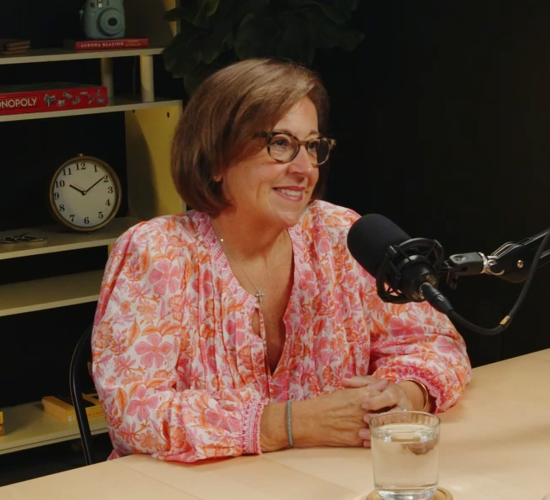
The Birmingham Greek Festival runs for three days, and the people who put it on work on it all year. This week on The Localist, host Carrie Rollwagen is doing something a little different. Instead of sitting down with a small business, she talks with Agatha Pihakis, who chairs takeout and drive-through at the festival, about what it actually takes to feed close to 40,000 people on a closed-off city block downtown.
The story starts small. In the late 1960s, the city of Birmingham ran an event called the Festival of Arts at Boutwell Auditorium, and each year it honored a different country. The year it honored Greece, the organizers asked the ladies of Holy Trinity-Holy Cross Greek Orthodox Cathedral to set up a booth of Greek pastries. They sold out. At the time you could not buy Greek pastries anywhere in town, and that one booth became the idea for a festival of their own. The first one was a bazaar in the church gym. Today the Birmingham Greek Festival takes over a city block, and it is still run entirely by volunteers.
Agatha walks Carrie through how the Birmingham Greek Festival actually runs, and this is where the episode gets useful for anyone planning an event. Setup alone takes a week. All of the pastries are baked over the summer, including 25,000 pieces of baklava across 150 sheet pans, because nothing can be made on the fly during the festival. The kitchen turns out 600 full pans of pastitsio plus 1,200 frozen half pans, and the money from the frozen pans is donated. Tommy is the festival’s numbers guy. He keeps an Excel workbook that compares every sales number five years back. That tells the team what is growing, what is falling off, and how much salad to order. They pull live register numbers at 2:30 each afternoon so the kitchen knows what to put in the oven. Agatha photographs every table and every extension cord before teardown, because you only do this once a year. She also times the line. She walks to the end of the block, follows one customer to the register, and it usually comes out around 20 minutes.
They talk about the hard years too. The festival opened 10 days after Sept. 11. Nobody in the parish wanted to have a festival at all, but the food was already made and the bills were already due. They hoped to break even. Instead they sold out of everything, and people thanked them for going forward. A few years later they were a couple of weeks past Hurricane Katrina. They donated the proceeds to relief and had the most volunteers Agatha had ever seen. COVID forced them to rethink the flow and pre-package the pastries, and they kept both changes because both worked. Agatha closes with advice for visitors. Park free in the old Liberty National garage. Take the church tour. Catch the dancing that runs every 30 minutes. And know that there is no admission fee, so you only pay for what you want to eat. Her one request for anyone coming to the Birmingham Greek Festival is simple. Pack your patience, because everyone behind the counter is a volunteer.
Birmingham Greek Festival Topics Covered in This Episode
- How the Birmingham Greek Festival started as a pastry booth at the city Festival of Arts
- The first festival: a bazaar in the church gym with art, knickknacks, and food
- Growing from one gym to a closed-off city block serving close to 40,000 people
- Why a three-day charity festival takes a full year of planning
- The week of setup before the doors ever open
- Summer baking: 25,000 pieces of baklava, koulourakia, and kourambiedes made by hand
- 600 full pans of pastitsio, plus 1,200 frozen half pans sold for charity
- How the festival picks new charities every year and why it changes them
- Working with the city of Birmingham to shut down a street
- Opening 10 days after Sept. 11 and hoping only to break even
- Donating the proceeds after Hurricane Katrina and getting record volunteers
- The COVID pivots that stuck: pre-packaged pastries and the tent across the street
- Photographing every table and every plug so next year is easier
- The Excel workbook that tracks five years of sales numbers
- Pulling point-of-sale numbers at 2:30 so the kitchen knows what to cook
- Projecting Friday sales to avoid running out on Saturday
- Running takeout and a three-lane drive-through that outsells the walk-up line
- Timing the line and keeping the wait to about 20 minutes
- On-the-job training for volunteers and opening with no soft launch
- The follow-up meeting where every chairman reviews what worked
- Weather plans, flooded drive-throughs, and a tornado siren with 1,000 people in the street
- Free parking, church tours, no admission fee, and what not to miss
Mentioned in This Episode
- Birmingham Greek Festival
- Holy Trinity-Holy Cross Greek Orthodox Cathedral
- Food for Our Journey
- Life on Wheels
- Firehouse Shelter (Firehouse Ministries)
- The Salvation Army of Birmingham
- American Red Cross of Alabama
- Children’s of Alabama
- Magic Moments
- Ronald McDonald House Charities of Alabama
- Boutwell Auditorium
- Birmingham-Jefferson Convention Complex (BJCC)
- Infomedia
Follow Carrie Rollwagen
Connect with the Birmingham Greek Festival
Agatha Pihakis chairs takeout and drive-through for the Birmingham Greek Festival, a job she has held for about 25 years, and she is a past chairman of the festival itself. She is a lifelong member of Holy Trinity-Holy Cross Greek Orthodox Cathedral in downtown Birmingham.
Listen to The Localist on Spotify & Apple Podcasts
Thanks to Our Sponsor, Infomedia
The Localist is sponsored by Infomedia. They are a Birmingham-based web and digital marketing company. They help small businesses grow online.
Join Us at Localist Lab
Localist Lab is a free event series for small business owners. It meets on the third Thursday of most months at Saturn in Avondale. Free tacos and coffee too.
Subscribe to Carrie’s Newsletter
Want more small business tips from Carrie? Sign up for her newsletter.
FULL EPISODE TRANSCRIPT
Below is the full transcript of this episode of The Localist with Agatha Pihakis of the Birmingham Greek Festival. This transcript is provided for accessibility and SEO.
_______________________________________
Carrie (00:12): Welcome to The Localist, a podcast for small business owners where we talk about the highs and lows of building community through entrepreneurship. I’m your host, author of “The Localist” book and small business consultant Carrie Rollwagen. The Localist is sponsored by Infomedia, a Birmingham-based website and digital strategy company based here in Birmingham, where I work as senior vice president. At Infomedia, we help small businesses get big results online. Today we’re trying something a little different with the podcast. Instead of having a business on, we’re actually going to talk about the Greek festival. So if you’re in Birmingham, you already know the Greek festival is a huge deal. They expect, I think, 40,000 people this year. It’s over three days, and it’s going to be October 1, second, and third. They take over a whole city block, and it’s a real celebration of all things Greek, especially the food. We’ll talk more about what is actually involved on the podcast. But last year, when I went to the Greek festival, I thought, I really want to have them on the podcast, because there are so many logistics involved in putting this on. I really think it is fun to dig into that if you are running a charity or running an event, but also if you’re running a business, because a lot of us have to do events like this, and I think there’s a lot to learn here. Our guest today is Agatha Pihakis. Agatha is chairman of takeout and drive-through at the festival. They have a lot of different people chairing different departments, and you’ll hear more about that. We get into how they organize, how they take photos to remember how things are set up, how important numbers are in predicting what they’re going to sell next, and what they do about weather. We talk about different times the festival has had really difficult moments, because the festival has gone on so long. We talk about Sept. 11. We talk about Katrina and COVID and how the festival has adapted along the way. I learned a lot in this episode. I hope you’re going to love it, whether or not you’re planning an event of your own, or you want to use some of these tips for your business, or you just really like the Greek festival and want to know more about it. We’ll also put a link in the show notes to their website. You don’t need tickets to attend the festival, but if you want to check it out so that you can plan to go, the details are there for you. Well, welcome to the podcast.
Agatha (02:38): Thank you so much for having me.
Carrie (02:40): I’m excited. This is different than what we usually do, because normally we have a business on and kind of drill into everything about the business. But the Greek Food Festival is such a huge part of Birmingham. It’s not exactly a business, but you do have to organize so much. So I thought it’d be really cool to actually talk about that.
Agatha (03:03): Oh my God, yes. You know, it takes us a year. We’re constantly working on it. We’re always talking about it. We’re always looking at ways to improve or change something or add something, and it takes a lot of work. It’s a charity. We’re a church. But it is like opening a business for three days. You open it up and then you break it down.
Carrie (03:30): The worst days of a business are your first three days, and that’s what you have.
Agatha (03:34): Oh my God, Thursday. Oh, Lord. That is when you’re just in a panic. You just don’t know. You’ve done all the preparation you can possibly do. You’ve got your food ready, you’ve got your volunteers, you’ve got the equipment, but there’s always something that pops up that you cannot foresee or plan on, and you just don’t know how it’s going to go.
Carrie (03:59): So if people are listening from outside of Birmingham, or even if they’re in Birmingham and they’ve only heard about it, can you explain what the Greek Food Festival is?
Agatha (04:09): Well, to give you a little history: in the city of Birmingham, they used to have this event called the Festival of Arts, and it was down at Boutwell Auditorium. Every year they would pick a different country to honor or highlight, and everything would be geared around it. One year they picked Greece. This is in the ’60s, late ’60s, early ’70s. They picked Greece, and they asked the ladies of the church if they could do a booth with Greek pastries. So they made these pastries, had a booth, sold out, and that was the first thought of, let’s have our own event.
Carrie (04:53): And at that point, there wasn’t anything like it. It was going to be very popular.
Agatha (04:59): Oh, yeah. But think about it. This is the late ’60s, early maybe 1970, if it was even that date. I think it was like ’69 or something. There wasn’t anywhere you could go and buy Greek pastries. Nobody had probably had Greek pastries other than Greeks. So to have a booth and have these pastries and sell out, that was just totally amazing.
Carrie (05:26): It’s like competing with the Jell-O salad or something. That’s the dessert you normally have.
Agatha (05:32): The chocolate chip cookie, right. So the women were like, hey, I think we can maybe do something on our own. So the first festival was in our gym. They called it a bazaar, and we had different booths where you could buy different items. A lot of it wasn’t Greek. It was just all kinds of different booths, like art or knickknacks and stuff like that. And then they had food, and that’s where it began. And now we’re serving close to 40,000 people, and we’re in a city block. So it went from one small idea to this massive undertaking.
Carrie (06:16): You still have the food, and then you do dancing and things like that. Tell me about all of it.
Agatha (06:26): First we have church tours, which I totally encourage everybody to take. The church is absolutely gorgeous. It’s a basilica. It’s full of Byzantine iconography and just a wealth of information, and you can also learn about the Eastern Orthodox Church and Orthodoxy. So I really encourage everybody to come in and visit it, see the architecture and the art, and also ask some questions and learn about our history and faith. And then, of course, the kids start dance practices in the summer. They practice every week doing traditional folk dancing from Greece, and they start at, I think, six years old. That’s the youngest group, all the way up to college age. So there’s entertainment, and we have a Greek band, and of course we have Greek food, and we have Greek souvenir items and some other things that you can shop and experience. It’s just a great, fun time, something different to do in Birmingham. The food is awesome. We make it all on premise. It’s cooked fresh.
Carrie (07:39): For anybody listening, it’s a huge deal. We have somebody at Infomedia, where I work, who moved away and he plans his trips back around the Greek Food Festival. So I feel like it is something people really look forward to.
Agatha (07:56): That’s awesome. It’s a lot of fun. Even kids enjoy it, because of the live dancing and the music. And we like to have fun. We work hard, but we like to have fun and enjoy ourselves too. So it’s a good time. And like I said, the food is great.
Carrie (08:12): It really is. It’s fantastic. So you mentioned things like the dancing. It seems like maybe those wouldn’t necessarily be part of what kids were taught if it weren’t for the festival. Would we have the dance classes through the church anyway, or is it more like, no, we all learn the traditional dances and we just happen to have the festival?
Agatha (08:40): No, you grew up learning it. You go to weddings and you’re Greek dancing. When I was growing up, we had Greek school, which they still have. We all went to Greek school after school for a couple of hours, and you learned some of the Greek language, and you would learn dances and songs and stuff like that.
Carrie (09:02): Do you learn modern Greek, or …
Agatha (09:04): No, it’s more like Bible. The Greek school is more just a cultural thing. And your grandparents sing you Greek songs, and you Greek dance at weddings and other events.
Carrie (09:21): Celebrations.
Agatha (09:24): This is just a way for us to share our culture. The majority of us now here in Birmingham are born here in the states. We’re American. But our grandparents were all immigrants, so they started the church here in Birmingham, and we’re active in the church, and we all grew up here. This is our social network and our culture and spiritual life, because church always comes first in a Greek family.
Carrie (09:52): Do you think the festival helps to be almost like a pillar to build around? Even though it’s you sharing your culture and religion with the community, does it give you something to build toward?
Agatha (10:10): Absolutely. Historically, if you go back to the turn of the century when Greeks were immigrating here, they were not popular people. There was a lot of discrimination and mistreatment against Greeks, and so job opportunities were not there. They worked in the mines or in restaurants. This is what they could do to make a living and provide for their family. So for my grandparents to have come then, to where we are today, is so drastic, and a lot of it has to do with festivals. Being able to share your culture and your food and your faith with people who are not of that heritage, and then they experience it and want to be a part of it. We’ve seen tremendous growth in our church, and we are in the mainstream of America now, in all walks of life, in jobs and professions.
Carrie (11:19): And there’s a strong Greek community in Birmingham too.
Agatha (11:25): Yeah, huge.
Carrie (11:26): So that’s cool. I think there are plenty of Greek people at the festival, but there are also just, like, everybody’s at the festival.
Agatha (11:35): Oh, absolutely. We welcome everybody. You don’t have to be Greek to be a member of our church. We’re culturally Greek, but anybody is welcome to join and be a Greek Orthodox. And of course now, like I said, most people are not married to another Greek person, and everybody’s been born here in the states, so we’re American with Greek heritage.
Carrie (12:03): Well, let’s talk some about the planning for the festival, because you mentioned that you start planning basically a year out. Do you take a week off after the festival, or do you roll right into the next one?
Agatha (12:21): A lot of us take the week off prior. It takes us a week just to set up, just to put out the tables, the chairs, get all the equipment in and cleaned and set up and wired. All that takes a week. So I know a lot of people think, oh, your festival’s three days. I’m like, no, no, for me it’s seven. I’m down there the whole time, and there’s a whole bunch of us that are like that. You’re there the whole week setting up. But we also have meetings. We’re on the phone. We’re texting each other continually, prepping. The summer is the push, so we start baking. All the pastries are made, except we’ve got one more to go, which is the koulourakia, the butter cookie, and I think that’s tomorrow. They start making those, and that’s the last one to make. So the pastries are all made, and then we’ll package them next week, which takes us like three or four days just to package everything.
Carrie (13:23): And you do them in the kitchen at the church?
Agatha (13:25): Yes, we make it all there. It’s all volunteers. So somebody will chair, say, the baklava.
Carrie (13:31): When they’re in charge of a job. I mean, a hard job, but a cool title.
Agatha (13:37): I don’t think they look at it that way, to be honest.
Carrie (13:40): It’s a very hard job, but I like the title.
Agatha (13:45): So you have somebody in charge, say, of baklava. And then a few of us will go down there and we even prep the nuts and the cinnamon and the sugar and everything, and have it pre-measured out. And then everybody comes in, all the volunteers, and we make, I think, 150 sheet pans. So it’s around 25,000 pieces of baklava.
Carrie (14:15): Do you ever make more during the festival?
Agatha (14:19): Oh, no, no, no. There’s no way. This stuff is so labor intensive, and the kitchen is making the chicken and rice and the other food, so the kitchen is busy. All the pastries are done ahead of time, because they’re made by hand. Even the wedding cookie, the kourambiedes. This is all by hand. You put the dough out, roll the dough, cut, cut, cut. Then you have to hand sugar. So it’s nothing that you can just whip up and make on the fly. That’s all made ahead of time. And also the pastitsio, which is what we call the Greek lasagna dish. We make 600 full-size pans of that to be sold at the festival, and then we made another, I think, 1,200 of the half pans that we sell frozen. Again, it takes a week to make those, and that’s all made and put in the freezer so that we can just bake it fresh at the festival.
Carrie (15:26): Are there other things that you sell frozen at the festival?
Agatha (15:31): No, the pastitsio is the only thing you can get, and it’s only while supplies last. So it’s first come, first served on that one, the ones that are frozen, and we sell out of those. And actually, a little fun thing too: the money that we make on that pan is donated. So all that money goes to charity.
Carrie (15:57): We talked a bit about that before the podcast. You have a few charities. I think it’s Food for Our Journey this year, and then Life on Wheels.
Agatha (16:13): Correct. These are the ones we’ve picked for this year that we’re going to support. We change the charities every year, because we believe it’s important to share our good fortune with others that are in need. We also support the Firehouse Ministries every year. Actually, we’re there today. I’m leaving here and then I’ll go there and serve at the Firehouse Ministries. We go there every month and provide lunch, and we’ve been doing that for, I don’t even know how many years, the past 20 years, I guess, since it was founded. So we support them, the Salvation Army, the Red Cross. We’ve supported Children’s Hospital, Magic Moments, and Ronald McDonald House. These are all very worthy charities in the city of Birmingham, and there’s many more, but we pick different ones every year to contribute to.
Carrie (17:12): So the festival gets connected with different charities and sort of puts a spotlight on them.
Agatha (17:20): It’s great, because all these people see our publicity or they’re coming to the festival, and we want them to be able to support these charities too and know about them. We give the charities an opportunity to spread their word, so it’s really a great way of sharing and giving back. Since we are downtown and we’re part of the city of Birmingham, it’s important to support everybody down there.
Carrie (17:43): I think that’s great. I also wanted to talk some about the block, because you shut down a city block for this. When did that start? It seems like a while ago. And you have to coordinate with the city at that point, right?
Agatha (18:03): Absolutely. Well, we own all the buildings on that block. There’s three buildings, and then we own the parking lot across the street. First, oh my gosh, I guess it was over 30 years ago, we started a drive-through, and this is way before anybody else had drive-throughs. So we had a lane closed. But as the festival grew, and I know that it was probably in the last 20 years, well, maybe a little bit longer, we had to really start to shut down the street, because we outgrew the buildings and we just had to go.
Agatha (18:48): And there were two big events, unfortunate events, that really changed the course of the festival. One was Sept. 11. We were 10 days after Sept. 11.
Carrie (19:04): Oh, wow.
Agatha (19:05): And that was a really tough decision for the church to make, because nobody wanted to have a festival 10 days after Sept. 11. We were all mourning. But we had to go forward, and that really changed the trajectory of what we were doing. And then the next one was Katrina. We were, I think, a couple of weeks after Katrina at that time, and we actually decided as a parish to donate our proceeds to Katrina relief. That one event changed our numbers pretty heavily. We went from an average festival to a much bigger festival, and that’s when we had to go to the city and say, we’ve got to block this street.
Carrie (19:59): And COVID.
Agatha (20:01): COVID caused more changes. And again, we decided to go forward with a festival, and it blew up on us. It just got bigger and bigger. And that’s when we brought the tent in across the street.
Carrie (20:19): It does seem like, of course, it’s a very difficult decision in each of these situations, but it is also a time when it’s important for people to gather. So it’s like you’re serving the community in another way. After Sept. 11, just being together, I think, was important. And I don’t think it had started yet, because it was so quick, but there was a whole, well, we have to return to our lives thing then. Ten days after, you didn’t know that was going to be the way people were going to go.
Agatha (20:57): You are exactly right. And because we’re coming up on the anniversary of Sept. 11, I remember we met after church, and there were about 25 or 30 of us in the board room. It was the parish council and all of us that were the different chairmen, and we sat down and had a very serious discussion about what do we do. Nobody wanted to have a festival, but food had been prepped and made, the pastries had been made, we had bills to pay, deposits had been made. What do we do? And our goal was to break even. That was all we hoped for. We were like, if we go for it, if we could just break even, that’s great. And that’s what we thought would happen. Nobody was going to come, and we would break even. And then we opened the doors, and it just went. It was huge. We were packed. We sold out of everything. We couldn’t believe the response. And what you said is exactly what happened. People were coming up and thanking us for going forward, for not letting the terrorists win. We’re going to be American, we’re going forward, and we want to celebrate, and we’re here.
Carrie (22:19): And just being together.
Agatha (22:20): Absolutely. Everybody got out of their house.
Carrie (22:22): Obviously we’re more like this now than we were then, but even then, we were watching everything on TV. Not phones then, I don’t think, but …
Agatha (22:33): No, right. We were glued to the television. You didn’t leave your house.
Carrie (22:36): So just getting together. Same thing with Katrina, because there were a lot of people displaced who were here.
Agatha (22:43): Yes, which we fed them too, at the BJCC. We did. And that was another one where we said, we’re going to support it, and we’re going to donate. Actually, I was chairman of the festival that year, and I had some people telling me, oh, you’re not going to have any volunteers. Nobody’s going to come down there and want to work and give away all the money. And actually, that was the year I had the most volunteers and the most enthusiasm. We were just thrilled to do it. One member of our community said she had never been more proud of her church than when we said we’re going to do this and we’re going to give it away.
Carrie (23:29): Well, the community affected by Katrina is so close to us, so being able to help that way. And also just literally close to us, because they were staying here.
Agatha (23:41): They were right down the street. And we had people come in who were there temporarily. I don’t want to say refugees, but they had come, and they came through the lines, and they were thanking us for doing it.
Carrie (23:56): So with a festival like what you guys are doing, normally it’s very fun and you think of it as just a celebration, but it is cool, especially with the tie into the church and charity. That’s another benefit of it, and just being together as people, especially in a culture that’s so siloed off, is important.
Agatha (24:22): And it adds a lot to the city of Birmingham. Isn’t it great to celebrate everybody’s differences and different cultures and ethnic groups? I love it. And we see that there’s a lot more festivals now.
Carrie (24:35): Like there’s Lebanese festivals.
Agatha (24:36): That’s right. Middle Eastern. And you’ve got the Italian festival. I love it. I think that’s great, and it makes the city more fun. There’s a lot more to do, and everybody gets out. And we’re definitely a food city. We like our food and our restaurants here, so we’re another element to that.
Agatha (25:03): And for us as a community and a church, it’s just thrilling to be able to open the doors and share everything. Greeks are about hospitality, so to open our doors and say, come on in, and treat everybody like they’re at our home, which it is our home. Come on in and have a good time, and eat food, and Greek dance.
Carrie (25:27): Well, before we totally move off of this, can you tell me some about COVID? How did you all approach that? It’s around this time of year all the time, so if it were in March or April, that would have been a little different. But it seems like it was still probably everybody’s masking up, and you could be outside.
Agatha (25:47): That’s right. So we pivoted again. Here we’re faced with COVID and what are we going to do? And that’s when we said, okay, we can’t use our banquet hall anymore, pack everybody in there or in the parking deck. So let’s put a tent up. So we put that tent up, and we rethought how everybody flowed and the lines, and then how we packaged the pastries. Before, you ordered and we’d have to take it from a tray and put it in a box. We were like, no, we’re going to pre-package everything. So these were things that we had to change, but they were for the better.
Carrie (26:30): So you’re still doing a lot of those things?
Agatha (26:32): We’re still doing all of it. It became, this is great. And these were things we wouldn’t have done, but we got pushed to do. Because you’re always scared to try something new. You just don’t know if it’s going to work. But these worked. We had to, and they worked very successfully. So we’re still doing them today.
Carrie (26:52): It seems like also people coming had a little bit more leeway. During COVID, you’re just trying your best, so some things are like, well, maybe this didn’t work out perfectly, but we figured it out, and they gave us some grace. Whereas if it were just a normal year, customers at any point are not always the most gracious, I guess.
Agatha (27:21): I always say, when you’re coming to the Greek festival, pack your patience. Just remember, we’re volunteers. This is church. We’re not professional. We do it one time a year.
Agatha (27:33): And then the other thing is, I’m in charge of takeout and drive-through, and the chairman Tommy and I, I take pictures every year, because we can’t remember the next year how we set it up. Now we’ve been doing it for like 25 years, but we never could remember, because you do it one time a year.
Carrie (27:57): Photos are great. That’s a great tip, though, because I agree. I even do that with Christmas decorations or something, like, wait, where did this go?
Agatha (28:11): Absolutely. So Tommy will yell, we’ll be setting up, and he’ll go, did you take pictures? Take pictures. And I’m taking pictures of where the plugs are, where the table sits, exactly where everything is, because we can’t remember. And then, what size table did we use? Was it a six foot or an eight foot? How many do we need? So I take pictures every year, and then send them to him. He’ll print them off, and we’ll examine them while we’re setting up.
Carrie (28:43): I think that’s really smart. Do you have other things, like spreadsheets?
Agatha (28:47): Oh my God, yes. Tommy’s our number guy, and we have everything on an Excel workbook. And we compare every number, because this is a festival, so there’s no prediction. You have to look at all the variables, like weather, economy, what’s going on in the world, COVID. So you have to look at everything, and you’re having to predict or project. What are you going to do? So we compare every number. The year before, we can go back five years. We can see the growth. We can tell if something’s selling more than something else, if one’s on a decline or one’s going up, and then we can look at that growth rate and put a projected lift in there. So we know what to order, because you’re predicting how much salad you need. You can’t go to Publix.
Agatha (29:45): When I was chairman, I’ll tell you a funny story about the time we ran out of rolls. My dad says to me, now I was chairman, why didn’t you just go to the grocery store and get some rolls? They don’t have 5,000 rolls. I need a pickup truck. You need a delivery. He had no concept of it. So the numbers are huge. You have to have the stuff ready. So we look at every number every year, constantly.
Carrie (30:20): Do you have a POS, a point of sale, when you ring people up?
Agatha (30:27): Oh, when you register, oh yeah. It’s all computerized. So we know every number of plates, every pastry, everything. And we can get it live, obviously, because it’s all computerized now. So we will pull those numbers at 2 p.m., around 2:30, and we can see. This is important for the kitchen, because then they know what to prepare, what to actually put in the oven. And then we confer with them, so they have the same numbers too. They know exactly what they cooked the year before, and they know if we oversold and they had to put more in, or if we undersold. So we know how to gauge for the evening.
Carrie (31:14): So much of that is trial and error, but also just making sure you keep the records, so that it’s not just gut instinct.
Agatha (31:22): Oh, records. You have got to have those numbers.
Carrie (31:24): Every year: we tried this, this is how it worked out.
Agatha (31:31): Numbers, numbers, numbers. We follow them all. And like I said, that’s how we gauge our days. We know everything, and we can project on Friday if we’re going to be in trouble on Saturday. If we’re sold out of something, we can get deliveries on Saturday morning. So we’ve got to know those numbers to make an emergency call to one of the brokers and say, get us this down here. So you’ve got to know where you’re at, every lunch and dinner.
Carrie (32:05): Well, tell me some about the takeout, because I was happy to hear that you’re the chairperson of that. That part, I feel like you guys do so well, and maybe every festival does it and I just haven’t noticed. But especially working downtown, I think last time we didn’t have a ton of time, so we just went through the takeout line. We still ate there, but it was kind of like, okay, there’s an option. I thought it was really cool that you have that. What are the logistics? Because it seems like it’s a whole other ball of wax.
Agatha (32:41): It is. So my department is the takeout and the drive-through. You can walk up, and anybody can walk up and get your food and take it home, or you can eat on the property. It doesn’t matter. It’s still a walk-up line, but we are servicing those cars too that are in the drive-through. So you have people in the street taking orders. I have runners, and then we have baggers. The baggers are behind me, because I do all the tickets. So they’re behind me bagging up the food, and either it’s a walk-up and it’s going to the person that’s waiting there, or it’s going to the runner that runs to the street and brings it to your car window.
Agatha (33:32): And you’ve been down there, you see thousands of people. We actually do more in the cars, believe it or not. So that’s the scary one. That drive-through. When I say pack your patience, we’re doing hundreds and hundreds of cars, and big orders are going through that drive-through.
Carrie (33:58): I was also just impressed with the system. It felt like, you know when you go through Chick-fil-A and you’re like, oh, they’ve got it?
Agatha (34:04): I say they copied us. I think somebody saw us do it. So Tommy, the chairman, is the one that started the drive-through. Again, it was probably around 30 years ago. We started with one lane, now we have three. It’s that big. That’s going around the city block, the lineup. And we do over half the festival in takeout and drive-through.
Carrie (34:36): Wow. It just seemed really amazing. I really like efficiency when you see it and you’re like, wow, this seems like a nightmare, but they had it. It was still quick compared to what it should have been.
Agatha (34:52): It’s a little nightmare. I time it. I actually time it. I’ll walk down Third Avenue and I’ll go to the end, and then I’ll come back. I’ll watch that person, and I’ll go back, because I’m behind the registers. And when I see that person come up, I’ll time it, see how long they stood in line. And it’s usually 20 minutes.
Carrie (35:12): But it still seems like you can see how much is going on and how much chaos there is. And also just knowing that everybody got the correct order.
Agatha (35:23): We make some mistakes, but there’s very little compared to …
Carrie (35:26): Our party, we didn’t have any.
Agatha (35:27): Okay, good. We’ll go with that. There are some. You forget the salad or you forgot the cookie, but it’s not on purpose. It’s just like you said, it’s such chaos, and you’re doing thousands of orders.
Carrie (35:40): But that’s what was so impressive to me. It felt like an established restaurant. It was about the same mistake rate as somewhere that’s been there for years. But to know that you put this on in three days …
Agatha (35:56): On the job training, by the way. You volunteer, so you come up there and we go, okay, this is what you’ve got to do. You’ve got to do this, this, this, this.
Carrie (36:03): Because normally you’d still be in the soft launch. If you open a restaurant, usually you open it to friends and family, because you know you’re going to mess up your first few days.
Agatha (36:12): That’s right. And so you practice.
Carrie (36:14): And you’re not advertising. But all you guys have is a soft launch.
Agatha (36:19): That’s what I say. It’s like, here we go. And we have people waiting on us. They’ll be in line before we even open. I come in there, I’m down there setting up, but 10 a.m., I’ve got people in line. And they’re looking at me, looking at their watch. I’m like, it’s 10:30. The food’s not even out from the kitchen yet. They’re waiting.
Carrie (36:45): So when things are over, do you all have a way to decompress? Do you have a party? Or are you like, that’s the last thing we want to do, I just want to go home and turn the lights off and watch TV?
Agatha (37:00): Saturday nights, usually as you finish working, all of us end up in the tent. And that’s a time that we all dance ourselves and enjoy and laugh. We’re really good at laughing at ourselves and laughing at each other, and just decompressing at that point. It’s usually like 11 p.m. But we do have a follow-up. We have a couple of meetings. We’ll have another celebration at the church one night, like dinner, and have all the volunteers down and just have a good time. But then we’ll have a follow-up meeting, all the chairmen.
Carrie (37:39): On how everything went?
Agatha (37:41): Oh, yeah. We’ll sit down and go through it. It’s all the different chairmen, because you have a chairman for everything. And we sit down and go over what worked and what didn’t, and we put it up just like a corporate meeting. We have all the boards up and we write it down, and then Tommy puts it on our spreadsheet, and we all get it back. And then we go write down that list and check it off, like what needs to be done. Did we do it? We reevaluate any situation.
Carrie (38:16): What’s attendance like at church that Sunday? Is everybody tired?
Agatha (38:21): Oh yeah, oh my God. I can’t even get up on Sunday. Most of us can’t even get out of bed. And so yeah, there are people at church.
Carrie (38:34): But the funny thing is, I don’t know that I’d get up on Sunday. It’s hard.
Agatha (38:39): It’s hard. Unfortunately, I am usually not there. By Sunday my voice is gone. Everything aches, because you’re standing on concrete. For us chairmen, I’m there at 8 a.m., 8:30, and I leave at 10 or 11. You’re on concrete all day. Plus it’s hot.
Carrie (39:05): In the South.
Agatha (39:06): We’re sweating to death. And then I smell like the lamb kebabs, because the smoke from the lamb kebabs is blowing on me all day, and then you’re just exhausted. But it’s fun at the end. You celebrate. Obviously it was a success. We know our numbers, we see immediately, right then and there that night, exactly what we did. We were over the year before. And we already have all our numbers.
Carrie (39:37): When do you set the date? Do you have it already set, or do you have to work with the city on that?
Agatha (39:44): We basically have now decided. We used to be in September. We’ve changed around the dates, but we’ve decided basically it’s going to be the first weekend of October. September is still pretty hot.
Carrie (39:58): So it’s October. I think that’s why you moved it a little bit.
Agatha (40:06): It was to get away from Labor Day. Having it right after Labor Day is hard, and then also the weather. We were like, well, let’s push it a little bit and see if we can get some better weather. It gives us more time for preparation.
Carrie (40:24): Have you had any weather horror stories? Or is it just, if it rains, it’s always a horror story?
Agatha (40:33): We’ve had some. Years ago, it was a long time ago, we were in a tent over in the parking lot where the tent is now, and the whole festival was in the tent, and there was a storm, and that tent almost went. Everybody’s hanging on to the tent. And then one year, when I was chairman, it rained so bad. It was on a Saturday, I think. It was storming so bad I had to shut down the drive-through. It was blinding rain. It flooded down behind us. It was like a river of water coming through, and I ran and got our electrician. I was like, are we okay? There’s wires. And we were okay, but that was horrible. Everybody got soaked, and all the paper products got wet. And then one time, again when I was chairman, I was standing up on Fourth Avenue on the corner of the drive-through with the police, and the sirens went off.
Carrie (41:28): Oh, wow.
Agatha (41:29): And I said, please tell me there’s not a tornado near us. Luckily, it was not near us. And I turned and looked, and you’ve got 1,000 people in the street. I thought, what do I do? Where are they going? And the police officer said, we’re going to get them all in that parking deck. I thought, how’s that happening? Like, we can shove everybody in. So yeah, there have been some crazy things like that.
Carrie (42:00): As we’re starting to wrap up, what are some things that you’d say, don’t miss this? Maybe things people don’t know as much about, or even something they do know about, but you’re like, you have to see the dancing. What’s the general information people should have?
Agatha (42:24): I think first off is free parking in the old Liberty National building, which is behind us. It’s over on Third. There’s an entrance on Third Avenue South. It’s free parking, so I encourage people to park there instead of driving around trying to find a parking space. Just go park in that deck.
Carrie (42:42): I was going to ask, where’s the secret parking? There it is. We all park in it. That’s where to park.
Agatha (42:47): In the old Liberty National building. Just come and know that it’s going to be crowded, but it’s going to be fun, and it is fast. It’s faster than you think. I always say, where are you going on a Friday night that you don’t wait for a table? Or you have to have reservations. So just come and enjoy yourself. But I encourage everybody, do the church tours. Don’t miss that. And then of course the dancing. There’s dancing every 30 minutes, and different groups are going to perform, and it’s a lot of fun to see. And then you’re just going to order whatever it is that you want to eat, off the menu. So you just pay for what you want to eat. There’s no entrance fee, there’s no admission fee, so you just pay for what you want to buy.
Carrie (43:44): I think that’s good to mention, because I don’t think people know that. You can kind of just go get the lay of the land, walk around. The no entrance fee is important.
Agatha (43:55): Absolutely. You can come and just watch the entertainment if you wanted to. But you can come down and eat, grab a beverage, then get a dessert. You can stay there for a couple of hours if you want. There’s no time limit. And there are people that will come and just hang out and enjoy the dancing and sit with a group of friends. It’s really a fun night.
Carrie (44:21): That’s awesome. So people should just come down. They don’t need to register. They don’t need to do anything. We’ll put links in the show notes. That’s great.
Agatha (44:33): Come through the drive-through, get a frozen pan for the holidays. Get a pan of pastitsio. You can take it, put it in your freezer, and save it.
Carrie (44:40): And it has baking instructions and everything.
Agatha (44:43): Absolutely. It’ll keep. And then take your pastries home, or get food. I don’t know, if you’ve got friends coming to watch a football game, you can get food, take it home. And we’re there. We’re ready. We’re getting ready. We’re almost there. We’ll be ready and ready to roll, and just pray for everybody’s safety and good weather, and we’ll be there.
Carrie (45:07): Well, awesome. Thank you so much.
Agatha (45:09): Thanks for having me, and I hope to see you there.
Carrie (45:11): Oh yeah, I’m looking forward to it.
Agatha (45:12): Just come to takeout. Come on by. I’ll be there behind the counter.
Carrie (45:17): Awesome. Thank you.
Agatha (45:18): Thank you, Carrie.
Carrie (45:19): The Localist is written and produced by me, Carrie Rollwagen. Our showrunner is Taylor Davis. Our outreach manager is B.J. Eadie, and our producer in the studio with us today is Emory Lambert. Thanks to Infomedia for sponsoring the show and making everything we do here possible. And until next time, whether you’re buying from a small business or running one, thank you for all you do to make our community stronger every day.