
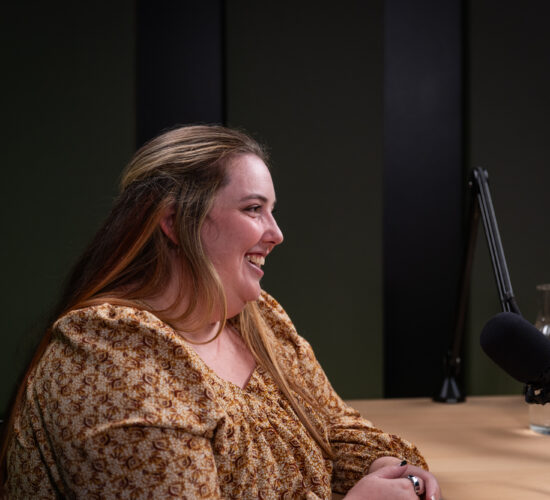
Can you build an AI website if you are not a developer? Laine White did, and it was much harder than she expected. On this episode of The Localist, host Carrie Rollwagen talks with Laine, Head of Growth at PackPay and a returning favorite on the show.
Laine spent years at Uptick Marketing planning and auditing websites. When she joined PackPay, a Birmingham startup that helps food and beverage brands recover retailer deductions, she needed a new site fast. The old one did not work on phones. She was sending cold outreach, and people read LinkedIn messages on their phones. So she vibe coded a new site with Claude Code. She knew what a good site needs. It was still hard.
Carrie and Laine get into what can go wrong. They talk about website security and the recent PHP2Shell vulnerability. They talk about why a CMS matters when a founder hands a site to a marketing manager. And they name the design tells that make an AI website look cheap, like eyebrow text, pill shaped buttons, and little dots everywhere. They also cover semantic HTML, metadata, alt text, and why you should not rewrite your homepage every few days. Carrie compares
This is not an anti-AI episode. Carrie and Laine both use AI every day. They just want you to know that an AI website is a DIY project, not a magic button. If you are a small business owner thinking about building your own site, this conversation will help you decide when to do it yourself and when to get help.
AI Website Topics Covered in This Episode
- Why Laine rebuilt the PackPay website with Claude Code
- How Claude Code and Claude Cowork differ for non-developers
- Carrie’s web development Halloween costumes
- Looks good vs. works vs. converts and ranks
- When a DIY site makes sense for startups and B2C businesses
- Website security and the recent PHP vulnerability
- What a CMS is and why marketing managers need one
- How a site update wiped out PackPay’s analytics
- Design tells that make a site look AI generated
- How AI reads a website differently than people do
- Semantic HTML, H1 headings, and eyebrow text
- Metadata, alt text, and text baked into images
- Why you should not rewrite your homepage too often
- Google indexing and the Street View car
- Using a brand guide with AI
- AI fatigue, accessibility, and cookie consent
- The jagged frontier and whether AI should have a name
- Vibe coding vs. Squarespace
Mentioned in This Episode
- PackPay
- Harmony Venture Labs
- Uptick Marketing
- Infomedia
- Laine’s Localist Lab talk: The Actual Secret to Performing Well on Google, LLMs, and Social Media
- Laine’s previous episode: Local Influencer Marketing
Follow Carrie Rollwagen
Connect with Laine White
Laine White is Head of Growth at PackPay, a Birmingham startup that helps food and beverage brands recover money lost to retailer deductions. She spent years as a marketing consultant at Uptick Marketing.
Listen to The Localist on Spotify & Apple Podcasts
Thanks to Our Sponsor, Infomedia
The Localist is sponsored by Infomedia. They are a Birmingham-based web and digital marketing company. They help small businesses grow online.
Join Us at Localist Lab
Localist Lab is a free event series for small business owners. It meets on the third Thursday of most months at Saturn in Avondale. Free tacos and coffee too.
Subscribe to Carrie’s Newsletter
Want more small business tips from Carrie? Sign up for her newsletter.
FULL EPISODE TRANSCRIPT
Below is the full transcript of this episode of The Localist with Laine White. This transcript is provided for accessibility and SEO.
_______________________________________
Carrie (00:12): Welcome to The Localist, a podcast for small business owners where we talk about the highs and lows of building community through entrepreneurship. I’m your host, author of “The Localist” book and small business consultant, Carrie Rollwagen. The Localist is sponsored by Infomedia. Infomedia is a web development company where I work as senior vice president. At Infomedia, we help small businesses get big results online.
Carrie: Our guest today is a returning favorite. Laine White is here to talk about building your website with AI. When Laine was on the podcast in the past, she was working as a consultant for Uptick Marketing. Uptick Marketing is the sister company of Infomedia, where I work, and Infomedia does more web development and strategy. So together, Laine and I know both sides of the website question: the building side (I don’t actually build websites, but I’ve worked in websites for years) and the marketing side, meaning what your website actually needs to do.
Carrie: Laine is now head of growth at PackPay. She’ll talk a little more about what PackPay is, but she’s coming on today to talk about why she decided to build a new website for PackPay, why she decided to use AI to do it, and what that process was like. She talks about some of the positives, but she and I were talking over coffee, and that’s why she came on the podcast. This was a lot harder than people make it out to be. Laine was saying, “This is hard, and I know basically what I’m doing. It would be really hard for a small business owner or a marketing manager to do this themselves.” That is sometimes what you want to do, but there are drawbacks. So today we talk about all the things you may not know that you need to know, or need to guide AI to do. We talk about some of the drawbacks, and when you might want to choose AI and when you might want to go with a company like Infomedia.
Carrie: Even though I work at Infomedia and the podcast is sponsored by Infomedia, I usually try not to be very salesy about Infomedia. I’m going to lift that a little bit today, because we talk on the podcast so much about how to do things completely on your own. I do say a few times that Infomedia can help you out at various stages in the process. So if you’re interested in working with Infomedia in that capacity, or learning more about it, you can email me at carrie@infomedia.com and I’ll connect you with the person you need. But whether or not you ever want to take us up on that is completely fine. Hopefully you’ll get something out of the podcast even if you want to DIY this and use AI to build a website for yourself. Laine, welcome back to the podcast.
Laine (03:07): Thanks for having me again.
Carrie: I think you’re our most frequent guest at this point.
Laine: Oh, I feel special now.
Carrie (03:13): By audience request. And I think this topic is going to resonate with a lot of people, and it’s an interesting topic for me too. For a little background for the audience: Laine, you worked at Uptick Marketing for a really long time. You’re still a marketing consultant. I think you say you’re “your friend who knows a lot about marketing.” I still recommend people follow you on Instagram if they want marketing advice.
Laine: You’re so sweet.
Carrie: Well, I’m not really. I just don’t want to help them, and you’re very helpful. Completely self-serving. So you know so much about the marketing world, and at the time, Uptick Marketing and Infomedia were sister companies, and Infomedia, where I work, builds websites. Is this correct? You wouldn’t call yourself an expert in building websites before.
Laine (04:06): Certainly not.
Carrie (04:08): But you were an expert in what needs to be on a website and what your site needs to do.
Laine (04:14): Strategizing and auditing websites. The beginning and the end is where I showed up.
Carrie (04:20): So you still know way more about websites, because so much of a site is planning. Even though you didn’t know the code, you knew what you were supposed to do. But then when we had coffee, you said, “Hey, I built this site with AI,” and I was like, wow. So what were you needing to build the site for, and how did that process go?
Laine (04:50): I did not have it on my 2026 bingo card to vibe code my first website. I’ve dabbled a little in some AI classes I’ve taken, but every time I even touched Claude Code, I was like, “This is too much for me.” I was overwhelmed. And I use AI a lot, but differently.
Carrie (05:07): So differently.
Laine (05:10): I think also the language it uses is not something the average person, or even a pretty heavy, experienced marketing person, uses all the time. It’s a lot of dev language. But I recently joined the team at a company called PackPay. PackPay is kind of complicated to explain, and part of the reason is that there’s a lot of nuance to it. It works for a very specific industry: CPG, which stands for consumer packaged goods. So basically snack brands or drink brands that you buy at a grocery store. One of the biggest things I heard when I first got to PackPay was, “What in the heck do you guys even do?” And I realized the number one place I needed to answer that question was our website.
Laine: There already was a very basic website that had been built previously for the startup. But in my first week at PackPay, after I spent a week deep diving into everything I could find about the business, I realized pretty quickly that I needed to flip the website into something more usable. It wasn’t mobile optimized, which meant you couldn’t really view it functionally on a phone. And I was doing a bunch of cold outreach, so people are going to look at their LinkedIn DMs on their phone. Among many other reasons, I needed to flip the website, as I’m calling it, and it was such an endeavor. I had no concept of how much people are doing when they vibe code websites. That’s why I brought it up to you at coffee the other day. So much of what I’ve learned about websites has come from Infomedia, and I’ve always said it’s not as easy as you think it is. There’s a reason there are whole teams and companies that do this. Having done it now, I say that even more. It’s not one of those things where you’re like, “Oh, that was a lot easier than I thought it was going to be.”
Carrie (07:10): We’re finding out so much. The way we use AI is so different, but so many people are still in that chatting-with-AI phase, and that does feel magical. Or just “write a job description for this job.” In my opinion, you shouldn’t be that basic, but you could be that basic, and it still spits out something that looks good and in many cases is pretty good. And it seems like when people say, “Oh, build my website with AI,” they’re thinking it’s going to be like that.
Laine (07:41): It’s not.
Carrie (07:42): One of the things you pointed out is the coding side of things. Claude Code is what you use. It’s not just a different language. It’s also a different way of organizing your thoughts.
Laine (07:56): 100%.
Carrie (07:57): When I started at Infomedia, I was a copywriter, and I knew nothing about technology. So it was so surprising to me, first of all, that devs are creative, and they all do things differently. The way you build a blog is not the same from dev to dev, or from website to website. Of course we have standards. But there was much more creativity than I thought. And they have very organized minds. They have to structure these databases, and everything has to be, in dev parlance, “elegant.”
Laine (08:37): I didn’t know that.
Carrie (08:38): It’s set up in an elegant way, meaning it’s just not a mess. That’s how they’re building their systems. They know this has to pull from a database, so it has to be structured a certain way. And Claude Code especially is structured the way a dev thinks.
Laine (08:58): Yes, 100%.
Carrie (08:59): And works, and that’s very much not how the rest of us usually think. In my opinion, that’s why Claude Cowork exists. This is becoming a little less true, but in a lot of ways you can do the same exact stuff with Claude Code that you do in Cowork. I think of Cowork, and this is derivative, as the “for Dummies” version, for people like me. I’m a manager, I’m a writer, I think in a different way. Cowork is organized in a way I understand, but Code is not.
Laine (09:37): No, it’s not. And I really get lost in jargon and lingo. I talk about that a lot in my marketing philosophies: don’t overuse that kind of stuff. Partly because it’s important, but also because it’s a big pet peeve of mine. And in Claude Code, repos and merging to dev and all this stuff is language I don’t really know. In my first week, luckily, I had a teammate who is a software engineer, and he had to get me set up. I’m not saying it’s impossible to learn. I probably could have spent a few hours to figure it out on my own if I really had to. Maybe more than a few hours, to be honest. But it was so helpful to have somebody who actually understands code and that way of working to help me get set up, because it is challenging.
Carrie (10:26): And you can go back and forth. You could go to Cowork and say, “What’s a repo?” It’s a repository.
Laine (10:33): Oh, look! She knows. I use it every day, and I don’t know that.
Carrie (10:37): This is what a decade working in websites will get you. But really, I wanted to go as a repo man for Halloween, and that’s why I was trying to make it work.
Laine (10:50): That’s perfect.
Carrie (10:51): The tech terms that could be turned into costumes, I’m quite familiar with.
Laine (10:55): You’re definitely going to have to link photos of you in your costumes in the show notes now.
Carrie (11:00): By the time people listen, my 2026 costume will be revealed.
Laine (11:06): Should we back up and share context? Carrie dresses up as a web development-related thing every year. I don’t know that everyone knows that.
Carrie (11:17): Why not? I went as cowboy code one year, which was very last minute but really set off this whole thing. I made a vest out of a paper bag. It was literally, “What do I have?”
Laine (11:37): It’s incredible.
Carrie (11:38): I shouldn’t start defining things, because I define them the way I understand them, and there’s always some dev, usually my husband, who’s like, “Actually …”
Laine (11:51): You’re giving the code definition, not the Claude Code definition.
Carrie (11:53): Right. So, cowboy code. I went as a web designer one year, but I was a spider.
Laine (12:00): Amazing.
Carrie (12:00): And last year I was a resource hog.
Laine (12:06): Oh, love it! And JavaScript was another one, right?
Carrie (12:08): JavaScript, yeah. I forgot about that. And then I went as a headless CMS. I’d wanted to do that one forever. Well, I’ll give you a reveal, because by the time people are listening it’ll be out: cloud storage this year.
Laine (12:28): That is amazing, and very AI forward of you. That’s very different from JavaScript. That’s hilarious.
Carrie (12:34): The costume has electricity. Well, it’s battery powered.
Laine (12:40): Still electricity. I’m so excited.
Carrie (12:41): You heard it here first. But that’s kind of how I interact with this stuff. I’m like, “Oh, that’s a fun thing. I’ll make a costume out of it.” But I don’t know how to pull from the repo. If you’re a business owner listening and you want to do this, there’s a lot of going back. Maybe you go back to Cowork, or maybe you ask Claude Code, “What does this mean? Tell me about it.” But even then, is it going to explain it in a way I understand? I think the people who are having success building with AI are often people for whom this is fun on some level. They don’t mind watching a YouTube video on what something is, because they’re really interested in it.
Laine (13:31): It’s a passion project or a fun hobby for them. But the tricky thing for me is that a lot of people think building a website is just getting it up and having it look good. Then there’s a layer of: is it actually functional? There’s some bare minimum functionality every website has to have, like the mobile optimization I mentioned earlier. Then there’s a whole third layer: is it actually effective? Does it convert? Does it show up? Does it rank? I can imagine that’s where most people would get really lost. I know how to ask Claude for those things, I have a lot of knowledge in those areas, and I know how to read the analytics to see if we’re doing a good job. It is still a lot of time and energy. I have to review my analytics constantly to see if I missed something or forgot something. And it’s especially complicated when you don’t have a CMS, which you often don’t have if you’re vibe coding.
Carrie (14:26): I do think it’s tough for a business that’s an established business. PackPay is a legitimate business, so you’re having to cross all the T’s and dot all the I’s. I think it depends on the business. Even with a startup, what you do is going to evolve over the next few months, so your website should be easy to evolve. I think AI is a good choice for that. Or if you have a B2C business, like a coffee shop, and you don’t have the budget, the stakes are lower. If you don’t set something up, it’s not the end of the world. It’s a little different.
Laine (15:05): If you’re using your website as a brochure, something you just hand to people, and you attend to the bare minimum basics, you can probably get away with something like that. It’s more when you’re trying to use your website for marketing that you can get yourself into trouble, and it can go bad real quickly. You can get way off the rails before you know what you’ve done.
Carrie (15:29): So let’s talk about some of that. How can it go bad?
Laine (15:33): First, something I think is really boring, but it’s worth saying, and I’m saving the fun stuff for after: a lot of people don’t think about website security. Working at Uptick, I learned firsthand how important that is. We had clients with very high security needs, like a bank or a hospital, where there are really important private details for customers. Much less if you take payment on your website. There’s a lot of risk. And I think a lot of business owners, especially entrepreneurs, are not all that risk averse. That’s some of what makes a good entrepreneur. But those things don’t matter until they really, really matter.
Laine: Security is something I’m very cautious about. I was actually asking our software engineer about it the other day, because I really feel out of my depth on the security piece, and he knows a lot more than I do. He keeps an eye on that, and I asked him, “What else do we need to do? How secure are we so far?” He said that because our website isn’t very big, there’s not a lot of surface area that could be hacked right now, so it’s not as high of a risk. But the bigger you build your website, the more ways in there are for someone to hack it and do damaging things. That makes me a nervous wreck. And there have been some major security things happening recently.
Carrie (17:01): The PHP one.
Laine (17:03): You probably know way more about that than I do.
Carrie (17:04): For people listening: PHP is a language. A lot of the internet, probably 70%, is built on it. A vulnerability was discovered by AI that would have been so time-consuming to find that the chances a human would have found it were kind of low, but the chances an AI could find it were high. They announced it, and a patch came out, but the patch came after the announcement. So a lot of huge companies took their websites down and said, “I’d rather not have a website for a day or so than take the risk.”
Carrie: And your point about surface area is part of the risk. Hackers can steal data, and that’s a huge thing. Because you worked with Infomedia, you know a lot of what we do with clients is find secure ways to store their data. A lot of times the data isn’t even stored on the site. You wouldn’t know that if you’re building your own site, because the site can store it, and we know when to say, “You should not do this. Here’s an alternative.” To the user, it’s the same experience. But with that vulnerability, hackers can not only take information, they can also change wording on your site. They can put up a page that tries to trick or hack people. And the more pages you have, the less likely you are to find the things that have been put on your site.
Laine (18:36): That is really scary. As someone who’s responsible for managing a brand, we have investors in our business that are very important large businesses, and that would be a huge concern if it were an issue for us. So security is not one of the super exciting parts of this, but you have to at least consider it and be aware of the level of risk you’re willing to take on. Sometimes you’re still going to do what you’re going to do. But if you’re taking payment on your site, you’re probably going to need to lock it down a little more.
Carrie (19:10): And it’s not just payment. Even emails, if your client information gets out. There are best practices. An email getting out is way less serious than a credit card number or medical information. And there are ways to build more secure forms on this kind of site and mitigate that risk. Technically, you could probably even do that with AI. But so much of what makes it hard is that you don’t know what you don’t know.
Laine (19:45): I think that’s the biggest thing. It’s not that you couldn’t vibe code it. I think that’s important to say, because a lot of people assume you can’t do the same things. In theory, if you can’t now, you will soon be able to do virtually all the same things. The difference is that the person driving the AI has to know what to ask it for. There will be a time when AI catches everything for us, but we’re not there yet. In the short term, there’s so much you have to control and dictate. And if you ask AI to go one direction, it forgets the other, and that’s a huge problem.
Laine: That was coming up for me a lot, because I mentioned CMS earlier. CMS stands for content management system. For those of you who don’t know web lingo: if you have a WordPress site and you log in, that’s your CMS. It’s where you can update a blog or change the wording on something.
Carrie (20:43): You can change what’s on your site without knowing code.
Laine (20:47): Squarespace is a great example. Their whole thing is that they’ve made a really easy, user-friendly CMS, so anybody can get on there and figure their way around the website. For marketers, especially ones who don’t know how to code, that’s what we’re used to. I can at least go in and change the wording, or maybe even move some blocks around on the back end of a website.
Laine: That was one of my issues when I first got in. For example, I needed to put some code on the website so I could track analytics. The analytics were not on the site. And this is a funny side story. It’s a startup, so we’re in extremely early days, and all of this was par for the course. But there was a time when analytics were put on the site, and then they had to make an update to the site, and whoever was prompting it didn’t know it was going to remove the analytics. So there were weeks with no analytics. It didn’t really matter at the time, because we hadn’t gone to market yet. But that’s the kind of thing the average person, or even a really smart person who just isn’t experienced in marketing, wouldn’t think of.
Laine: Normally, you can put that code in the header of your site, or there are ways to add it through the CMS. But that didn’t exist, and I certainly don’t know what part of a massively long list of code it goes in. I wouldn’t even know how to get in and edit that code. That’s why I ended up having to flip the website: there were enough changes I needed to make that I couldn’t just get in and tweak one word. I think that’s a big component people need to think about. I’ve talked to some marketing directors whose business owner or founder vibe coded a site because it was a passion project. They’re excited about it. Then they pass it down to the marketing director and say, “Great, here you go!” And the marketing director says, “To do my work well, I have to change some things, and I can’t. I don’t know how. I have to learn a whole new skill.”
Carrie (22:52): It’s been interesting at Infomedia, because we’ve had clients come to us, and we can put a CMS on the back end. A big part of Infomedia, as you know, is support. We have some clients where the business owner is excited about this stuff. They’re pumped about learning it, they put the site together, and then they’re off to something else that’s super important. And the marketing manager is like, “Help me.” So they get an Infomedia support plan, just a monthly plan. We put a CMS on it so they can make changes on the back end. And when it comes to something like analytics, they come to us and say, “Can you put this on?” It’s been really interesting to see that as the site gets handed down the line. Just because you’re the one vibe coding doesn’t mean anybody can step in and do it.
Laine (23:45): That’s where our software engineer, Trey, had to get me set up. I’m going to use all the wrong lingo for this, but I had to tether into the existing site so I knew the bones of what was there. There was already some brand material attached to that, so I didn’t have to re-upload the whole brand. But part of making a site good is having good copy, whether it’s generated or I write it myself, and having good visuals. Oh my gosh, I cannot express to you how much time I’ve spent trying to make the site not look like an AI-generated site. I’m a little pickier about that than the average person, probably. But the trends are headed in a direction where, if your site is very obviously AI generated, people are going to have opinions about it. They already do.
Carrie (24:36): Well, the people who know are having opinions. I think there’s a huge percentage of people who get it but don’t realize why they’re turned off. They wouldn’t be able to say, “I don’t like this because it’s generic, or because it looks like an AI site.” They just don’t like it, they don’t know why, and they’ve moved on. That’s the case with so many things in life. It isn’t just an AI thing. So many people say nobody can even tell. Some people can tell on a conscious level, but a lot of people can tell on a subconscious level, even if it’s just, “This looks like a rip-off of a million other sites.” Then it doesn’t look unique, and it doesn’t even look real.
Laine (25:16): Which is really important from a marketing perspective. What are your differentiators? How are you different from the competition? When I see an AI-generated site that’s clearly straight vibe coded, it has the little eyebrows, which is the text above the main heading. That’s a big tell. Or all the little pill-shaped things.
Carrie (25:39): Yes, the ovals.
Laine (25:41): We’ve joked a lot about the little dots. There’s always a little dot everywhere, on everything.
Carrie (25:47): It’s like a junior designer. Junior designers also tend to throw in a bunch of weird design elements.
Laine (25:53): Because it’s trying to be impressive. But when I see a site that’s completely AI generated from scratch, what I think in my head is that the business is really early, so it doesn’t have as much legitimacy as a fully developed, hand-developed site, or that they’re cheap. If they don’t have a lot of money for marketing, I think they’re probably not as legitimate yet. Maybe they’ll be more affordable, and maybe I want to work with a newer business. But in a lot of cases, when we’re making purchases, certainly for our businesses, we want to go with somebody we trust and think is doing a good job. I know you can do a good job with a vibe coded site if you really work at it, and I know this industry. But pretty soon, I think everybody’s going to start thinking that way. They’re going to think, “Wow, this is just like everybody else,” or “This looks cheap.” That’s not a good thing for people to say when they land on your website.
Carrie (26:49): Let’s talk about user experience a little. UX is the industry term. It goes hand in hand with design, and I think AI can usually design a decent site. But can you speak to UX and how it’s different, the actual user journeys and how somebody uses your site?
Laine (27:18): It’s so true. I have a funny story to explain this. I saw somebody the other day talking about common AI phrases, like “nobody tells you this.”
Carrie: “Quietly.”
Laine: Quietly, yes. We’ve talked about all of those. There was another one about rules, like “no one tells you this rule,” and the person asked, “Does AI think we all have all these rules that we operate off of?” And I realized it’s because AI doesn’t know what it’s like to have a human experience. We personify AI so much, but it isn’t human, so it can’t think like we do.
Laine: A great example: I did a big SEO audit one time on a website with AI, because I was testing out some tools. It wasn’t my website. It came back and said there was a bunch of outdated information on the site, and I thought, “That’s a big deal. I need to tell this brand.” I went to that page, because you never trust AI on the first go, and I didn’t find any of that information. It turned out it was hidden on the back end. In a CMS, you might put some content on a page but hide it, then make it live when you’re ready. I used to do that at a previous job all the time with seasonal content. It was still there in the code, but I didn’t need it until that season came back around. So AI doesn’t look at a website the way a human does. It looks at the code and thinks about it that way. It doesn’t really get what it’s like to scroll through a site. It doesn’t think, “This text has a lot of great keywords for SEO because you told me to add them, but now I’m scrolling forever on mobile and it doesn’t look good anymore.” I think it will get better at that. But there’s something really valuable about the human experience, and that’s really difficult to harness well with a straight vibe coded site.
Carrie (29:28): This comes up so much. I spent a lot of my career as a copywriter and website writer, and I was always saying, “Please show them the copy in the website,” because when you read it in a Google Doc, it sounds terrible. It’s really repetitive. The reason is that the way we interact with a site is by jumping around from page to page. You’re hardly ever reading it all.
Laine: Not at all.
Carrie: You’re interested in something, and you click over there. It’s like a choose-your-own-adventure novel. I don’t know if that’s still a relevant reference, but you’re not reading it cover to cover. You’re like, “I want to jump off a waterfall, so I’ll go to page 72,” and that experience is different than if you’d decided to dig for treasure. You read a website by jumping around, and a good designer understands which colors, shapes, and elements get a user to say, “I’m not going to keep reading the homepage. I’m interested in a service, so I’m going to jump right to that service.” They use design to guide that journey. AI is really not there yet. If you write enough prompting, where you say, “This is exactly what I want,” you could probably get there. But it’s really difficult for somebody who’s not trained in that.
Laine (30:55): I think what you just pointed out is one of the most important things in our conversation today. If you tell AI exactly what to do, that’s one thing. If you say, “AI, here are my goals, go do it,” what you get back isn’t necessarily going to hit all those marks. On the first go, it feels like a rough draft where you think, “Wow, I didn’t have to do a lot of work.” But to get to the final draft, I go through and record myself critiquing every single layer of the website to get it corrected to what I actually want.
Laine: I’ve also been dabbling in making some software-as-a-service videos for PackPay with AI. I raw generated some, just “here’s the stuff, make one,” and it was not good. Then I said, “Here’s the story I want to tell. Use this footage.” And it was OK. It still takes a director, someone to tell it what to do and why. That “why” piece is really valuable, because we know how to apply knowledge across everything. Unless you tell AI to apply some feedback to other places, it’s just going to take it for that one moment.
Carrie (32:07): Sometimes it does that, and sometimes it does the opposite and over-extrapolates. I’m like, “I just wanted you to do this. Why did you strip the analytics out? I was just trying to change the color.”
Laine (32:18): That’s so true. And something that keeps popping up for me is what one person can do versus another. I’ve spent a lot of time curating my global settings in AI. Some people keep that outside their LLM, in a file or something. I’m really intentional about it, which is great. The problem is that when I tell someone else how to get the same output I get, they often can’t, because I forget to tell them about the back-end knowledge I’ve fed into my LLM.
Carrie (32:53): We’re finding that so much. AI that’s been developed personally by an expert can do way more powerful things than when you take that same skill and put it into somebody else’s. Sometimes it’s on a very basic level. Somebody here was creating a contract. First of all, I’ve done a lot of feeding mine our current contracts and different brand voices for it to pull from. But I’ve also trained it to go to our About page and spell people’s names right. Theirs was calling Janna “Janice” and misspelling names. Those basic things seem obvious. But a lot of the choices it makes are really interesting. The more you cultivate your own agent, essentially, the more different the work is.
Laine (33:53): It’s so different. And that’s another good point. To understand how I built a successful vibe coded website, you have to understand how much pre-work went into getting the result I got. And to be clear, that was a one-page website. I’m not talking about a really robust website. It didn’t take payment. All it did was explain what our company did. What I had was files upon files of SEO knowledge and theory, and files upon files of brand messaging and competitor analysis. I use an Obsidian vault now, which is kind of complicated, but basically every document in there is tethered to other documents, and it creates this web of knowledge. All of that shapes the output I get. I have that because I have a lot of expertise. I know how to tell good SEO from bad SEO, and I know how to analyze a brand well. The average person isn’t going to know that, and they’re not even going to know their own version of that, because there’s no black-and-white “do it this way and you’re good.” It’s exhausting.
Carrie (35:02): For sure. So let’s talk about something that’s on the tip of everyone’s tongue: semantic HTML. I’m kidding. Did you see your eyes get big?
Laine (35:13): I was like, I’m out of my depth.
Carrie (35:16): I’ll start, but you do know a lot about this, because I’ve seen you catch it on a lot of websites, sometimes human-built websites. I’m going to explain this in a Claude Cowork way.
Laine: Yes, give me the dummy version.
Carrie: All the developers listening, close your ears. We see headlines on a website, and you have the biggest headline. We know it’s the most important as people, because it’s in a key place and because it’s big.
Laine: Visual hierarchy makes it clear.
Carrie: Exactly. But for that to be clear to Google or AI or any robot reading your site, it needs to be an H1. Heading one: the number one, most important heading.
Laine (36:15): I do know what this is now.
Carrie (36:18): Second most important heading? Guess what: H2. Shocker, number two most important headline. You need to actually write that into the code. Otherwise, if you have a bunch of H1s, a machine looking at your site has no idea that the thing you have front and center about your company is the most important. It thinks it’s just as important as the “call us” at the bottom, which is useless from an SEO perspective. That’s one thing I’ve seen a lot in AI sites. They’re full of H1s.
Laine (36:57): That’s a great point. And how would you know that? You wouldn’t. It’s funny, because that was one of the biggest things that clicked for me when I first started working with Infomedia and dove into the SEO world. The example I always use is a Google Doc, where it gives you preset styles like Heading 1, Heading 2, or Paragraph. I also came across this when I was building Squarespace websites, because I would change the H designation based on what I wanted it to look like. I’m so mortified looking back on that years later. I thought it was just a style: “I want to use this style here.” No, it means something super important. From an SEO perspective especially, Google isn’t necessarily going to crawl every word on your website every time. The H1 is the most important one. Google starts there and asks, “Is this the right place to send someone?” If it doesn’t get what it needs from the H1, it’s going to move on. I’m way oversimplifying, but you get the idea.
Laine: And to point out that eyebrow thing again (that’s my new favorite word, because someone recently told me that’s what it’s called), the little text above your H1 is a great example of AI getting this wrong. For our website, one of the rough drafts AI spit out put who we were targeting in that little eyebrow. It said something like “For food and beverage CPG brands,” which sounds helpful, because I always want people to be really clear about who they’re targeting. The problem is that Google isn’t going to read it the way it needs to, even though it’s the first text on the page. That’s a whole layer where, if you don’t know what you’re doing, you can really mess things up. It is an SEO crime.
Carrie (38:56): You’re just losing opportunities. You only have so much real estate on your site that’s a really good opportunity, and you’re giving away some of the best spots.
Laine (39:08): Yes.
Carrie (39:08): Have you seen other SEO mistakes?
Laine (39:11): This one’s kind of funny, because SEO has changed so much in recent years. Good SEO used to mean getting a ton of keywords on the page and making sure there was so much information there. In the early days of AI-generated content, you’d see massive amounts of content, and we still are seeing that. I’m even starting to see it on people’s homepages: there’s just so much stuff all over the page. The problem, to our earlier point, is that AI doesn’t read things like a human does. It can absorb all that information and hold all those pieces in its little AI brain at once. Human beings don’t work that way. We absorb one thing before we go to the next, and if we see too many things, we get lost.
Laine: So often you’ll say, “Make me a great website for SEO,” and it will lean so far into that that it’s no longer good for the user. That’s a natural friction point between SEO experts and user experience experts anyway, and it’s good to have that counterbalance. I’ve debated many times with our SEO teams: “This is great for SEO. Let’s make it better for the user.” And sometimes I say to the designer, “This is great for the user. I need you to put more SEO in there.” There’s also a lot of metadata the user doesn’t really understand.
Carrie (40:44): Metadata is words that are on the back end of the site but aren’t really showing up on the front end.
Laine (40:50): I had to Google it once, because I like to understand the definition of a word. Metadata is literally data that describes data. For example, you’ll have a meta title and a meta description for every page on your site, and that’s very important for SEO. You sometimes see it when you Google something: the text that shows up underneath the link. For my website, PackPay would be the link you click, and underneath there’s a description of PackPay. Google does rewrite those, and if you don’t give it one, it writes its own. But if you give it a really good one, it does a better job of rewriting it, or sometimes it won’t rewrite it at all, which is the best case scenario. Those are details the average user never sees and doesn’t know about. Alt text is another great example. Alt text is text that describes an image. It’s great for accessibility and great for SEO. Two birds with one stone. If you don’t tell AI to add alt text to your images, it’s just not going to do it, because it’s saving your tokens.
Carrie (41:59): I’ve even seen AI-built sites with the text baked into the image. You can see that as a user, but the robots (when I say robots, I mean Google and AI search) aren’t really seeing it. Technically they could read it, but that’s not how they read websites. We’ve been shocked, because at Infomedia we also have people bring us sites that are maybe 80% or 90% done, and we finish them out and launch them, because they get to the point where so much of it was easy and now it’s really hard. We get in there and we’re like, “Oh my gosh, it made all of these images.” So we go back, find the original image, replace it, and actually put the words in as text with an H1 so they’re readable. Stuff like that seems so silly, and it would never occur to a user, but you’re tanking your SEO if you launch with it.
Laine (43:00): 100%. That brings up another good point. Once you get into the vibe coding world, you realize you can change things pretty quickly. In theory, you can make big changes very fast once you have a base website. It’s not really that fast to get it all up in the first place, or it can be, but it won’t be great. Either way, what I’ve run into is that you have to be careful how often you edit your website from an SEO perspective. To your point earlier, sometimes you ask it to change one thing and it changes a bunch of other things. If you’re changing the copy on your website every three days, you’re not going to gain a lot of SEO traction. So I’m literally having to say, “All right, let’s sit on it for a moment. I need to gather some data and let Google figure out who we are before I make any new changes.”
Carrie (43:48): For people listening, blogs are different. Google understands what those are. If you’re adding to your blog or putting up a podcast, that’s a good signal, because it’s fresh content. But if you’re rewriting your homepage every day, it’s like, “This company doesn’t even know who it is. Why would I rank it?”
Laine (44:06): And a lot of people think, “Great! I have this big SEO project. I’m going to rewrite my website.” But Google won’t even index it until it gets around to it, or until you prompt it to. The average person wouldn’t know that.
Carrie (44:16): As soon as you put your site up, it’s not like Google says, “Fresh content!” It’s going to crawl it when it crawls it.
Laine (44:23): Google basically has a schedule for reviewing websites. So you may make a change, and if Google hasn’t crawled and indexed the new version, it’s not benefiting you for that amount of time.
Carrie (44:34): It’s kind of like Google Maps. You look at something and think, “That sign isn’t there anymore,” but it’s still showing because the truck hasn’t driven around with the camera yet.
Laine (44:42): That’s a great analogy. The Google Street View car is basically Google’s crawlers indexing. We need to keep that one in our back pocket. I love marketing analogies like that. But that’s the thing: it’s so complicated and complex. I’m auditing my analytics daily, looking at what could go wrong and what is going wrong, and I’m finding issues constantly. Today I used a free trial of an SEO tool to do another audit of my site, because I wanted a second opinion. And by golly, it found a ton of holes, even though I was really intentional about plugging those from an SEO perspective. There’s still more room to grow. It’s way more involved than I ever imagined.
Carrie (45:28): It’s also weird with finding holes, because sometimes it flags things that aren’t wrong, which is exhausting. Somebody was telling me yesterday, “I got this from a copywriter, but I ran it through AI and there are still a lot of mistakes.” I didn’t see it, so maybe there were a lot of mistakes. But I often take my Substack articles that I write and ask AI to write a title or something, and it always says, “Here are some things you got wrong.” Sometimes it finds things. I get stuff wrong. I’m a human. But every time, 50% to 75% of the things it says are wrong are things you could do either way. I did that stylistically, on purpose. Occasionally I broke a rule on purpose, but a lot of the time it’s not even breaking a rule.
Laine (46:21): Yes, and it’s suggesting, “You should say this word instead of that one.” No, I shouldn’t. I understand words. AI doesn’t have taste. That’s a big component of it. You have to find other examples to give it. I’m not a designer by trade. I can appreciate good design, and I know the difference between good and bad design in many cases. It was important for us, especially in the software industry, not to look like every other software-as-a-service website. I really care about that, because we have to show up in a countercultural way. It was so challenging to come up with anything original for the site that didn’t feel completely derivative of the examples I was giving, but still felt fresh and new. Spoiler alert: it’s because I’m not a designer, and I don’t create a lot of original designs. So me plus AI is only so good. We’re actually going to talk to a brand designer to help us build some elements to use with our vibe coded website, because I was out of my depth on that.
Carrie (47:32): That can be so helpful, and it translates to websites too. I’m not meaning this to be a commercial for Infomedia, but it’s interesting to see a company that did basically all hand-coded sites adapting. I want to use an analogy with making slide decks, because that’s what I do. I don’t make a lot of websites, because I have people for that. But I do make a lot of slide decks, and before AI they would take me forever and still weren’t very good. I never liked the layouts. What we do now is that Infomedia created a brand guide for me in Claude. You’ve actually used the same thing, because Localist Lab has one, and you presented at Localist Lab. We should link to that talk in the show notes. It was a great talk. I think we did the transition then: the first Localist Lab you did was with Canva, and the second was with Claude.
Carrie: Now I can use the brand guide, and then I use my own very heavy prompting to say, “Do this,” and it’s branded. If I had to come up with that brand myself, even with Claude, it would either be very generic, because that’s not my skill set (I’m not visually literate at all), or it would be my ideas, and just weird. But because we worked together on a brand guide, it knows the theory, the color choices, and the font choices. It looks great and it looks branded, but I don’t have to send it to a designer every time.
Laine (49:24): It’s so true. And I don’t want to scare people so badly that they think they could never do anything. I’m just trying to communicate that so much goes into it. As with most DIY things, you have to be prepared for what you’re doing and go in with a clear mind. In this case, I didn’t select the fonts or build our logo. Some of that was already built, and it was still really hard from a design perspective. The more tools you have available, the easier it gets. But it’s still not easy. It’s definitely not a snap-your-fingers-and-you’re-done thing. It’s complicated.
Carrie (49:58): I think describing it as DIY is perfect, because that’s where the disconnect comes from. Some people think, “This is magic, and it’s going to look professional,” and it’s not that. It’s DIY. You’re going to have to say, “I’m going to get in the weeds. Some things are going to go sideways. I’m going to have to research some stuff.” But so many people actually love that process, and it’s cool that you can do that without learning a lot of programming languages. And a lot of local businesses don’t have the budget to do anything else. That’s when you DIY. One of my best qualities as a business owner is being scrappy.
Laine (50:42): Amen. Same here.
Carrie (50:45): So it’s not that you shouldn’t use it. It’s just that it’s not a magic button. Are magic buttons a thing? Wands, buttons, whatever.
Laine (50:55): The easy button. That’s where my head went. I think there’s also something about getting fatigued in the process that really shows up for me. I can lock into something and work on it for hours if I’m focused and excited. But at some point it’s exhausting. Infomedia, at the height of hand coding, spent months nurturing a brand, talking with people, studying, and developing, so the end product was really great. There’s a reason it took that long. The average person asks why it takes so long. I can tell you from the other side, having watched Infomedia do this, how important that time was.
Laine: I had a situation the other day where I built a new landing page. I was so excited. I’d already vibe coded the base site, and this was the second page. I was starting to get the hang of it. I critique website pages all day long, and I got it to where I felt good about it. I sent it to a friend, and she and I send stuff to each other to critique. She said, “This looks great. You just need to add some CTAs.” And wouldn’t you know, I went back, and there was a call to action at the beginning and one at the end, and not a single one in the entire middle of the page. I cannot tell you how many times I’ve busted other people for not putting calls to action throughout a landing page. But because I’d been so close to it, working on it for so long, I missed one of the most important steps in the process. Even if you lock yourself in a room for 12 hours, your brain is going to get fatigued. It has to be a multi-day, multi-week process, and even then you have to analyze data to improve it over time. It’s just really involved.
Carrie (52:54): It is. We don’t need to get deep into this, but I did want to mention that accessibility is another thing that can be difficult. That means creating a website that someone who’s visually impaired or hearing impaired can navigate just as well. That’s important just to be a good human, but it also feeds into your ranking some, and depending on your industry, it might be a legal requirement.
Laine (53:23): It might be required, yeah.
Carrie (53:24): There’s also putting cookies on your site and knowing that in most cases you need a cookie opt-in, what it needs to have, and whether you need a disclaimer about how you’re sharing data. All of these things are pretty complicated. When you’re using something like Squarespace, it bakes all of that in, so it won’t let you skip the question, at least. With vibe coding, it really just depends.
Laine (53:54): It does.
Carrie (53:54): The jagged frontier of AI is also really interesting. AI can be so great at something that you think, “Wow, I barely had to do anything. It’s perfect.” And then something that seems so simple to us, it’s so bad at. That’s the jagged part.
Laine (54:14): I heard that recently, and it’s been such a great example. I was studying whether people care if something is made with AI, and I was also studying the personification of AI. PackPay is software, and we obviously have some AI built in. So the question was, do we need to give our AI a name and make people fall in love with it? There’s something compelling about that. Human beings like a person.
Laine: Oh, Penny! That’s actually great. Penny is really clever, because we work in the finance world. I should pay you for that idea. But we were trying to decide whether to personify it, because that’s a huge thing happening right now. Muse has their little character, and so on. Everybody’s doing it. Some research looked at the personification of AI and whether it made people more likely to use it, and it did, to an extent. The problem is that when the AI then failed, people felt more angry and frustrated when it was personified, because it’s like, “This is a human I’m counting on, and you failed me.” We think of competent people as competent across the board. We don’t expect that jagged pattern, where you can be highly competent in one area and completely incompetent in another that has the same level of requirements. And that’s where AI isn’t necessarily great.
Carrie (55:38): I was also reading something recently about how it’s good to be kind to your AI, because it kind of spirals when you’re not. It’s trained to make you happy, or at least to give you what you need. When you’re constantly saying, “That’s not right, that’s bad,” it tries so much harder to get it right that it starts getting it wrong, because it’s spiraling. Which is so wild.
Laine (56:13): And it’s stripped down compared to a human. A human being panics because they’re crushed and their nervous system is on fire in that moment. But the AI is really just asking, “What else do I try?” And it starts throwing out things that aren’t a great idea, because it’s running out of options. I think that’s a great example. I often have to talk to my AI like I would talk to an employee. That’s another plug for a talk you did, because you talked about how training your AI is like training a real person. You still have to give really good, clear feedback. When you’re vibe coding a website, you can’t just say, “I don’t like this here.” You have to be explicit about what you don’t like, and why, and where. I dictate that into something like Granola. I go through the entire site and dictate this massive transcript. And even then, I give it the full transcript, not the summary notes, because things get lost in translation even in simplifying. It uses a lot of tokens. I’m spending a lot of money.
Carrie (57:13): That’s the new thing. If you’re not blowing through tokens, what are you doing?
Laine (57:21): I work in a venture studio where a ton of people are super smart with AI, and they have all the LLMs. I’m not that cool yet. I’m just on Claude. I was a big ChatGPT person before. But they have every one, and all of them are running all the time. That’s where we’ll all get eventually. It’s crazy to see those geniuses at work.
Carrie (57:39): It is an interesting world. I’m definitely drilled down into one as well. I saw a funny meme, which is probably so over by the time people hear this, that said, “If I have a stupid question, I ask ChatGPT, because I don’t want my Claude to know I’m stupid.”
Laine: Amen.
Carrie: But it is like, when do you go to Grok? When do you go to which one?
Laine (58:05): I still Google things every once in a while. Much less than I used to.
Carrie (58:10): As usual, we have to wrap up. Speaking of Meta, it did say to ask you this: if AI were a human contractor in this process, would you hire it again?
Laine (58:24): That’s a good question. I think it depends on my time and energy. The contractor is only as good as my ability to give it feedback. Just like a real contractor, if you get a cheap contractor who’s not all that great, maybe you get an output, but it’s just a workhorse at that point.
Carrie (58:47): At that point, you’re the general contractor, because you have to stand there and watch and say, “No, that’s not right.”
Laine (58:54): That’s definitely how I feel about vibe coding right now. There are probably ways to automate it more and get better at it, but it takes a massive amount of time. So yes, I think it can do some things if you know what you’re doing and you’re expert enough to control it and prompt it.
Carrie (59:09): Or if you need to save the money, or you’re B2C. And I think startups, like what you’re doing, are a perfect fit. We often don’t even take startup sites. We’ll do branding and photos and all that, but with the site, by the time it’s finished, the company has changed who it is. So I think that’s a great use. Maybe even for influencers. It definitely has its place.
Laine (59:32): My best advice is to weigh the pros and cons of your own vibe coded site versus something like Squarespace, where a lot of that work and training has been done for you. Yes, it costs something, but you’re also going to pay for your Claude subscription, so it kind of all shakes out. There are tools out there that are still helpful, and I’d rather you use them than lose all your time and energy vibe coding a site that’s going to need to change in three months anyway.
Laine (1:00:01): My husband, who owns his own business, has a Squarespace website. He does train Claude to go build the pages on it, because it’s pretty good at that, and I’ve trained his Claude a little on my stuff too. But we still keep him on Squarespace, because if he wants to change the hours his business is open, he does not want to have to go into Claude Code to do that. That’s just complicated.
Carrie (1:00:21): Tell people how to connect with you if they want more of this advice from Laine.
Laine (1:00:27): Instagram is always my favorite place. I’m Laine White, L-A-I-N-E. She’ll put it in the show notes, so I don’t have to spell it all out for you. And I’ve been very active on LinkedIn lately, because I’m in the world of cold outreach now, so come hang out with me on LinkedIn. It’s a fun time over there, and I’m sharing lots of behind-the-scenes of this kind of stuff right now.
Carrie (1:00:46): If you’re into packaged goods, or you know someone who is.
Laine (1:00:50): If you know somebody with a food and beverage brand who’s drowning in their deductions (you may not know what that means, but they will), send them my way.
Carrie (1:00:58): Thank you so much. The Localist podcast is written and produced by me, Carrie Rollwagen. Our showrunner is Taylor Davis. Our outreach manager is B.J. Eadie, and our sound engineer in the room with me today is Emery Lambert. Thanks again to Infomedia for sponsoring the show and making this work possible. And until next time, whether you’re buying from a small business or running one, thanks for all you do to make our community stronger every day.