
Show Notes
AI marketing for small business isn’t just a new tool; it’s a shift in how customers find you, how platforms decide who to show your ads to, and how you should be spending your budget. In this episode of The Localist podcast, host Carrie Rollwagen sits down with Alan Harned, Director of Account Services at Uptick Marketing, to talk about what has changed and what small business owners can actually do about it.
Alan works with small business owners every day on digital ads, SEO, AEO and analytics. He’s honest about what’s working, what isn’t, and where the temptation to over-optimize with AI can backfire. He explains why pausing keywords based on an AI report can actually hurt your campaign, why platforms need 30 to 60 days to learn what a good lead looks like for your business, and why AI marketing for small business works best when it augments the human judgment behind it, not when it replaces it.
They cover hard conversions versus soft conversions, why Google Ads is now prioritizing conversion data more than ever, and how small changes to a website (like adding a schedule button on a schedule page) can turn analytics into real business insight. Alan also walks through small business AI marketing use cases: analyzing your own analytics with ChatGPT, building an AI advisory board of business experts, critiquing your website with LLMs, and catching things like spammy backlinks you did not know were there.
The second half is a live audience Q&A. Alan answers questions on whether customers are actually finding businesses through ChatGPT and Perplexity, whether SEO is dead (it isn’t), how to handle a Google Business Profile you have neglected for a year, whether Google Ads are still worth the money, and what budget you actually need to start working with a marketing agency. If you are wondering how AI marketing for small business fits into what you are already doing, this episode is a practical starting point.
AI Marketing for Small Business Topics Covered in This Episode
- Why AI has accelerated changes in marketing analytics
- Why pausing keywords based on an AI report can hurt your campaign
- Why platforms need 30 to 60 days to learn what a good lead looks like
- Hard conversions vs. soft conversions and why the difference matters
- Why Google Ads now prioritize conversion data
- How marketing data tells you things about your business you did not know
- Where to start with AI when you have no agency budget
- How to screenshot analytics and ask AI to explain them like you’re five
- How to prompt AI as a business advisor, not just a marketer
- Building an AI advisory board of business experts
- How AI caught spammy backlinks on a real client website
- Whether customers are finding you through ChatGPT and Perplexity
- Whether SEO is dead (spoiler: no, but it has evolved)
- How to handle a Google Business Profile you haven’t touched
- How to ask for Google reviews the right way
- Whether Google Ads are still worth the money
- What budget you actually need to work with a marketing agency
Mentioned in This Episode
- Uptick Marketing
- Infomedia
- ChatGPT
- Claude
- Perplexity
- Google Business Profile
- Google Analytics
- Google Ads
- StoryBrand
- Yelp for Business
- Bing Places for Business
- Ohm Jiu Jitsu
Follow Carrie Rollwagen
Connect with Alan Harned
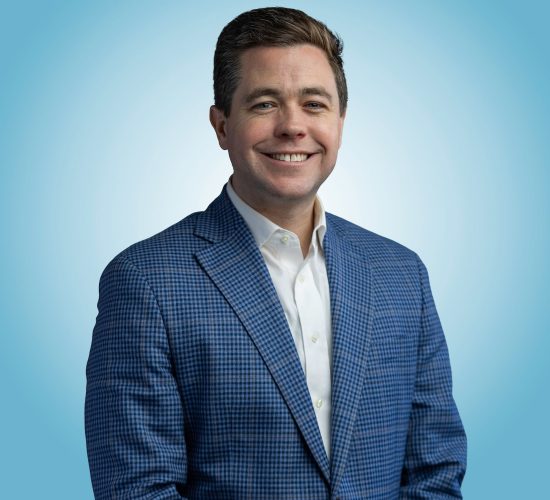
Alan Harned is Director of Account Services at Uptick Marketing, the sister company of Infomedia. He works with small business owners every day on digital ads, SEO, AEO and analytics.
Listen to The Localist on Spotify & Apple Podcasts
Thanks to Our Sponsor, Infomedia
The Localist is sponsored by Infomedia. They are a Birmingham-based web and digital marketing company. They help small businesses grow online.
Join Us at Localist Lab
Localist Lab is a free event series for small business owners. It meets on the third Thursday of most months at Saturn in Avondale. Each session covers marketing tips you can use right away. Free tacos and coffee, too.
Subscribe to Carrie’s Newsletter
Want more small business tips from Carrie? Sign up for her newsletter.
FULL EPISODE TRANSCRIPT
Below is the full transcript of this episode of The Localist with Alan Harned of Uptick Marketing. This transcript is provided for accessibility and SEO.
Carrie (00:06): Welcome to The Localist, a podcast for small business owners, where we talk about the highs and lows of building community through entrepreneurship. I’m your host, author of The Localist book, and small business consultant, Carrie Rollwagen. The Localist is sponsored by Infomedia. Infomedia is a Birmingham-based digital strategy company where I work as Senior Vice President. At Infomedia, we help small businesses get big results online.
Carrie: Today we’re talking about marketing for your small business. As you know, AI has changed everything, and marketing is no exception. If you do digital ads, if you work with SEO, if you have a website, if you’re doing social media, you have probably noticed that a lot has changed. The platforms themselves have changed, and the performance you’re getting has probably changed too. At its root, AI is a big part of the reason. I wanted to bring in an expert so we could talk about what we can actually do about it.
Carrie: Today we’re talking with Alan Harned. Alan is Director of Account Services at Uptick Marketing. Uptick is the sister company of Infomedia, and I bring on guests from Uptick a lot because I talk to them a lot about what is going on with marketing, particularly for small businesses. The advice Alan is going to give us today is basically the advice you would get at a marketing company like Uptick, but today it is free. Welcome to the podcast.
Alan (02:03): Awesome, thanks for having me.
Carrie (02:04): We work together regularly. I’ve been challenged by the staff to trip you up in this podcast.
Alan: That’s gonna be very easy to do. I’m not the best with my words, and I’m really not good with idioms, so much so that there’s a Slack channel dedicated to me screwing up idioms.
Carrie: I’m excited.
Alan: Maybe we should have a counter for how many idioms Alan gets incorrect.
Carrie: It’ll be an Easter egg for people. You can write in.
Alan: Please, keep up with Alan’s idioms.
Carrie (02:51): Being recorded is maybe not your favorite, but you do talk to clients every day about exactly the stuff we’re going to talk about today. I think small businesses are looking at their analytics, their Google Ads performance, all of this, and being like, what is going on? Is that just changing like normal, or has AI accelerated it?
Alan (03:28): I do think AI has accelerated a lot, mostly because people have these tools now, and they’re able to put their information, their analytics, their ad performance into these tools, and then they get massive summaries of what could be done better or differently. Last week I got two reports that were completely AI generated. We were already in process of doing a lot of the things they recommended, which is a good thing, but it’s also kind of daunting.
Alan: Some things AI recommends can seem obvious. For example, if you’re not getting any conversions off a certain keyword, well, you should just pause it. That may not be the best thing to do. The platforms are learning based on what you’re feeding it, and just pausing keywords could hurt the campaign. You can over analyze it. That is partly where some of this is coming from.
Carrie (05:12): That’s a little bit of the benefit of having a marketing consultant you trust. I love that AI puts a lot of this in the hands of small business owners. I wrote a thing this week about how, for a lot of small businesses, it’s not like I could hire a marketing company. Just having access to some of this at all is helpful. But if you can hire a company, it’s helpful because they can say, oh, actually this is not performing, we should cut it. Or, this one needs to warm up.
Carrie (05:56): With algorithms, we don’t necessarily realize that sometimes those need to get used to your behavior in order to work. We think it’s a computer, so it should work immediately.
Alan (06:17): You’re exactly right. One of the things we’re pushing at Uptick is focusing on the in-conversion aspect of campaigns, closing the loop. There was a guy who trained an AI, and this was early before AI was really a thing. He wanted to let his cat out of his house, and open the door when the cat came back. But the cat would sometimes have food in its mouth. He had to process hundreds of images of his cat walking back to his house for the camera to open the door if the cat did not have food, and not open the door if it did. Eventually, once he had enough images, the algorithm knew accurately when to open and close the door.
Alan: It’s like marketing. You have to train the algorithms and the computers to close the loop, so it knows this is a good conversion. We push our clients to feed us information: hey, this is an accurate lead, this is an accurate conversion. Even better if you can add dollar amounts. Then the platforms can find more people like that, or prevent your ads from showing to people less likely to convert.
Carrie (07:58): If your campaigns have been running for a while and you haven’t changed anything, it’s useful to say, what is AI telling me is performing? But if there’s been any adjustment, it’s good to give an adjustment period.
Alan (08:13): Absolutely. We typically say it takes 30 to 60 days at least before you’re starting to see results. Google Ads is now preferring more conversion data than ever, just for the simple sake of knowing what is a good lead. You’re building a trust factor with the platform.
Carrie (08:51): When we say convert, this can mean different things for different companies. When you talk to a business, is it a form fill? Actually buying something? What kinds of things?
Alan (09:18): You think about the final conversion. For an e-commerce site, it’s a checkout. Hurray, you’ve got your shirt on the way. For B2B, it’s this person called and they’re interested in purchasing. We also talk about soft conversions. Someone hit more than one page on your website, so they’re actually researching. They’re trying to figure out, is this the right partner or product? Even adding something to the cart is a soft conversion. More of those indicators are becoming valuable to the platforms.
Alan: That’s really what we’ve tried to push. How can we go all the way and say, I know this person searched me here, or saw this ad, then came to Google, did some research, saw my ads again, went to the website, interacted with it, all the way to the final conversion?
Carrie (10:46): A lot of people don’t realize how much of this data can just tell you things about your business. I’ll use Ohm Jiu Jitsu, my husband’s business. He was able to look at his analytics and see that a ton of people were looking at the schedule page, but there wasn’t a place to book a free class on the schedule page. It was just the regular schedule. He added the button, and the next day he had three signups for a new class.
Carrie: AI can help you with this, but people who actually do this for a living can really look at the behavior on a website. Are these soft conversions turning into conversions? Are people putting stuff in their cart and never checking out? That’s an issue on the business owner side, but marketing tells you about it.
Alan (12:23): I’m a big data person. I love to analyze things through that lens and try my hardest to make data-driven decisions, as opposed to gut-driven decisions. It’s happened in conversations with Jason, our president. Is this a gut decision or a data-driven decision? Looking at, like, we may find something not as valuable, but the reality is it’s getting a good amount of reads, opens, clicks. Let’s not just cut it based on one person’s idea. Utilizing AI to give us that information has been effective.
Carrie (13:30): When you meet with your clients, it seems like a lot of that conversation is about the business. It’s not just, let’s look at this graph. You look at the graph, but they’re saying, we’re launching this, we’re moving away from this.
Alan (14:06): Yeah. Well, and then how can we focus on the business within its own verticals, making decisions based on that. Also, the internet has changed how everybody uses it because of AI. Having a partner you can trust to bounce ideas off, someone you can give full transparency to, matters. What is it actually doing to my bottom line, as opposed to just this one campaign has become stale? Maybe it’s not stale, maybe it has just evolved within your customer’s journey.
Carrie (15:04): If somebody’s listening and they’re like, okay, partnering with a company like Uptick sounds cool, but that’s a Q1 2027 goal for me, I don’t want to wait until then. Where can they start with AI? Say they have a website, a social media presence, they turned analytics on but never look at it. Where would you start?
Alan (15:46): There are several GPTs you can use. I’m a big ChatGPT person, full disclosure. There are custom GPTs in the marketplace. You can utilize some of that to interpret your data. Even just taking screenshots and saying, present this and tell me what I need to know, is beneficial.
Carrie (16:14): You could just take a screenshot and be like, explain this to me like I’m five.
Alan (16:22): Explain this like I’m a kindergartner. Yeah. You can use it for your ads too. Laine, one of our consultants at Uptick, created a custom GPT making sure it answers three of her big questions: Is it clear? Is it concise? Do they know what you’re selling? Taking it from a StoryBrand perspective. That’s been a big aspect of Uptick, making sure our clients make the customer the hero and the client is the guide. Even if you don’t build a custom one, you could say, hey, analyze this from a StoryBrand perspective. One massive reason I like ChatGPT and all the LLMs: they’re going to try to be objective. They shouldn’t sway you. There’s a chance it could hype you up, but yeah.
Carrie (17:28): It’s gonna tell you what you want to hear, but not necessarily lie. That’s on the user. This sounds great, but now argue with yourself. You can tell the AI, give me the other perspective.
Alan (17:49): Challenge it. I do that for pitches and presentations. Where do you see pitfalls? What questions might someone have going against this? I want to be able to argue both ways: why someone should buy, why someone shouldn’t. Utilize it. Start feeding it and asking it to explain things. This is great information, now give me tangible ways I can raise this. Analyze my website. We had a client where ChatGPT found a bunch of spammy backlinks. We asked, hey, tell me what I can do to improve this landing page, and it was like, critical error number one: get rid of spammy casino links. We didn’t know it was on the back end of the website. So it’s going to read images, look and feel of the website, and some code as well.
Carrie (19:12): That’s a great place to start. Assess what you’re already doing. It helps to tell the AI what kind of assessment you want. I wrote a Claude skill to give advice on The Localist podcast. At first I said, act like a podcast producer. It gave me stuff that was really unreasonable for me, because for me this is one part of a business strategy. I’m not trying to gear my whole life toward having a super successful global podcast. Local businesses in Birmingham is a weird niche to global brand.
Carrie: So it gave me all this advice, and I said, actually, I see what you’re saying, but I don’t want you to act like a podcast producer anymore. I want you to act like a business advisor and give me advice as one. Then it was way more in line with what was reasonable.
Alan (20:26): That reminds me of a buddy of mine. He told me about creating an advisory board. He asked AI to have certain people on the advisory board and analyze his website or marketing strategy based on what he was doing, and let them fill in the gaps. It was fascinating. He had Gary V, Alex Hormozi as options. All these marketing and business consultants, hitting their own niche, saying, hey, this is what you could be doing. Feeding it that was cool because it offered multiple perspectives. Let them give me real-time advice with my business.
Carrie (22:03): Uptick’s approach to AI has been interesting and good. You haven’t been like, oh no, this is going to replace us. It’s more like this can supplement what we’re doing. Some YouTube people say all marketing companies are just using AI anyway. That’s true and not true. You’re using it to supplement, to fill gaps. It’s not just running it through GPT.
Alan (22:43): No. All of my emails are answered via Claude, so you’re not getting anything personal. No, I think of it as making us more efficient. I was listening to another podcast about how agencies are using AI for efficiency, whereas in-house teams often aren’t. The biggest reason they were saying is security is a big pitfall within their own company. They don’t know what the rules and regulations are. For us, it’s really more to be more efficient, finding ways to clean things up. I’m not the best writer, so what it does is clean up the stuff I shouldn’t say, or make it pretty.
Carrie (23:54): We all get like that. I used to write for a living, but I’ll write something and I’m like, this isn’t going to make sense, but I’m exhausted, I don’t know where the gaps are. Being able to put that in Claude and say, what am I missing? Oh, you didn’t tell people where to go.
Alan (24:17): Going back to the advisory board, it’s going to give you 20 pages of information, and that’s great. But where do you start? How do you actually put it into action, make it tangible? That’s where using Uptick or another trusted consultant can give you a roadmap. Here’s how to tackle all the things you want to do. We can over complicate it, AI can over complicate it. Finding a path and going down that path is beneficial.
Carrie (25:04): Another misconception about people who come to Uptick or Infomedia. There’s that joke about going to the doctor and saying, well, this is what WebMD told me, and the doctor rolls their eyes. People think it will be like that with us. It’s not. It’s more like, oh cool, this is someone who’s interested enough in their business that they’ve got a lot of ideas. Our teams like you to come with a bunch of ideas.
Alan: Yeah.
Carrie: Then we can be like, we’ve seen that before, this might get tripped up because of this, or this is a great idea, this is going to give you quick returns, let’s start with that.
Alan (25:56): One of my strengths is riffing off of ideas, taking an idea and making it better. The opposite is one of my weaknesses, which is actually just starting. Using AI to come up with several ideas and going, what if we did this, and expanding on it, has been really beneficial. We’re not utilizing it all the way to completion. How can we humanize it? That’s been a big piece.
Carrie (26:42): Okay, I want to go to audience questions.
Alan (26:52): Let’s do it.
Carrie (27:10): First question: Are customers finding me through ChatGPT or Perplexity instead of Google? Is that a real thing?
Alan (27:31): Yes to all of the above. They are finding you everywhere. We’ve started incorporating into our marketing reports how users are finding you through LLMs. It usually comes in analytics as a referral. Google Analytics has broken out another channel grouping specifically for AI. It’s not AI Overview or AI searches, it’s its own line item. There’s going to be things missed within that, but we’ve started to break it out so our clients can see people are finding them on these LLMs. Clients care about it more now. All the questions are about AEO.
Carrie (28:46): AEO would be answer engine optimization. Kind of the way we used to say SEO.
Alan (28:51): Exactly. Within that little widget we have, it’s coming in as a referral source, and it’ll tell you ChatGPT, Perplexity, Claude, all of those are in there. If you have questions, ask ChatGPT, show me how to find my AI traffic. Reporting platforms, specifically Google Analytics, know people are trying to find this information out.
Carrie (29:28): Piggybacking off that, if somebody has been working on their SEO, is that all garbage now? Do you have to do totally different things for AEO?
Alan (29:44): No. It is not garbage. SEO is not dead. Hot button topic: is SEO dead? No, short answer. It’s evolved. At the core of all these changes, thinking about how AI impacts your business, when we get down to it, the core things that have always been there are still there. It’s just how customers get to you. They’re finding you by ways they believe are trustworthy sources. Foundational things are still there. Structuring your content, expert content. E-E-A-T still exists. Google My Business has become bigger within LLMs, which we historically called off-site SEO. SEO is not dead.
Carrie (31:16): Next question. Great, I have a Google Business Profile, but I haven’t touched it in a year. How bad is that? First, tell people what Google Business Profile or GBP is.
Alan (31:34): GBP, Google Business Profile, Google My Business. They renamed it a year or two ago. It’s your online storefront.
Carrie (31:51): That little box, when you’re looking at Google on the right, is the box that has your store hours and stuff like that.
Alan (31:57): Store hours. It offers services you can show, products or services. Takes people directly to those pages. You can utilize it as a micro website. A lot of times we’ve focused on zero click searches. People are getting all their information about your business just by looking on Google. They may not go to your website.
Alan: If you haven’t touched it in a year, it’s probably fine. You should start creating posts. Google does offer its own sort of social platform. Think of it as an announcement platform. You’re running a deal, or you’re closed for the Fourth of July weekend. Google takes that as, okay, they are updating regularly. Within LLMs, they take that as trustworthy information.
Alan: Also focus on reviews. If you haven’t touched your GBP, start floating the idea of getting more Google reviews. I would say LLMs are treating that as more valuable. Quick anecdote. Late 2010s Google Business Profile posts were really valuable. We pushed one a week. Eventually our SEO team said, hey, this has no ranking impact. We stopped pushing it. Then with the growth of AI and LLMs, they put a lot more emphasis on that, so we started pushing it again. Make sure all the information is correct on your website and on GBP. I would also hit Yelp, Google Maps, Bing as the big four. There are other data aggregators, but as long as all of those are accurate and consistent, that’s really what LLMs are doing. They’re not just looking at what Google says. Consistency across the board. And Google reviews. It’s always awkward to ask, but I tell our clients to frame it as, you’re helping other people find businesses like yours.
Carrie (35:36): It’s good to just ask, make it a habit rather than doing a big push. If you try to give stuff away for reviews, Google really hates that. If you get caught, it’s very bad for you.
Alan (35:55): They put out a really big update in April. Do not do this, we’re going to find you. I don’t know how they’re going to find you, but knowing Google.
Carrie (36:03): So it really is just organically asking your good customers to support you. It doesn’t have to be heavy handed. Work it into a process.
Alan (36:18): I’m a big advocate for good quality customer service. I think about myself: I’m going to leave a review if I have an exceptional experience. I want them to know they did a good job, and I want others to know. You may have to elevate and make sure you have the right people interacting with customers. If I know I’m being taken care of and don’t feel forced, yeah, I’ll go out of my way, the two minutes, to leave a Google review.
Carrie (37:06): I remember when you guys pivoted to, we don’t have to post as much on GBP. Then you switched back. That’s another reason to hire a marketing agency. AI may not know about it, because most AIs are trained on data up until the end of 2025. It’s going to give you information that’s a little bit old. Because it sounds right, and because it was right at some point, it’s not necessarily going to be wrong, but you’re going to know things a typical ChatGPT or Claude won’t.
Alan (38:09): A client of ours was talking with a Google customer rep. This was in March. They were basically telling us the things coming within Google My Business. The business owner was like, do you know anything? It’s like, thank you for telling me. Having the ability to talk to someone who’s consistently talking with other business owners can provide more value than delayed information.
Carrie (39:01): You guys at Uptick are very excited about things in the digital marketing space.
Alan (39:12): I so much wanted to game the system one time. I saw this like game of like cheat, and I was like, should we just try this as a company to see if it works? Someone out there saying a hack. Getting people on board. Everyone was like, absolutely, we should definitely do this. It’s kind of funny to see us nerd out over that.
Carrie (39:35): When people talk to you, they’re also getting the benefit of the networks of all the other people who are on top of things. You all have your ears to the ground. That’s not messing up an idiom, maybe.
Alan (40:03): It sounded right to me. That’s usually what I say.
Carrie (40:09): You’re all listening to different podcasts, checking blogs, having friends on Discords about digital media. You’ll hear about algorithm changes way more quickly than an AI, because we think the machine has up-to-the-minute information. That’s not how LLMs work. They’ll tell you. You can ask, what’s the latest information you’re trained on? Claude will say, up until the end of 2025.
Carrie (40:57): Last audience question. We run Google Ads, but I’m not sure they’re working the way they used to. How do I know if they’re still worth the money?
Alan (41:11): Gosh, Google Ads has changed so much, especially in the last three years. It’s becoming harder and harder to stay ahead of the game. Making sure you can close the gap by feeding conversion information is not just about people seeing the ad, but doing what you want them to.
Alan (41:43): Search in general has changed. If your business is heavily B2C, think about how often you’re interacting with AI Overview. I saw somewhere that a high percentage of searches resulted in an AI Overview if they were asking a question. I’d never thought of it that way. Versus ‘plumber near me,’ your ad is going to show up. Google’s not going to show you an instant AI Overview. But if you search ‘who is the best plumber near me,’ likely users are going to get an AI Overview.
Alan (42:33): Customers are still finding and searching you. It’s just how they’ve searched and found you is different. You have to utilize some SEO tactics to show up in AI Overview. How can you win page one within AEO? How can I show up as a reference at the top? Maybe they keep scrolling, so how can I show up in the map pack? On the sponsored post? Organically? All of that has evolved. Google Ads has changed, but so has user behavior.
Carrie (43:47): That’s a lot about making sure you’re answering questions on your site. Maybe having an FAQ, having a blog, so you’re more likely to come up there. Is that right?
Alan (44:02): Absolutely. Thinking of questions people are asking has become more important. We’ve evolved as a society with LLMs. They’re asking more questions instead of just finding answers. Answering questions builds trust from an entity perspective. That’s what LLMs do. Where are all the mentions of Uptick out there? What are people saying about Uptick? Not just what Uptick is saying about Uptick. Are people referencing them on LinkedIn articles? Are there other blog posts? That goes back to foundational SEO with backlinks. Consistently posting is a big piece.
Alan: I found LinkedIn articles coming in as highly sourced information in AI Overview. I was looking up a sports thing, and someone’s LinkedIn article popped up because they had posted about it. LinkedIn has blown up in AI Overview. Your Google Ads aren’t dead, but you have to evolve and think about how people are searching for you and how you can fill in the gaps.
Carrie (46:08): It sounds like more like, have a comprehensive strategy, instead of just aiming for, I’m going to run this ad.
Alan (46:20): It’s funny to hear business owners talk about how, I used to run this ad for $25 and got 100 leads. You can’t rely on one ad or one channel to provide a sustainable business model. It was great when you could. There’s so many touch points now, on computers, phones. The whole game has changed, but the foundations are still there. You still have to be consistent. You still have to be clear.
Carrie (47:10): It’s like it was Candy Land, and now we’re playing Settlers of Catan. I don’t actually know that.
Alan (47:19): I don’t play Settlers of Catan. The two times I’ve played, I’ve been made fun of.
Carrie (47:34): They’re both board games, but not the same. Stuff has evolved, gotten more complex. Candy Land is pretty self explanatory. We’re in a different zone now.
Alan (47:51): You have to have a strategy. You can utilize AI as a strategy, which is great, but it’s also going to be overwhelming. You can have paralysis by analysis. I was afraid I was going to get that one wrong. You can get so much information you don’t know where to start. That’s where our clients, they’ve been business owners, they know marketing terms, they think they can do some of this stuff. It’s like, okay, let’s just start with being consistent about posting on social media. Being consistent about answering a couple of questions. AI can definitely help, but you also have to continue to be human.
Carrie (49:27): If somebody doesn’t have the budget to engage with a marketing company right now, they can use AI to analyze what data they have, and make sure their Google Business Profile, Yelp, and other listings are correct.
Alan (49:55): Absolutely. Start basic. Hey, I’ve never looked at my Google Analytics. I don’t know what I’m looking at. What is a big driver of people coming to my website? Give me some feedback. Push back on what you see. Don’t be afraid to ask AI to critique your website.
Carrie (50:14): It might find you don’t have a schedule button on your schedule page. It might find you have casino backlinks.
Alan (50:20): You had no idea were there. You can ask it to be an SEO expert. There are SEO GPTs. Hey, analyze my site as an SEO expert. Is it going to give everything our team may find? No, because we use other tools. But it’s going to be close, better than nothing.
Carrie (50:45): When you go to engage a marketing agency, it’s good if you’ve done the easy stuff on your own. That way they can hit the ground running with stuff worth paying for, instead of doing three months of basic upkeep.
Alan (51:02): It can feel expensive to pay for someone setting up Google Analytics. I really enjoy taking screenshots, pasting them, and asking, hey, I’m trying to do X, Y and Z, here’s where I’m at. I’m stuck, tell me what to do next. It does a really good job. Sometimes it’ll be wrong, and I just say nope, that’s not right. Because we’re having a conversation, it’s going to remember. It’ll be like, oh, okay, maybe do this instead. That’s been beneficial. It makes me look smarter.
Carrie (52:12): One analogy I’ve heard with AI is, think of it as the coworker sitting next to you. Hey, have you ever done this before? You’re not officially saying go do this, you’re just saying, have you tried this? Anything you would try because the guy sitting next to you said, oh, I do this, is probably fine to do with AI. If you’re like, that sounds sketchy, maybe you go do a little more information. Same with AI.
Alan (52:43): It’s not going to judge you for not knowing something.
Carrie (52:49): Last question. How do people know what budget they need? Say you’re a jiu jitsu gym. Hypothetically, say your husband owns a jiu jitsu gym, like Ohm Jiu Jitsu, and the first class is free. What’s a budget you can really do something with? Is it 5,000 a month, 10,000 a month? Where’s a bucket where a small business can start really engaging?
Alan (53:30): It’s going to vary by what you’re trying to accomplish, that’s the caveat. Obviously the more money you put out there is better. The more money you get out there, the more the machines can learn faster. I would say $3,500 to $4,000 is probably the bare minimum. That includes ad spend, but I would try to think of it more as ad spend. Then it goes up from there. People think digital is cheap. It is compared to some things, but it’s also gotten more expensive across the board. All these platforms are raising their prices. You’re losing eyeballs because they can still work with $100, but obviously not as many people see the ad.
Carrie (55:13): It’s helpful to say, if you can budget for around 5K a month, we’re not necessarily going to spend all of that, but we could. Until then, DIY it or look for a freelancer. You’re going to get some benefit, but not the whole team.
Alan (55:32): Yeah. We can do focused small projects, which are great for working within a budget. I’m a big full marketing funnel fan, just for the sake of knowing all of it will work. That’s why I’d push for a higher budget.
Carrie (55:56): Thank you so much.
Alan (55:58): Thanks. And no idiom screw ups.
Carrie (56:01): I don’t think so either. If you’re in Birmingham and want to experience The Localist live, join us for Localist Lab. These are in-person events we do every third Thursday at Saturn in Avondale. We have free breakfast tacos from our sponsor, Lady Bird Taco. We have free June coffee, and we bring in experts on small business strategy, just like we did today with Alan. I host every event and would love to see you there. Grab your free ticket in our show notes.
Carrie: The Localist Podcast is written and produced by me, Carrie Rollwagen. Our showrunner is Taylor Davis. Our outreach manager is Hannah Craigen. Our production engineer in the studio with us today is Emory Lambert. We record right here at Infomedia Studios. If you’re in Birmingham and interested in doing a podcast or some social media content, we would love to help. Thanks again to Infomedia for sponsoring the podcast and making what we do here possible. Until next time, whether you’re buying from a local business or running one, thank you for everything you do every day to make our communities even stronger.