
Show Notes
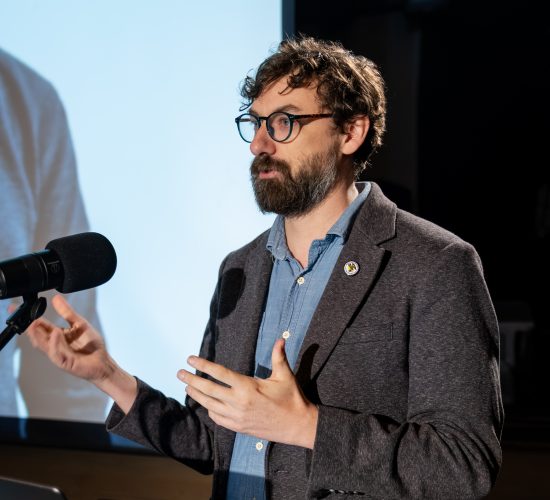
Digital ads for small businesses look nothing like they did five years ago. In this episode of The Localist podcast, recorded live at Localist Lab in Birmingham, Matt Robinson walks the audience through what has actually changed with Google Ads and Meta Ads in 2026, and what small business owners can do about it right now.
Matt is Director of Advertising and Analytics at Uptick Marketing and President of AMA Birmingham. He runs Google Ads and Meta Ads for Uptick clients every day. He opens with an honest read: if digital ads feel broken, it is because they are. Costs are up. Tracking is worse. Platforms are behaving differently. And the advice you get from AI tools can send you off a cliff if you follow it blindly.
The first half of the talk is about why you may be spending the same amount and getting less. Matt explains why cheap cost per click is no longer the win, why the platforms now treat your website as a data source just as much as your ads, and what AI Max, Performance Max, and Advantage Plus are actually doing on the back end. He walks through what Facebook is actually rewarding now (us versus them ads, face to camera, product demos, testimonials, web experience, positioning tests, founder story) and why the answer is roughly 20 ads a month, not one perfect ad.
The second half is about tracking and AI. Matt is honest that tracking is broken and getting worse. iOS changes, cookie deprecation, and consent pop-ups have all pulled visibility away from advertisers. The answer is to think directionally rather than chasing exact dollar amounts. Then he closes on the elephant in the room: AI advice. He uses Claude and ChatGPT every day, but has also learned the hard way that a confident answer is not the same as a correct one. If you run digital ads for small business and want to work smarter with what has changed, this is a practical field guide.
Digital Ads for Small Business Topics Covered in This Episode
- Why digital ads for small business feel broken right now and what that means
- Why cost per click is now a quality signal, not just a metric to minimize
- Broad vs. specific keyword searches and how each one performs
- Why cutting your budget is the wrong response to rising costs
- Why your website is a data source for Google Ads and Meta Ads
- What AI Max, Performance Max and Advantage Plus actually do
- Why bad website content will burn your ad budget on those tools
- Fast loading, clear headline, obvious next step: the three-part filter
- Why Facebook rewards 20+ ads a month, not one perfect ad
- Ad formats that work: us vs. them, face to camera, testimonials, web experience
- Why tracking is broken and getting worse in 2026
- Why you should think directionally, not in exact dollar amounts
- How AI-generated ad advice can send you off a cliff
- How to prompt AI for better digital ads for small business advice
- Why you should push back on AI recommendations and change one thing at a time
Mentioned in This Episode
- Uptick Marketing
- Infomedia
- Tempo Websites
- Infomedia Studios
- AMA Birmingham
- Google Ads
- Meta Ads
- Claude
- ChatGPT
- Google Gemini
- Uncle G’s Pizza episode of The Localist
- Lady Bird Taco
Follow Carrie Rollwagen
Connect with Matt Robinson
Matt Robinson is Director of Advertising and Analytics at Uptick Marketing, the sister company of Infomedia. He also serves as President of the American Marketing Association Birmingham chapter. Matt runs Google Ads, Meta Ads, and analytics for Uptick clients every day.
Listen to The Localist on Spotify & Apple Podcasts
Thanks to Our Sponsor, Infomedia
The Localist is sponsored by Infomedia. They are a Birmingham-based web and digital marketing company. They help small businesses grow online.
Join Us at Localist Lab
Localist Lab is a free event series for small business owners. It meets on the third Thursday of most months at Saturn in Avondale. Each session covers marketing tips you can use right away. Free tacos and coffee, too.
Subscribe to Carrie’s Newsletter
Want more small business tips from Carrie? Sign up for her newsletter.
FULL EPISODE TRANSCRIPT
Below is the full transcript of this Localist Lab episode with Matt Robinson of Uptick Marketing. This transcript is provided for accessibility and SEO.
Carrie (00:13): Hi, I’m Carrie Rollwagen, host of The Localist. What you’re about to hear is a live recording from one of our Localist Lab events. This is when we bring in experts to talk about practical insights on marketing for small businesses. This session was recorded in front of a live audience, so you may hear some room noise and shuffling during the Q and A, but hopefully that just makes you feel more like you’re actually there. For more background on the speaker, or to view slides from the event, check out our show notes, or grab a ticket there to our next event. I hope you enjoy this conversation.
Carrie: Good morning, thank you for being here. My name is Carrie Rollwagen. I am the author of The Localist book and host of The Localist podcast. On The Localist podcast, we bring in small business owners from around Birmingham to talk about how they built their business, what has gone wrong, what’s gone right, and what they want to know about today. If you’re interested in that, either because you want to know more about small businesses in Birmingham, or you run a small business and want to hear what other people are going through, follow us wherever you listen to podcasts. We’re also on YouTube.
Carrie: For example, we just had George on the podcast. He owns Uncle G’s, and he owns a pizza truck. I thought we would talk about pizza, but I said, what do you want to talk about today, and he said, AI. That was a pivot, but not really, because so many small business owners are asking, how do I use AI? Those are the kinds of things we talk about on the podcast, and here at the lab we dig deeper into those things. Questions we hear from you, if you’re a client of Infomedia or Uptick or Tempo, we try to answer in the lab. Or things that come up when I interview business owners, we bring in experts here to talk about.
Carrie: The Localist has been a passion project of mine for more than a decade, probably a weird amount of time. Now I work with Infomedia, which is a digital strategy company, and Uptick Marketing, our sister company, and Tempo, another sister company. I’m meeting every day with experts who are answering the same questions business owners are asking. Some of those business owners are our clients, and some aren’t. We wanted to start this series to bring in those experts and open up that information.
Carrie: Today we are going to have Matt Robinson. Matt is from Uptick Marketing. He is their Director of Advertising and Analytics. He also works with AMA Birmingham and does a lot of other stuff. He has a little sticker pack over there. So stop by his table and get one. But I love talking to Matt about digital ads. He’s done this for a long time. He knows what’s going on in the industry and he explains it really well. I actually go to him when I have questions about my business. So I wanted to bring him on to share those things with you. Matt is here to talk about what’s really going on with your digital ads and how to fix it.
Matt (03:43): Hello everyone. Can you hear me okay? I have trouble speaking into microphones. I hear I might yell in them too often. Let’s get started. First, we have a couple of sponsors that Carrie mentioned. I do think we should talk about just for half a second the Lavoy family of companies of Infomedia, Uptick, Infomedia Studios and Tempo. We do web development, digital marketing, photography, video, quick websites, big websites. If you’re a huge bank and need a great website for a big infrastructure, we can take care of that through Infomedia. Tempo does quick websites for small companies. Uptick handles digital marketing strategy and tactics. Across these companies, we can be your one-stop shop for digital and web strategies. Also thanks to Lady Bird Taco. Everybody loves a Lady Bird Taco.
Matt: Today we’re going to talk about what’s really going on with your digital ads and how to fix it. My name is Matt Robinson. I am uniquely able to describe this because I do it every day. I work in digital advertising during the day, and I work in digital advertising during the night. I’m also President of AMA Birmingham right now, so I do a lot of research with them and talk about this stuff with other professional people across the country. I’m not necessarily an expert, but I have the ability to talk on this because I’m in it all the time. This is real real life stuff.
Matt: How I became a marketer. I have a communications degree from the University of Alabama. I majored in advertising and public relations. I graduated in 2008. If anybody was around here in 2008, it was a tough time to get a job. Worked in restaurants. I bummed around. Lived in cool places. That’s a train in a cruise ship. I lived in Alaska and worked for a train company. That was cool. I became a graphic designer at a local print shop. I had worked at print shops almost my whole life. I’m not a good graphic designer, but I am a graphic designer. I moved into backend type stuff called advertising operations. I started working with digital publishers like Gatehouse and Gannett, huge newspaper companies. I’ve worked for over 150 newspapers through those two companies. Then I worked for Bassmaster.com doing video and display advertising. I’ve been at Uptick for about five and a half years now, running Google Ads, Meta Ads and handling our analytics stack.
Matt (05:00): Why does it feel so broken? If you do this stuff day to day, if you’re a small business running your own ads, you probably feel it because it is kind of broken. It feels broken because it is. Here’s four things that are really stacking against each other. You’re spending the same as you always have, but getting less in return. The platforms have changed, and because of that, the rules have changed. Tracking is about as crazy as it’s ever been. And you might be getting bad advice.
Matt: When I say you may be spending the same but getting less. Several years ago, Google Ads was kind of a race to the bottom. You were always looking for cheaper cost per clicks, cheaper metrics. You could put together hacks to get those. In 2026, cost per click is more of a quality signal. A more expensive cost per click means the quality of that click means more. Google values that person more to your business than it would a 50 cent click.
Matt (06:00): There’s a difference between minimizing your cost per click from $50 to 50 cents. A $10 click is going to come from somebody who really wants what you sell. A 50 cent click probably came from my child watching something on YouTube. Chasing cheap clicks is just chasing cheap customers, chasing spam. The platforms know quality now. Because of inflation, and because more competition is entering into the same amount of audience, the platforms know quality, and they can raise those prices. They know who’s going to buy from you. That’s what people mean by algorithms. They know who will click on an ad next. So clicks, conversions, costs — those are quality signals.
Matt: The more that click costs, the better that person is to acquire. And everybody’s trying to acquire that customer, not just you. That’s why it costs more. Did I mention it costs more because of inflation? So when I say you’re spending the same amount and not getting the same results, that’s one of the biggest reasons. The cost for people’s attention is more than it was even six months ago.
Matt (09:00): What does this look like in your accounts? You’ll see broad keywords in your accounts, things that don’t necessarily relate to your business. Let’s say you’re selling Montessori toys, wooden toys, and your search terms are showing up for baby jumper. That’s not the same thing. It is a toy. It is adjacent. But a Montessori toy click is going to be $15, and a baby jumper click is going to be $1. Specific expensive keywords like wooden Montessori toy lead to more expensive clicks and fewer clicks. Those are real buyers. Those are the people that know what they want right then.
Matt: You also see specific keywords that aren’t getting clicked on a lot, but are the drivers of your real conversions. The stuff that is actually turning into business. You might see really low cost per clicks with low conversion rates. That’s because you’re just not paying enough. The cost per click isn’t high enough to get into that same competition. If you’re not ready to bid as much as your competitors, you’re stuck in lower auctions with people looking for baby jumpers.
Matt (11:55): In Meta Ads, honestly, you see this all the time now. Your Meta Ads are stuck in learning, learning limited. It gives you all sorts of errors. Add more ads, do this, do that. Your Meta Ads are consistently stuck in learning. That means you’re not getting enough results for those algorithms to optimize toward. It’s a cost problem. It’s not spending enough to get enough data to run properly.
Matt (13:00): You don’t necessarily want to cut your budgets, because everything costs more. Why would you cut your budgets if everything costs more? It’s like me going to the grocery store and saying, last year I was spending $200 on groceries. I’m going to spend $100 this year and expect to get more than I did last year. That’s not going to happen. But maybe I could redirect it to better things I could buy. Maybe I could buy in bulk. Don’t cut your budgets. Redirect them to higher intent audiences.
Matt (14:00): Here’s what that looks like in search. Somebody searches for lawn mower. That’s a really broad search. Let’s say you’re a company that does lawn mower repair in Birmingham, right down the street here in Avondale. You’re running ads. You start getting clicks on people just searching for lawn mower. Lots of clicks. 50 cent click. I’m getting tons of website traffic. Great CTR. Those people are looking for lawn mowers. They could be my kid interested in lawn mowers. You don’t know who those people are. Those are the broad curious searchers.
Matt: Lawn mower repair. A little more specific. Cost per click goes up a little bit. Might get a couple more buyers. But people could be looking up how do I fix my lawn mower. Once you get more specific, that’s when it gets more expensive. Lawn mower repair near me. That person’s ready to buy. They’re in Avondale. They have a broken lawn mower. It’s hot. They want to fix it today so they can finish cutting their grass. Google knows that person wants that thing at that moment. Not just from the way they search. From the fact that they’re involved in that entire Google sphere. Lots of signals associated with them.
Matt (15:47): So you think, duh, I want to target lawn mower repair near me, not lawn mower. But that process actually takes time. That’s the way Google Ads works. Letting it have time to figure out what works and what doesn’t work. Letting it breathe. It’s a phased approach. Higher intent searches turn into more conversions. Less traffic turns into more conversions. Everything in digital advertising takes time. Or money.
Matt (16:30): Here’s part of that rules have changed piece. Your website matters just as much as your ads do. If you’re running hundreds of dollars a day on Facebook ads and your website stinks, that’s a waste of money. Your competition is spending $100 a day and does have a good website. Your website matters because it’s becoming much more of a data source. Not just for ChatGPT and Gemini. Your website is a data source for Google Ads and Facebook Ads too.
Matt: Google is scraping this to know. Is it up to date? Is this good content? Is this content associated with the ad the person clicked on? Google doesn’t want to serve an ad that somebody clicks on and doesn’t convert. Google is in the business of making money. They want to charge as much as they can for that click. You will buy that click if it converts. Google is looking at your website saying, hey, is this website better than the other one? It’s going to deliver the most relevant, best ad and website combination to the person searching.
Matt (18:00): AI Max, Performance Max and Advantage Plus. These are ad types in Google Ads and Facebook Ads. They are starting to decide more and more what your targeting is and what your ad creative looks like. It’s basically just an AI thing. It scans your website and uses your website as the targeting, the ad, your messaging, your click-through. It’s trying to put people like me out of business, but it doesn’t work. I mean, it works great.
Matt (19:52): You need somebody like me to drive it, or it’s just going to completely plummet into the ground. If you have a bad website and you start running an AI Max campaign, you’re going to spend hundreds of thousands of dollars on baby jumper when you’re trying to sell a baby car. Is your website slow and outdated? Site score speed is one of the biggest things Google and Facebook care about. These things go into the bidding algorithm. If your website stinks and somebody else’s doesn’t, they’re going to win that click. Your website has to seal the deal. I can get people to click on your ad and get to your website, but is your website going to convince them?
Matt: AI Max crawls your page, expands your headlines, and matches beyond just your keywords. If I’m searching for lawn mower, AI Max might match to weed eater. That could be because the person searching for weed eater actually meant they needed a lawn mower. Maybe they’re searching for a weed eater because they want a cheap weed eater because they actually need lawn mower repair. I’m not kidding. That is actually how AI Max in Google Ads is starting to work. That’s why you see weird things show up in your search terms.
Matt: Performance Max is the opposite. There’s no keyword targeting at all. It uses your website as the main signal to drive everything. It uses your website to source a lot of the ad creative and messaging. When people click on my ad, I want to make sure that lines up with the message on the website. That’s going to help bring your costs down. Advantage Plus is a Meta Ads product that’s about the same. Meta calls a lot of things Advantage Plus now. It scans your website and creates audiences. It doesn’t even show you it’s doing this. Weak pages mean weak targeting.
Matt (22:00): A lot of this is an easy fix. It’s easier to do things these days for certain reasons. You can say this is what I want on my website. Sometimes it’s easier to filter that through a ChatGPT or a Gemini to put it into your vendor’s language. I want my website to do this turns into I want my website to have a clear headline.
Matt: Does your website load fast? Does it have a clear headline? And is there an obvious next step? Laine White over here spoke recently. I work with her at Uptick Marketing. She has a three-step process. Run everything through that filter and that’ll fix almost all your marketing problems on your website. Make sure your stuff’s loading fast. A fresh coat of paint can make you look like a market leader overnight. We took on a client last year who had just put out a new website. It was a good-looking website. Over the year they iterated on what was working and what wasn’t. Recently they pushed out a great update of all these great visuals. They found out what products people wanted to see most, what pages people were visiting most, and put those things in strategic places where it was visually appealing. That fresh coat of paint really made them look bigger and like a market leader.
Matt: All these things are good content for the machines. This content is also good for large language models being able to relate back to your website. People say, how do I show up in ChatGPT? Be clear about what you do, how you help people. Reviews help. But just be very clear on your website.
Matt (27:28): Here’s the lawn mower repair site again. If I was using a Performance Max or AI Max, that would automatically create an ad out of this. This is the top of my website. It tells everything that needs to be told. What I do, how I do it, what you can do, reviews, where I do it. Fast loading. Clear headline. Obvious next step. Services. Repairs we handle. That’ll get picked up in Performance Max and AI Max searches because you might search for my lawn mower won’t start. This company has a tab right here. Your lawn mower won’t start. Do you need your carburetor cleaned? So you can actually use these AI Max and Performance Max tools on this website because it’s very well structured. The machines can say, I know what this person does. They offer push mower repair. They also can change your oil. Just be clear. You don’t want an ad that says you do carburetor cleaning for lawn mowers, but it’s not reflected on your website.
Matt (28:00): Here’s another part of the platform change. Previously, we used to talk about Facebook ads with problem, message, answer. You don’t want to put paid media behind why you exist as a company. Guess what? Facebook says otherwise. Facebook wants you to create this whole story of ads for people on their platforms to understand you and trust you more. It actually works. It’s just a mindset change from what you used to do, which was put an ad up, expect clicks. This is why you see a lot of business owners and founders becoming influencers. They’re on camera all the time. That’s what Facebook wants.
Matt (30:00): Here are a bunch of ad types Facebook wants. Us versus them. You don’t have to mention your competitor by name. Just what we do differently than other people. Face to camera. Hey Birmingham. Product demo where somebody shows you what it is. Feature benefit — that’s an old one everybody should have always been using. Testimonials. Meta Ads wants more testimonials. They want your customers telling other customers you’re good to buy from. Web experience. This is an ad that would show what you do next. If you go to my website, here’s what it looks like. Positioning tests. Founder story. Facebook wants a whole host of ads. They want 20 plus a month. They want to tell a story compelling enough for customers to buy from you. Test them. Some won’t work for your business. You can tell very quickly. Facebook just won’t serve the ad.
Matt (32:30): Here’s another big thing and why it feels broken. Tracking is broken and it’s just getting worse. We’re still being tracked. I have a phone in my pocket, it’s tracking me. We’re all location targeted. We all have email addresses. Yeah, we’re being tracked. But not as much by advertising platforms as we used to. And as much as they probably are tracking us, they’re not letting people like me and you in on that black box anymore.
Matt: iOS changed several years back and really killed Meta Ads. There’s cookie deprecation. There’s consent pop-ups. Do you accept cookies? If you click no, I can’t track that click back to your ad. If you go in and buy $10,000 of merchandise from me after clicking no, that is unattributed. So you say my ads don’t work, but really your ads work. Your consent pop-up also works. There are different laws per state and region and country.
Matt (35:30): Tracking is slowly getting worse. In 2016, you used to be able to spend $100 on Facebook ads and make $1,000, and you could look at it and go, boom, I’m targeting these people. It’s not like that anymore. It’s much more advanced. Facebook has caught up too and knows how to make money off of it. They’re asking us to make 50 ads. It’s tough to know which ad caused which sale these days.
Matt: The platforms are reporting numbers. They’re not always real measurements. They’re modeled behavior. Everybody who is used to seeing I spent $1 and made $2, we can still look at that. But it’s important to think directionally. If your sessions and visitors are down over the year, if you dig into it, your sales might actually be up. Start thinking directionally. Your platforms are reporting different numbers because it’s not being tracked, not because you’re getting less of it. You are getting less of it because of Google Gemini and ChatGPT, but it also looks like you’re getting less because of tracking. Think of things like signals. Not exact dollar amounts, not exact people, not exact numbers.
Matt (37:30): There’s an elephant in the room. I mentioned earlier you might be getting bad advice. You might be listening to ChatGPT, Gemini, any large language model too much. I use Claude every day. I use ChatGPT every day. I use them for all sorts of stuff. But I also vet what it tells me. One of the things I see a lot is it will give you generic best practices. It will give you advice like you’re a billion-dollar company trying to spend a billion dollars. Of course it’s going to pitch you the best SEO plan ever, and make it sound like it’s the best. This is exactly what you should do. This is how it’s going to work. But is it actually going to be good within your margins?
Matt (39:42): Is it going to be good within what you do and your ability to do it? It can give you a giant list of stuff. What on that list is what’s going to actually work? Make sure you’re curating and vetting the advice. It’s going to give you really confident answers. Use your own personal context with those confident answers. I have taken these confident answers as advice and it was bad advice. You have to use that human context layer. As you use more of it, it’s harder to use that human context layer. Keep exercising that muscle. If not, you end up with a lot of yeses and not enough nos. You’re just saying yeah let’s do that, yeah let’s do that. As opposed to, well, this looks good, but my margins on this product aren’t great for me to build out 15 web pages or spend $15,000 a month on this. Use your best judgment. You know your business better.
Matt: Here’s a better way to get advice. Did you tell it your budget and your goals? Did you tell it what’s worked before and what hasn’t worked before? Because it might tell you what to do, and it’s like, well, we tried that for the past four years and it hasn’t worked. Did it push back on anything at all? One thing I always try to prompt on is, if this doesn’t make sense, or if you have a better idea, let’s do that. Ask me questions before we move forward. Why did you do this? Did you push back on anything, or did it push back on anything? Because maybe you’ve just got a yes man. Maybe that’s what you want. Maybe not.
Matt: Here’s a big one. It’s going to give you a really long list of stuff to do. Should you do all of that list? Should you make all those changes at once, or are you going to vet those changes one by one? If you make 10 changes at once, it’s going to be hard to see what change made a difference. Try to solicit better advice from it.
Matt (43:00): The one thing I want everybody to walk away with is to start thinking directionally. Numbers are numbers. Numbers belong in your QuickBooks and CRM. Numbers are in your ads. But let’s think directionally: up, down, uptick, up, down. That’s the way you want to think when you look at your analytics.
Matt (43:31): The main takeaways otherwise. This stuff’s getting expensive. It’s not for the faint of heart. Sometimes you see stuff and you’re like, whew, that’s tough. I spent $50 on that. You can’t think like that. You didn’t spend $50 on that. You were going to spend $1,000 on two customers. You didn’t spend $50 on one keyword. That’s a directional type of thinking. Filtering your AI advice. That’s a no-brainer. It thinks it knows and it’s going to tell you it knows these things. Make sure you’re filtering it. I use several Google Ads Guru type frameworks that are loaded into my ChatGPTs and Claudes to prompt things so it isn’t just Claude or myself. It’s going through a certain framework, checking certain things, as opposed to just what Claude thinks it needs to do.
Matt: Another big thing. Your website is a data source. Treat it as such. Keep it updated. Make sure the stuff is right. If you want to show up for informational terms, that’s okay, but make sure your website is also talking to the person that is your customer, your perfect client.
Matt: You can download some takeaways from that QR code over there. It’s going to ask you for your email address. I promise I won’t email you that much. Over here is Carrie’s Localist Lab. Forgive me, Carrie. This is for an email newsletter subscription. She will also email you. Thank you everyone.
Carrie (45:59): Yeah, I’ll email you once a week. Matt will email you possibly in November. We actually talked before and decided we weren’t going to leave a ton of room for questions because so many ad questions are really specific to your business. But we’ll do a little lightning round. If you have a quick question, now’s the time.
Matt (46:20): I’m also pretty long-winded. We went until right at 11:01 a.m. as well.
Carrie (46:26): Also I know there’s a ton of, we’ve gotten so many questions about this, and this isn’t something I have a ton of experience in. So I really did want Matt to drill down into a lot of the specifics. I think there are some really good takeaways for small businesses. Even tracking. The smaller your business is, especially if you’re a B2C business, you can talk to your customers. A lot of times they’ll mention what they saw. You just have less data coming in. You can see, I started ads and I started selling stuff. To some extent you’re like, okay, it’s probably working. We have a little more data than an Amazon would have in a different way. I mean, they have a lot of data. We have a different kind of data. We have a more one-on-one kind of thing.
Carrie: All right. I think we covered a lot. Thank you, Matt. If you want to get specific information for your business, you can work with Matt and his team at Uptick Marketing. Find Matt after and he’ll help you get connected there. Thank you for coming. This talk is going to be available on The Localist podcast. This is one of our podcasts in the studio. If you’re interested in shooting in the studio, you can talk to me after, and you can shoot at Infomedia Studio.
Carrie: We have a video of this event and any events we did in the past. It’ll run on The Localist in a couple of weeks, and it’ll also be at infomedia.com/events. You can sign up for future events there and see the ones from the past. Next month’s event, I’m going to be speaking. The topic is: if you can write instructions, you can build an AI skill. Here’s how. This is going to be a really practical talk because at Infomedia we are all sick of going to AI talks that are just, this is AI, it might be bad, it might be even worse. We all know that. We actually need to know how to use it. That’s what this is going to be about. It’s going to be about how I think this is less of a tech platform and more like, if you can delegate at work and write instructions, you can build this kind of stuff really easily. And we’re going to walk through how. I hope you’ll come. Third Thursday of the month, right back here. Thank you for coming.
Carrie: Thank you so much for listening to this Localist Lab session. If you’d like tickets to the event, check out the show notes. The tickets are free, and we would love to see you there. And as always, whether you’re buying from a local business or running one, remember that what you do makes our community stronger every day.