
Show Notes
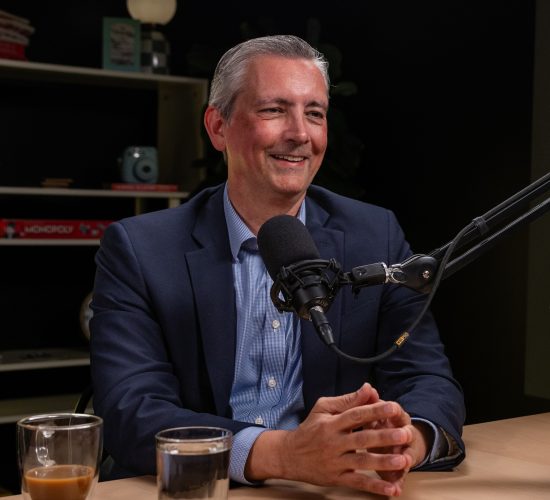
Downtown Birmingham revitalization is a 30-year story, and David Fleming has been in it from the beginning. In this episode of The Localist podcast, host Carrie Rollwagen sits down with David, president and CEO of REV Birmingham, to talk about how the city got here, what REV Birmingham actually does, and what any small business owner can use right now.
David is a Bessemer native and self-described building hugger. He started Main Street Birmingham in 2004, then merged it with Operation New Birmingham (founded 1957) to create REV. Today REV focuses on downtown Birmingham and the Woodlawn neighborhood through four business centers: place management, economic development, marketing and storytelling, and advocacy and policy. Carrie and David open with the story of how Birmingham was founded as an entrepreneurial response to the collapse of the Southern slave economy, why immigrant families like the Pizitz and Zinszer families built the businesses that shaped Second Avenue North, and why understanding that DNA matters for anyone leading downtown Birmingham revitalization work today.
The next 30 years of downtown Birmingham revitalization gets its own chapter in the conversation. Why 2010 was the pivotal year. How Railroad Park and Regions Field changed what people believed downtown could be. Why Second Avenue North became the corridor it is now, and how Urban Standard, El Barrio and others lit the fuse. Carrie also shares how local Starbucks managers like James Little at Filter Coffee Parlor and Cal Morris at Church Street Coffee & Books turned into homegrown coffee shop owners, and why that pattern matters for the city.
The second half is a practical guide for small business owners. David walks through what REV Birmingham offers: the CAP program (the blue shirts you see downtown), the Business Improvement District that raises around $2 million a year for downtown, the historic preservation easement program, free market data at downtownbhm.com, and one-on-one real estate advice for anyone trying to figure out where to open. He also shares what a 2000-person survey revealed about downtown Birmingham revitalization priorities for 2030 and why the answer surprised even his team. If you own a small business in Birmingham, love the city or work in place-based revitalization, this conversation is full of practical resources and Birmingham history.
Downtown Birmingham Revitalization Topics Covered in This Episode
- How Birmingham was founded as a startup city and why that DNA still matters
- The immigrant families who built Second Avenue North and downtown commerce
- Why 2010 was the pivotal year for downtown Birmingham revitalization
- How Railroad Park and Regions Field changed people’s belief in downtown
- The story of Urban Standard and how it opened up Second Avenue North
- How local Starbucks managers built Filter and Church Street
- The merger of Operation New Birmingham and Main Street Birmingham
- Why REV works in downtown and Woodlawn specifically
- The ‘place, people, payer’ framework REV uses to decide where to work
- REV’s four business centers: place management, economic development, marketing, advocacy
- Why REV is essentially managing downtown like a shopping center
- The historic preservation easement program and how it protects buildings
- The CAP program and the Business Improvement District
- Free market data and reports at downtownbhm.com
- How REV helps small businesses find a location, even when it’s off market
- What a 2000-person survey said about downtown’s future
- Why filling vacant buildings ranks above parking as a priority
Mentioned in This Episode
- REV Birmingham
- Downtown Birmingham
- Sloss Furnaces
- Birmingham Historical Society
- Railroad Park
- Regions Field
- Pepper Place Farmers Market
- Alabama Theatre
- El Barrio
- Filter Coffee Parlor
- Church Street Coffee & Books
- Gus’s Hot Dogs
- The Localist book by Carrie Rollwagen
Follow Carrie Rollwagen
Connect with REV Birmingham
David Fleming is president and CEO of REV Birmingham, the nonprofit that works to grow downtown Birmingham and the Woodlawn neighborhood through place management, small business support, historic preservation and economic development. REV is the merger of Operation New Birmingham (founded 1957) and Main Street Birmingham (founded by David in 2004).
- REV Birmingham website
- Downtown Birmingham info and data
- REV Birmingham on Instagram
- REV Birmingham on Facebook
Listen to The Localist on Spotify & Apple Podcasts
Thanks to Our Sponsor, Infomedia
The Localist is sponsored by Infomedia. They are a Birmingham-based web and digital marketing company. They help small businesses grow online.
Join Us at Localist Lab
Localist Lab is a free event series for small business owners. It meets on the third Thursday of most months at Saturn in Avondale. Each session covers marketing tips you can use right away. Free tacos and coffee, too.
Subscribe to Carrie’s Newsletter
Want more small business tips from Carrie? Sign up for her newsletter.
FULL EPISODE TRANSCRIPT
Below is the full transcript of this episode of The Localist with David Fleming of REV Birmingham. This transcript is provided for accessibility and SEO.
Carrie (00:12): Welcome to The Localist, a small business podcast where we talk about the highs and lows of building community through entrepreneurship. I’m your host, author of The Localist book and small business consultant Carrie Rollwagen. The Localist is sponsored by Infomedia, which is a digital strategy company where I work as Senior Vice President. At Infomedia, we help small businesses get big results online.
Carrie: Our guest today is David Fleming. David is president and CEO of REV Birmingham. You’ve probably heard about REV, but you may not know exactly what they do, and that’s because they really do a lot. They work to revitalize and grow downtown Birmingham and Woodlawn in particular. We’ll talk today about why those two communities. They work to revitalize the place itself: make sure the streets are clean, that parking is taken care of, that people know where they can go. They connect small businesses with people who are selling buildings. They do work to protect different buildings downtown.
Carrie: We’ll dig into that today, specifically how, as residents of Birmingham and the surrounding communities, we can see what is being done to build these city centers up, and as small business owners, what resources are available to us. But we actually open up with a little bit of Birmingham history, because before the podcast I was told that David was a real history buff, especially when it comes to Birmingham. So many of us have joined Birmingham’s journey at different points, and I wanted to back up and see how we got where we are today. I love history too, so I thought that was a lot of fun.
Carrie: Thank you so much to David for coming on, and to REV for everything they do. I’ve been involved with a little bit of it along the way. They used to have an event called The Big Pitch, and I was a mentor for that. At Infomedia, we don’t work with REV directly, but we work with a lot of different REV partners. So it was really fun to have them on today. Welcome to the podcast.
David (02:37): Oh, so glad to be here.
Carrie: We’ve talked through the years, just a little bit in passing, and I’ve done a few things with REV in the past. But I’m excited to have a longer conversation.
David (02:49): Well, this is great, and it’s always good to be with people that love Birmingham and talk about it.
Carrie (02:55): Speaking of that, I want to get to what REV does and what it can do for small businesses. But I know that you in particular know a lot about the history of Birmingham and the history of downtown and the economic development there. We have listeners who’ve come in at certain parts of the story. So I wanted to back up a little bit. When you talk about this or when you learn about this, can you give a few minutes of just how did we get here as a city?
David (03:32): Sure. And for those that don’t know, I am a native of this area. I grew up around here. For those that really want to get granular, I’m a Bessemer native. So the old industrial west side city was where I was born and raised. My dad taught in the Vestavia school system, so I went to school there. Growing up, I was living in the declining working class community, but going to school in an affluent one. If you know anything about Birmingham, we have a lot of individual communities and silos, and I was crossing some of those. So I loved that I was getting an education I didn’t know I was getting, because I was seeing lots of different neighborhoods and aspects of the city. I fell in love with its historic buildings. I always joke that I’m a building hugger. Some people are tree huggers. All of that drove me to want to do more to help the city grow.
David: The history of the city is so interesting. Every place has its history, but Birmingham’s has a lot to teach us, not just here but really across our country and even in the world. We were a city started in response to a problem. The problem was that the South had had an economy that was largely dependent on enslaved labor until the Civil War. After that, it was: how do we build a new economy? In Alabama, people knew as early as the 1820s that there were all these resources in the ground. There was iron ore, coal, limestone here in central Alabama. There was potential for an industrial city. But it didn’t happen until after the Civil War. Some men with ambition and vision had a vision for building this place where people could make money, but also build an industrial city in the middle of the agricultural South that would rival the great industrial cities of the world. That’s why they named it Birmingham.
Carrie (05:50): To kind of say, there’s a city that already exists, and they’re sort of saying this is what we’re trying to be.
David (05:58): They were casting that vision, and they had to then convince people to put the infrastructure in. Railroads were needed to get people in and get the product out. So Birmingham was really born as an entrepreneurial idea. We were a startup city. We were a boomtown. Our early history was a roller coaster. Almost two or three years after starting, we had this cholera epidemic that nearly took everybody out. Then we came back. Then we had financial panics that stopped the growth. There were many times throughout Birmingham’s history where we should have died as a community, but we didn’t. We kept coming back.
David: What’s really interesting about the story is not just the industrialists and what they did. Building the Sloss Furnace and the Debardeleben Furnace, all those big industries drew people here to work in the mines, work in the factories, and have jobs that were probably better than the ones they had. But also all the people who came here to start small businesses that supported those workers.
Carrie (07:22): Yeah.
David: Our downtown is full of buildings that were built by immigrants from Europe who wanted to start a dry goods business and turn it into a department store, like Louis Pizitz did. Or Peter and Rosa Zinszer who built this furniture store to serve all the people coming here, and knew that the wives wanted to buy good stuff to fill out their houses. They did entrepreneurial things like offer what today we would call credit buying. They created opportunities for women to come in from this hot, muggy, dirty city, come inside, and they laid out areas for people to lay down in cots and take a nap if they wanted to. So they were a rested and hopefully amenable buyer. And that building is still there on Second Avenue North.
David: That is such a treasure that we can still see and touch a lot of the history of these entrepreneurs who came to this place for opportunity, to serve a public that needed those things. Whether it was trying to get the iron ore out of the ground, or serve food like the Greek community did, or be like the Italian community that came here and started the grocery stores. It’s such a mixed bag story, and it’s really an American story.
Carrie (08:46): How did you get to learning about this? Was it buildings first? Did you see these cool buildings and want their story?
David (08:58): If I’m being honest, my way into history was through loving historic buildings. Although I always loved history throughout my life. I always loved reading about things that went on. But the buildings certainly helped make that story real. If you can still see a building or a place like Sloss Furnaces, you don’t just read about it, you go walk around it and see what it was like. That fueled it. But then I had to dig into it. My wife says I’m an Enneagram five, which means I’ll get something and just keep going down the rabbit hole.
David: There are great sources in Birmingham. The Birmingham Historical Society produces such great books and material. There’s this whole treasure trove that they’ve produced over the years. Many people don’t know that we have this tremendous archive at the downtown library. The Southern archives are really rich with a lot of history. I remember on my free time when I was younger, going in there to the section on local books, pulling that out and reading. And one of the best, most fun ways is just to ask people who’ve been around a while what happened when.
Carrie (10:26): Yeah.
David (10:27): I’m of a particular age where a lot of people that I knew lived in Birmingham before the civil rights movement and after. So talking to people. And Birmingham’s such an interesting city because I’ve had this experience where I’ve known somebody maybe as an African American leader of a neighborhood, and I’ve worked with them for a long time, and then I start talking to them, and I realize they were one of the people thrown in jail during the marches. This living history is still there too.
Carrie (10:59): It is amazing. I’ve interviewed some members of my family who are older, and it’s always a fun conversation. A lot of times when we read about something in a history book or watch movies, it’s very siloed. In reality, eras kind of blend. It’s fun to hear about what they were actually doing. Sometimes I’ll ask something like, I asked my great uncle, what was football like? He’s like, it’s football, what is wrong with you? Even the stuff that is the same is fun to see.
David (11:46): It’s so important, especially for what I do, which is every day I’m doing economic development focused on downtown and the Woodlawn neighborhoods. Trying to do that without an understanding of the history of the place — I don’t know why people would even try. You have to understand why things are the way they are now, and have an appreciation for that, in order to help lead it into the future. Just understanding the DNA of our city, which has its own good, bad and ugly, my interest in studying Birmingham’s history over the years has helped me figure out that because of things that happened maybe 100 years ago, we still have the resonance of those things today.
David: And this is why something either works or doesn’t work.
Carrie (12:40): Sometimes you look at something and you’re like, I don’t understand why it’s like that. If you know a little bit about the past, you can understand how we got here, so you can understand how to move forward.
Carrie: We talked about the industrial growth of Birmingham. What about the more recent, like 20 or 30 years of downtown? REV mostly works in downtown Birmingham and Woodlawn, is that correct?
David: Right.
Carrie (13:00): Maybe we can take downtown first, because that has changed a lot. There was a meme account making a joke about El Barrio being one of the restaurants where, when it opened, people were still scared to go there. And now it’s just downtown.
David (13:27): That’s right.
Carrie: To me, it seems like that just opened. What about the more recent 20 or 30 years, and what’s happened downtown?
David (13:36): It was 30 years ago this year that I really started working on downtown. So I’ve seen the last 30 years, but I can go further back. Coming out of World War II, we’re beginning to see suburban growth, and downtowns had to reinvent themselves. That’s why my organization was founded in 1957. People don’t know that, but it was originally called the Birmingham Downtown Improvement Association.
Carrie (14:06): Okay.
David (14:07): That’s where it got its roots. Those were commerce leaders — people like Elton Stevens was one — the downtown commerce leaders, not the industrialists. They wanted to make sure downtown was going to be viable and relevant for the modern city, which was seeing suburban growth. Eastwood Mall had been announced to be built on the east side of town in 1960. That was going to be the first air-conditioned mall south of Virginia.
Carrie (14:38): Wow.
David (14:39): It happened here in Birmingham. So all of that transition. Retail ultimately went to the suburbs by the ’80s. It became: what does downtown need to be today? We started that transition. Honestly it goes back to the late ’80s, beginning to get more residential downtown. More people are living downtown and have lofts. They start to want other things. They want to walk to a restaurant or a cafe. You see people walking their dogs, and it justifies a grocery store. That builds.
David: By 2010, which is a pivotal year in the history of downtown, we had done a lot. We’d been good at doing downtown plans over the years, because we went from my organization being the Birmingham Downtown Improvement Association to Operation New Birmingham to, a few years ago, REV Birmingham. 2010 was important because we’d built up some residential base downtown. The employment base stayed strong. A lot of people were thinking, oh, all the jobs are going. We actually have had then and still have a larger concentration of employment downtown compared to our region — compared to Nashville and other cities. We have a strong concentration of employment still downtown. UAB helps that.
Carrie (16:03): Yeah.
David (16:04): But what happened in 2010 was opening Railroad Park. That one thing really transitioned Birmingham from a downtown that was largely an office base with maybe a little residential, to possibly being a true mixed use district. Following that, a couple years later, came Regions Field. Regions Field meant that at least at that point about 600,000 people a year were coming downtown to go to baseball games that they weren’t doing before.
Carrie (16:47): Right.
David (16:47): They were seeing Railroad Park. They were seeing downtown. They were experiencing these historic buildings. It changed the attitude about downtown and the belief in it.
Carrie (16:58): Yeah.
David (17:00): Between those things and others like Pepper Place Farmers Market that started in 2000, we were seeing this transition of Birmingham as a city from a working class city where people largely left downtown to go play, to a place where we can have a city that we enjoy too.
Carrie (17:19): It’s so different. I worked at the Birmingham Post-Herald, which was a newspaper downtown. At the time, you had to go to the Arby’s in Southside if you wanted to eat at night.
David (17:36): I always joke that when I started working downtown on the north side of tracks, you basically had John’s or Andy’s on the Green, which were meat-and-three type places, or you get a hot dog.
Carrie (17:46): You had a bunch of hot dog places. I miss some of them.
David: We’ve only got Gus’s now, but I used to get. You had four or five different hot dogs that were great.
Carrie (17:55): We had Gus’s Hot Dogs on the podcast, and we talked a lot about the history of hot dogs in Birmingham. If anybody wants a deep dive, we’ll link that.
David: Yes.
Carrie: It has been so different. I lived in the Phoenix building before Railroad Park, which was one of the lofts down there. It’s been fun to see. It is really different now. The activity at night. When I was at the newspaper, I worked the night shift. I went in at 4 in the afternoon, got off at 2 in the morning. It was pretty dead.
David (18:40): That loft building is on Second Avenue North, which is important to talk about, because that street became pivotal in the modern story of downtown. The Phoenix is on one end of that.
Carrie (18:52): Yeah.
David (18:52): Starting on the other end, around the same time as Railroad Park, we had a significant investment. The Elyton family took a row of buildings, condoed them out, and created space. Urban Standard came in. If you remember Urban Standard, it was a coffee shop and a little restaurant. It was so unique. It created this place people came to. That really helped encourage others to start opening up, like El Barrio and others along that street. Now Second Avenue North is one of the best assets in downtown because it’s where all these great culinary options are.
Carrie (19:34): I remember when Urban Standard was at its heyday. When people in creative fields would say, how do I network, I was like, don’t worry about networking events, just go to Urban Standard. You just run into people.
David (19:51): That’s the beauty of local places. You can do that at Starbucks to some degree, but you want to exist or hang out at these local places. Local flavor. That’s why we really do believe at REV, and we’ll work with anybody doing anything that’s good for the city, whether it’s a big developer or somebody wanting to bring some chain thing. But we really believe in the authenticity of the local businesses. That’s part of what makes the city different. And that’s in the local people doing things. Plus, it’s usually local people that love the city enough to take the risk. If it’s a corporate entity, they’ve got a formula.
Carrie (20:30): Yeah.
David (20:31): Right.
Carrie (20:33): The locals kind of make Second Avenue what it is. Then it’s more attractive to a bigger company once everybody likes it there. I even think of some of the Starbucks that have felt more local, that actually turned into local coffee shops. The Five Points Starbucks was run by James.
David: When.
Carrie (21:01): When it was Starbucks. Then he started Filter, which is an independent coffee shop in the same space. In Crestline in Mountain Brook, that Starbucks was run by Cal Morris. I started Church Street Coffee & Books with Cal. He ran it as a Starbucks and then turned it into an independent. It’s a cool unique thing about Birmingham that the same people who were running the Starbucks kind of flipped them into local businesses.
David (21:28): There is so much talent and interest in Birmingham that cut their teeth somewhere like that, and then have the vision to want to do their own thing. That’s a cycle I hope continues, and that we can support as much as we can. Those are the people who have developed a love for Birmingham, they understand it, and they have a vision for something that continues to make Birmingham a great quality of life place.
David: Economic development as a field for many years, especially when I was starting, was focused on trying to make sure you got a big site somewhere with the right incentives, and you can recruit some — we used to call it smokestack chasing. I’m pleased that overall the industry has realized that quality and authenticity of place is as important to economic development, because you’ve got to attract and retain talent. They want a city that’s alive.
Carrie (22:30): Yeah.
David (22:31): A lot of people want the chain stuff they can get. They want to go to Target. But they also want to go to the El Barrios, and that’s where you feel like you’re in a real place that has character.
Carrie (22:41): We talked about downtown. Can you talk a little bit about Woodlawn, and why Woodlawn and downtown are the focuses for REV?
David (22:55): This is where you get into organizational change and evolution. At REV, we are always evolving, like any small business does. Nonprofits have to evolve too to be relevant. REV Birmingham is actually the result of a merger. We had two organizations come together. We had Operation New Birmingham, which was downtown focused, and we merged with Main Street Birmingham. Main Street Birmingham was an organization I started. I had worked at Operation New Birmingham, but then I thought we needed a non-downtown effort.
Carrie (23:33): Right. Because we have all these distinct communities. These little main streets all over.
David (23:42): We launched Main Street with the city’s help back around 2004. That’s when I started working in Woodlawn, really. But that was one of many neighborhood districts where we were also trying to help work. We were there for the early rebirth of Avondale, but we were also working in East Lake and North Birmingham and Ensley. All these places had different dynamics, but some common things: the place quality and all that.
David: I came to believe that we should merge the downtown entity ONB and Main Street, because we’re both organizations focused on place and specific places. We had skill sets around that. But I also had this dream of not having downtown versus the neighborhoods. It is such an erroneous approach to think downtown and the neighborhoods are at war with each other. They have a symbiotic relationship. I believed in that, still do. So I thought if we had an organization working in both downtown and neighborhoods, you could see the opportunities for cross collaboration.
Carrie (24:59): I think that’s how local businesses function too. When I was in coffee, we didn’t see other local coffee shops as our competition. We all worked together because we wanted people to value what we all have to offer. I’m not expecting you to drive to Crestline every time you want a cup of coffee. That approach — different main streets growing — helps the city as a whole and helps all the businesses in the city.
David (25:45): Yeah.
Carrie (25:46): Come see us when you’re in the neighborhood. When you’re in another neighborhood, go see another local business.
David (25:51): The rest of the story is the challenge of doing that. We tried to operate as a merged entity with lots of different places at one time. Businesses learn this lesson too. Sometimes you’re stretched too thin across too many places. In our case, we like to think of ourselves as pretty entrepreneurial, but you’re still having to raise resources to do the work. So I had to think, and our team had to think, what really makes sense. How do we know we’re having the impact we want to have? It came down to three things.
David (26:29): The first thing was the quality of the place. Is the place the kind of physical place we know we like and can work in? A Main Street historic CBD, Central Business District, kind of place. We’re not the industrial park people. That’s a different kind of place. The second element was the people in that place. Are there stakeholders we can work with to develop a common vision and tactics and strategies and work together? Do they want us there? They might not want us there. If we have a clear sense of leadership in the neighborhood aligned with us, then we can do good. The third element is more practical. That’s the payer, the resources. Somebody’s got to be resourcing the work. So we need place, people and payer.
Carrie (27:24): Yeah.
David (27:24): I can’t have just two. I’ve got to have all three for REV to be able to be successful. I honestly think that same formula is true for any organization trying to do real place-focused quality growth and revitalization. We have had instances where we had a payer and we had a place, but the people were kind of against us, and it just doesn’t work.
Carrie (27:46): So we use that rubric.
David (27:47): To boil down to: looks like downtown and Woodlawn are places where we have those three things. In a way, you could say it’s scalable. If we saw an opportunity where it made sense for REV somewhere else, and we had those three things, we could go there too. But right now we’re pretty content. We’ve got a lot to do downtown and a lot to do in Woodlawn still.
Carrie (28:13): The people aspect is so important. You don’t want to come in and turn a neighborhood into something that the neighborhood doesn’t want to be. It has ethical questions, and it just doesn’t work. Also, people will resist that.
David (28:34): And sometimes for good reasons. Sometimes maybe not. You have to be — and we’ve learned this, we’ve made our mistakes at times — that if you’re going to bring something into a place, whoever you’re bringing in has to understand they’re coming into a place that already exists. They’re coming into a community, becoming a part of that. Are they willing to operate their business in a way that they see themselves as part of that community? Otherwise, they’re just trying to plop their own vision down, and that’s going to meet resistance. We’ve seen that too many times.
Carrie (29:11): Even from the business owner side, it doesn’t work. Mountain Brook is a very different community, but the shop I would run in Mountain Brook has a very specific character. I used to manage Jonathan Benton, Bookseller, in that community, which is how I knew how to serve that community. I don’t think you can be successful if you’re just running on a cult of personality. It has to be: this is serving the people in this community.
David (29:57): One of the gifts that you give the community, if you have that mentality coming in — you have to attract audience probably from somewhere else too. It’s not going to exist just on the local community. But if you can really do that, you’re helping highlight the value of that community to other people who may not know it or see it. That’s one of the things we’ve loved when we’ve had things that brought people to Woodlawn, either the Woodlawn Market or something. We’re trying to reflect the character of the place, but also give you something you want to see.
Carrie (30:39): Let’s switch gears a little bit to REV and what it’s currently providing. First of all, just tell people what it is, because you do so many things. What is it, and what are some of the things you have going on right now?
David (31:05): Our organization is a nonprofit, as I alluded to. Our mission is to align the people, the investment, the places to grow authentically where we’re working. That is downtown and Woodlawn right now. First of all, downtown is one of the economic pillars of the whole region, so a healthy downtown growing in a healthy way helps the whole region grow. Even if you’re in North Shelby County or North Jefferson, a strong downtown is critical to the region’s growth. Most regions around the country that are growing well also have good, strong city centers as part of that. What’s nice about having the Woodlawn connection is it shows how community development is important too.
David (32:26): In order to focus on authentic growth in place, you can’t just do one or two things. We have what we call our business centers. We have several things people are working on at the same time. We have our advocacy and policy and planning efforts, vision casting. What can the place be? What are policies that may be holding it back or helping? What do we need to advocate for? That’s one wing of what we do. Another wing is economic development. That’s where we work with small businesses, but we also work with big developers or larger businesses on classic recruitment and retention. That work has evolved a lot over the years.
David: We also do our marketing and storytelling. We try to create that story and avenues for people to know more about these places. A lot of people have a naturally negative view of urban places, but we want to lift up the positive. Then just place — what we call place management. That’s where we focus on the quality of place, because as a business owner, how people physically experience the place is going to make them want to come back or not.
Carrie (33:48): Right.
David (33:49): Is it clean? Is it safe? Is the lighting working? We spend a lot of effort there. In the building blocks, that’s the bottom. If you’re addressing that, or if you’re not, you can’t do all the rest of it.
David (34:22): If you owned the Summit shopping mall, you have to do all of those things. You have to manage the quality, the experience. You’ve got to do active recruitment and retention. The business mix of the Summit is always changing. There are anchors, but new things coming in. You’ve got to make sure there are the right incentives. So we’re doing all the same things somebody would do if they owned a shopping center. Let’s say we own downtown. We just don’t own it. So we’re trying to do all those things more with influence sometimes. If you think of all our work, they all fall into one or more of those buckets. And we don’t let those be silos.
Carrie (35:08): Yeah.
David (35:09): What somebody’s doing to tell the story is economic development. What somebody’s doing with economic development, placemaking fuels that too.
Carrie (35:17): As an organization, are you all working in the same place? Do you all work at Social Venture, or do you connect through meetings, Slack channels, or a mix?
David (35:32): We have two physical locations. We have a downtown office on Third Avenue North, across from the McWane Center and the Alabama Theatre. Like our storefront downtown. We also own some properties in Woodlawn, because over time, we saw the need. When nobody wanted to do anything from a market standpoint in Woodlawn, we started buying buildings and redeveloping them to create catalytic development. We have our Social Venture building, which is a bigger assembly hall. We have our office there, Woodlawn United is there. We also have some spaces available for people that want to rent desks or offices, like a co-working space. Then we have a big room for big meetings.
David (36:26): Our team goes back and forth between those two places. Some people are more anchored one place or the other. Most people at REV aren’t sitting at their desk most of the time. We’re on the move. We pick one of those places for big meetings. We want to be convenient. If somebody’s downtown, easier to walk in there. Or if they’re more neighborhood focused, Woodlawn is a good place.
Carrie (36:55): Talk about some of the projects you have going on, like the historic preservation. Don’t you have that easement program?
David (37:08): We do. It’s a tool in the toolbox. In historic preservation, there are things like historic tax credits, and we’re still working to get the state tax credit renewed. But there’s this little known tool that’s been around a long time — an easement. Let’s say you own a historic building, and you want it around for a long time, and you want to maybe get a little tax benefit. You can essentially donate the facade of it as an easement. Most people know an easement is a legal instrument. Utilities need an easement to go through a place. Well, this easement is a legal instrument that requires that the historic quality of the building doesn’t get changed. You still own the building, you can do things with it, but you can’t make certain changes to it.
David: The nonprofit — we, REV — have gotten into the business of owning easements. We own the facade, but you have the management. You come in once or twice a year, we inspect, make sure you haven’t done anything or aren’t about to do anything against the agreement.
Carrie (38:38): So if people are walking through downtown, it still has the character of being older downtown.
David (38:43): And there’s a financial bit. A lot of people might say, doesn’t that lock me in? To some degree, it does. It means you’re not going to tear down that building. You’re not going to sell it to somebody who wants to. Because the easement will run in perpetuity with the property. But some smart people have figured out there is a monetary advantage. Essentially, you’re donating the future value or the potential value of the property to the nonprofit. So you can get a charitable deduction for that.
David (39:20): Some people figured out how to monetize that charitable deduction. There are organizations, entities, funders that will partner with you because you put that easement on there, and they might bring two or three million dollars of equity to the project. We believe we wanted to be a holder of easements because we want further preservation, but we started seeing more people using this tool in Birmingham. Nobody else around wanted to take easements anymore. They were finding some nonprofit in Minnesota, and they were donating the easement of a Birmingham building to somebody several states away. We’re local. Keep it local. So we have gotten into that and offer that as one of our services.
Carrie (40:15): What are some of the other things that are kind of niche, or just stuff a small business owner could take advantage of, that they may not know about?
David (40:27): I want to highlight the CAP program because it’s a very visible program. We manage what’s called the Business Improvement District, so that’s the district downtown where local property owners pay an assessment, kind of like a homeowners association, and that’s downtown and now Five Points and Switch District. Those property owners, we raise roughly $2 million a year. That goes directly back into those districts.
David (40:56): A big chunk, 60% or so, pays for CAP services. It’s like an extra layer of security, cleaning.
Carrie (41:05): Tell people what CAP services are.
David (41:07): If you’ve been downtown, you see the people in blue shirts. They walk around and monitor downtown. They keep an eye on things. They’re like extra eyes and ears of security. They’re not armed, but they are trained in security, so they know how to recognize something. Maybe how to intervene if something bad looks like it’s about to happen. We also have people that aren’t uniformed who go and help people experiencing homelessness, unhoused, and try to help them if they’re camped out under a bridge somewhere, how they can get help and maybe move into better services. They may also be walking around helping to clean up things. We always tell business owners, if you’re having issues downtown, call CAP. They can probably help intervene on environmental issues.
David (41:59): What we’ve also started using that resource to do is enhance place. We were talking about place quality. First of all, we built a website. There’s now a downtown website because we want people to know what they want to know about downtown. You can go to downtownbhm.com and find anything you want to find out about downtown. That’s paid for by the BID and by our team. We’re also using that to create some events like the St. Patrick’s Day event in Five Points South. And the holiday experience we did downtown last year. We added these ornaments painted by local artists — they were paid to paint them. We’re trying to decorate downtown more, make that a holiday experience you want to have.
David (43:10): Another service is just information. We have a full time person who does data and research.
Carrie (43:16): Is that information about how to invest? How to open a business? Or is it store hours for consumers?
David (43:28): It starts at the fundamental. Most of it is: what is the market reality downtown? If you’re a business owner, you’re trying to make decisions about your hours, when you could operate, or where you should operate. We have tools that tell us a lot about where people are, when they’re there, how many people, how many are employees versus residents, people movement. Real estate people use these tools to decide, do we want to put a Chipotle here? We have those tools and make them available. Every two quarters, we’ll put out a report. It’s on the downtown website under Doing Business. It says here’s the economic reality of downtown right now. Here’s how many office people are here. Here’s how many residents. Here’s the visitor count. So the public and private side can have a good source of information.
David (44:36): If somebody has an individual need — we had recently, there’s someone redeveloping a building downtown. It’s going to be a mixed use building. They’re doing some residential units upstairs. They’re trying to recruit a good commercial use on the ground floor. They’ve asked us for information to help make the case for what they want to put there. We don’t know the volume of sales retailers do — that’s proprietary. But based on people traffic involved, we can make some estimates. We supply that information to the developers so they could seal the deal with a commercial tenant. We’re happy to serve that role for people that have a business idea.
David (45:21): What we’ve also figured out more specifically is what we’re best at, because we’re place focused, is around real estate decisions. Somebody’s thinking, A, I want to find a location. B, I need to understand what my financial commitment is going to be. We’re never going to be a real estate broker for somebody, but we have a lot of experience helping people understand what it takes to get into a lease or buy a building.
Carrie (45:53): That is extremely difficult for new business owners.
David (45:57): That’s a real, core part of REV’s service, is helping people make good decisions about things.
Carrie (46:05): How do they do that? This isn’t real, but my husband owns Ohm Jiu Jitsu in Avondale. If they were like, we want to open a second location in downtown or Woodlawn, how would they do that? Would they call you guys? Is that information there? Is there personal help?
David (46:26): All of that is true. You can look on our website. But we would love to engage with you. There are numerous people we have been able to help find an opportunity to buy a building that wasn’t really on the market. The most recent example, a high profile one — it’s not a small business, but America’s First Federal Credit Union downtown has its headquarters, and their CEO told me they needed to build another building. They were looking outside the city. I said, no, no, we need to keep you in the city. Those 200 jobs you want to put there, we need them in the city. I happened to know that a couple blocks away there was a business that had been sold. It wasn’t going to work out. They had a 50,000 square foot building, which is exactly what they needed. So we connected the dots. They own that building now and they’re going to expand there. Keeps all the jobs downtown. That never went on the market.
David (47:31): Sometimes we know some things that might be helpful. People can call us, email us. They can email me directly. On our website there’s a way you can get into the general inbox and be distributed. We have a team of folks — our economic development vice president Brandon Cummings, who can help people with decisions. Jackson Dean, who’s our data guy, loves to look up information.
Carrie (47:58): That’s super helpful for a small business owner, because if you don’t have connections, you can work with a real estate broker or something, which is fine. But if they’re representing a development, they have interests in mind for that development, which might align with your interests or not. It’s nice to have a third party who’s really interested in the city.
David (48:26): We don’t discourage working with brokers. In fact, we encourage that. If you hire one, they’re paid to work for your best interest.
Carrie (48:33): You have to do both.
David (48:35): We can sometimes provide information that’s not driven by any agenda other than we want good things to happen.
Carrie (48:45): I feel like we could talk forever, but we have to wrap up. Before we go, I know you guys do polls and surveys about what people want to see downtown. What are the results? What are people telling you they want to see?
David (49:11): This is really exciting and fresh, because last year we spent a lot of time thinking, what does downtown need to be if we’re looking into the next decade, the 2030s? Imagine downtown in 2030 and beyond. What do we want it to be? What can it be? We partnered with the regional planning commission and hired consultants to help us think about economic development. Critical to that is: what do people here actually believe and think? Because I believe it’s going to be driven by local effort. So we did a survey. Over 2,000 people answered, which is a great response. It was great to get that.
David (50:14): The good news is that most of the people that answered are very familiar with downtown. They’re in downtown a lot. I would have loved to have gotten more people that never go downtown, but they usually don’t answer surveys about downtown. Of the people that know downtown, 60 plus percent think downtown is good or great. They see potential. They love the authenticity, the restaurants, the historic buildings, the walkability, the diversity. Diversity ranked very high. People in downtown like knowing there are a lot of people around that aren’t just like them. Where they ranked it low was general shopping and parking. Parking is the experience you have parking. It’s not that there aren’t plenty of parking spaces. It’s knowing how to do it and not getting your car towed. That’s the concern. It’s less than it used to be, but it’s still a threat. A lot of people mentally now are frightened because of what might happen. So we have work to do with education.
Carrie (51:41): Something a lot of businesses don’t think about, but parking is a pretty big deal. If you can answer that ahead of time — this is where you park — it seems weird to advertise as a business, but there are a lot of people, including me, who want to know where I’m going to park before I go over there.
David (52:02): I’m an urbanist. I like walkability. I would love to park my car once and walk all over downtown. But the reality is we’re in a community that’s very car centric, and parking is the lifeblood of a place. 98% of every trip taken somewhere in this region is in a car, so you have to accommodate it. But other things this survey showed us were really interesting. We asked people, rank the physical improvements that would be great, and pick one as your number one. More than 40% of the respondents said the best physical improvement is to fill up vacant buildings and lots. You would think parking would be the answer. But they know the experience of walking around downtown — we have all these wonderful nodes downtown, but they’re kind of isolated. To get from one to the other, you’re walking through this vibrancy gap.
David (53:15): People know we need to fill those up. So that means right now, to get to 2030, we’ve got to address who owns those buildings. How can we get the storefronts filled? They also said address perceptions of safety and homelessness. That speaks to the whole experience question. This is what we’ve shared with the mayor and with a number of business owners. We’re getting ready to go public with more of the comprehensive plan for downtown, which hasn’t gone public yet, but we’re getting ready. If we can just prioritize the experience people have when they come downtown — if they have a positive experience with parking and walking around, they’ll do more walking around. How many dollars could get spent in small businesses if people felt comfortable making that extra walk? So it’s good for business to focus on that.
Carrie (54:19): I think that’s exciting. Also, just a resource for small businesses. Once you open a small business, this whole world opens up of these are the resources. But it’s hard for people starting their first one to know where to even go, how to begin.
David (54:51): It’s a fractured ecosystem, and people don’t really know where to go to get help. If we’re not the ones to provide the best help, we probably know who can.
Carrie (55:10): I was talking about having you on, and one of the business owners I talked to said, oh, he’s a great connector. Which is a really good reputation.
David (55:23): Connecting the dots is definitely the job, and a lot of what makes a community a community.
Carrie (55:29): What’s the best way for people to get to know more about REV or get connected? Is it to go to the website, follow social media?
David (55:41): All the above. We have a REV website — revbirmingham.org is our organizational website. That tells you a lot about our services, people and connections. It’s a great first source. We’re also on Instagram. We do love putting content out. And honestly, we love people to give us content. We really are always wanting to have more content about great people or places or things in our districts that we want to promote. It’s not just what we’re doing. It’s what are other people doing?
Carrie (56:23): Should they just tag you?
David (56:26): They can tag us, REV Birmingham. They can also just email us directly. Find somebody on the website and talk to them.
Carrie (56:37): Okay, great. Well, thank you so much. Thanks for coming.
David (56:40): Thank you for having me. This has been a great conversation, and I appreciate what you do and have been doing to highlight local all these years.
Carrie (56:47): Thanks. It means a lot to me. I love the conversation. If you live in Birmingham, I would love to see you at one of our live Localist Lab events. These events are the third Thursday of every month at Saturn in Avondale. We have free Lady Bird Taco from our sponsor and free June coffee. We deep dive into topics that are super relevant to small business owners. I would love to see you there. You can get free tickets in our show notes.Carrie: The Localist is written and produced by me, Carrie Rollwagen. Our showrunner is Taylor Davis. Our outreach manager is Hannah Craigen. Emory Lambert is our sound engineer in the studio with me today. We record right here at Infomedia Studios. Thank you to Infomedia for sponsoring the podcast and making everything we do here possible. Until next time, whether you’re buying from a local business or running one, thank you for e