
Show Notes
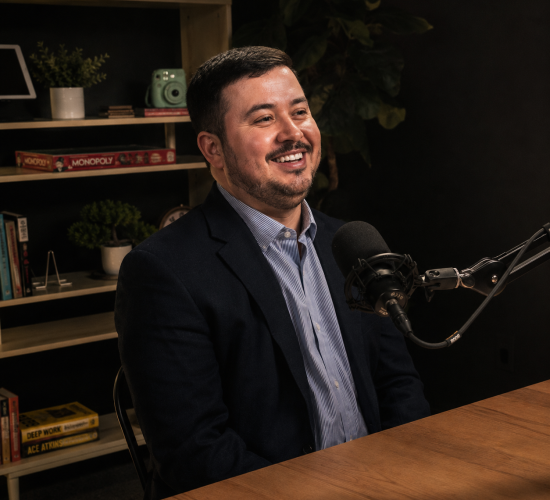
Email marketing for a small business is one of the cheapest and most direct ways to talk to your customers, and most owners are sleeping on it. In this episode of The Localist podcast, host Carrie Rollwagen sits down with Luke Richey, Director of Content Marketing at Uptick Marketing, to talk about what newsletters can actually do for a small business.
Luke and Carrie are both writers, and they both know good writing can sell services in a way most other marketing simply cannot. They start with the basics of email marketing for a small business: how newsletters differ from drip campaigns, why most people are wrong when they say nobody reads emails anymore, and why your email list is yours in a way your Instagram followers will never be. Social platforms can suppress your reach, change their algorithm overnight or shut down your account. Email does not work like that.
They get into whether to send your newsletter from a person or a brand, how Luke and his team write ghost-written newsletters for Uptick clients while still keeping a personal voice, why structure beats free writing, and why your subject line is the most important sentence you will ever write. Luke breaks down what works in subject lines, what feels spammy, when to use emojis and when not to, and how preview text works alongside your subject to get someone to open the email.
The episode also covers platform choices like Mailchimp, Constant Contact and Substack, when each makes sense and when it does not. Carrie and Luke answer audience questions about list growth, dealing with unsubscribes and starting with just 25 contacts. If you are looking for one marketing channel to commit to this year, email marketing for your small business might be exactly the place to start.
Email Marketing Small Business Topics Covered in This Episode
- Why email marketing for a small business is cheaper and more effective than most channels
- The difference between a newsletter and a drip campaign
- Why your email list is yours and your social media following is not
- Whether to send from a person or from your business name
- How Uptick writes ghost-written newsletters that still sound personal
- Why structure and sections beat free writing every time
- Why most readers only scan your headlines (and what that means for how you write them)
- Why your subject line is the most important sentence you write
- How to write subject lines that work without sounding spammy
- How preview text works alongside your subject line
- When emojis help in subject lines and when they hurt
- Choosing a platform: Mailchimp, Constant Contact and Canva-to-Mailchimp workflows
- When Substack is the right tool and when it is not
- Why unsubscribes are refining your audience, not breaking it
- How to grow your list from scratch with lead generators
- The Marketing Made Simple template Carrie uses for every newsletter
Mentioned in This Episode
- Carrie’s free newsletter and good stuff folder
- Uptick Marketing
- Infomedia
- Mailchimp
- Constant Contact
- Substack
- HubSpot
- Zapier
- Canva
- Marketing Made Simple by Donald Miller
- StoryBrand
Connect with Luke Richey
Luke Richey is the Director of Content Marketing at Uptick Marketing, Infomedia’s sister company. He writes about SEO, AEO, local SEO, email marketing and AI on LinkedIn at least twice a week.
Follow Carrie Rollwagen
Listen to The Localist on Spotify & Apple Podcasts
Thanks to Our Sponsor, Infomedia
The Localist is sponsored by Infomedia. They are a Birmingham-based web and digital marketing company. They help small businesses grow online. Contact Infomedia.
Join Us at Localist Lab
Localist Lab is a free event series for small business owners. It meets on the third Thursday of most months at Saturn in Avondale. Each session covers marketing tips you can use right away. Free tacos and coffee, too. See upcoming events.
Subscribe to Carrie’s Newsletter
Want more small business tips from Carrie? Sign up for her newsletter and get insights, resources and updates sent straight to your inbox. Sign up here.
FULL EPISODE TRANSCRIPT
Below is the full transcript of this episode of The Localist with Luke Richey of Uptick Marketing. This transcript is provided for accessibility and SEO.
Carrie (00:12): Welcome to The Localist, a podcast for small businesses, where we talk about the highs and lows of building community through entrepreneurship. I’m your host, author of The Localist book, and small business consultant, Carrie Rollwagen. The Localist is sponsored by Infomedia. Infomedia is a digital strategy company where I work as senior vice president. At Infomedia, we help small businesses get big results online.
Carrie: Our guest today is Luke Richey. Luke is Director of Content Marketing at Uptick Marketing. Uptick is the sister company of Infomedia, and Luke and I work together really closely because I also work as a consultant for Uptick. We work together well because we are both writers. Writing and communications is most of my background, and that is exactly what Luke does. I respect him so much as a writer, as a manager, as a coworker, and I have really enjoyed following his LinkedIn posts.
Carrie: Today we are deep diving into email marketing. That sounds boring, but it is actually pretty exciting, because email can be a free or very cheap way to interact directly with your client base. You can build serious loyalty. You can sell products. You can get people excited about what you are doing. I started an email newsletter a few years ago, and the traction I have gotten from it has surprised me. Luke has worked on a lot of email newsletters, both for Uptick and for different clients. If you are looking for a way to talk about your business that is cheap, doable and incredibly effective, email might be exactly what you need. Welcome to the podcast.
Luke (03:19): Thank you for having me.
Carrie: I am excited. We are both writers, and I feel like we think things are interesting that other people do not. In meetings, somebody will mess up a common phrase or something, and my eyes shoot right to you.
Luke: And then Hannah. We all shoot a look at each other.
Carrie: Yes. Did they just say that?
Carrie: So today we are talking about email marketing, and even more specifically the newsletter type of email marketing. First, can you say how that differs from drip marketing?
Luke: Cadence is the biggest difference. Newsletters go out once a month or maybe once a week. Drip emails are a lot more frequent and triggered by something the customer does. A newsletter goes out on whatever cadence you want.
Carrie: Drip is usually trying to make somebody do something.
Luke: Newsletters are informative.
Carrie: Newsletters build loyalty.
Luke: Brand loyalty. We do want them to go to our contact page and become a client, or use one of our services they are not using. But it is definitely brand loyalty. We are trying to give value and show how we are experts in what we do.
Carrie: I also think newsletter marketing can be more accessible for small businesses, because drip campaigns require charts and systems. Newsletters do not have to be like that. You can write something up and hit send.
Luke: Exactly. There is a lot you have to do with drip emails. With newsletters, you can just write something up and hit send. Get a good layout and there you go.
Carrie (06:18): How would you respond to somebody who says nobody reads these things? I used to be that person.
Luke: It is a common misconception. When you get into the platform itself, you can see exactly who is interacting with your content. It is a lot more than what you think. Yes, some people leave you unread or become disengaged. But it is a really great tool, especially cost-effective, just to get in front of your audience. It is almost a free ad.
Carrie: It is not free, but it is very cheap compared to almost anything else you are doing in marketing.
Luke: Way less.
Carrie: I collected emails for years, even sign-up sheets at in-person events, but did not do anything with them. When I finally started writing a newsletter every week, I was shocked at the response. People are actually clicking. They tell me about it in person. My newsletter is by far the thing people mention the most when they see me. People hit reply and tell me they liked something. It was shocking in a good way.
Luke: It is amazing what you do not know about how many people interact with it. People will just be like, oh yeah, I saw that. They might glance, but it sticks.
Carrie (09:33): Talk about why you might want a newsletter even if you have a dedicated following on Instagram. The level of control is different.
Luke: Not everybody on your email list is on Instagram or Facebook. You also have more control over the layout, the content, the links. On Instagram you cannot really include links except in your bio. With a newsletter you can drive people to your pages much more easily.
Carrie: Social media also punishes links because they do not want people to leave the platform.
Luke: They definitely suppress it.
Carrie: Email does not work that way. Nobody’s Gmail is telling you to stay in your inbox. Mailchimp and Constant Contact want to help you reach your audience. They do not care where you send them.
Luke: They are getting paid by you to help you reach your audience.
Carrie: Mailchimp is making money from me paying for the newsletter list. I am the client. With Instagram, advertisers are the client, not me. People lose access to their social media accounts all the time. If you lose your Instagram, those followers do not necessarily come back to you on another account. You cannot take your Instagram handles to TikTok. But you can take all your emails from Mailchimp and put them in Constant Contact or Substack and it still works.
Luke: Whereas a post you scroll past, the email is in their inbox until they delete it.
Carrie: I built my newsletter list initially through a Kickstarter for my book. Those people had given me money, so they were primed to want to hear from me. I still have people responding from over a decade ago because we connected back then.
Carrie (11:58): Should the email come from the business or from a person? At Infomedia, our emails come from Pam or Jason, not from Infomedia.
Luke: For B2B, you definitely want a person. We tested it on Mailchimp. The personal name always did better. People like that personalized touch.
Luke: For B2C, you might want your company name because you are trying to be a well-known brand or you already are one.
Carrie: B2C is business to consumer, like a coffee shop or a retail store.
Luke: If you are business to business, definitely use a person, unless you are really close with your followers.
Carrie: If I get an email from the electrolytes I am buying, it is from the brand, not from whoever runs the company. But for service businesses like ours, the person works much better. We are also using people that are well known to our clients, not someone who started six months ago.
Carrie (15:32): We have individuals on staff who have their own newsletters. Can you tell me why?
Luke: Specifically with Lance, it was brand recognition. He has been getting a following on LinkedIn, and we wanted to do the same for his clients. We wanted them to get a foundation from him and another touch point. He is not just an account manager. He is a senior SEO consultant. We launched it and it has done really well.
Carrie: Lance and I talked about his personal brand before he even started his newsletter. Jason, who owns both of our companies, is really good about wanting everybody to develop their personal brand. He says if your personal brand is good and you are associated with my company, that is good for my company. So we are encouraged to build up our names.
Carrie: Lance is also interested in video. We were talking about whether YouTube videos or shorts would be better, but when we looked at the logistics, I told him a newsletter might be better to start with. So many people are not comfortable on camera. Newsletters are easy to batch, easy to prep, and you do not need as many multimedia pieces.
Luke: They are easier to do. Video takes a lot of technology. With a newsletter, you get a platform and start sending.
Carrie (17:40): It is also a good place to start because you are planning your content. My newsletters have a tip-of-the-week format, so I have all this content already structured into tips. I have used those newsletters to make video content, podcast episodes and more. We did solo episodes on The Localist using my newsletters as the script.
Luke: Lance puts it on his LinkedIn too. He reuses it as a post.
Carrie: Whole newsletter or a snippet?
Luke: Snippet.
Carrie (19:30): When you ghost write for clients like Lance, you and your team work on his newsletter. He writes the first draft.
Luke: He does. We edit and polish it. For Clay we use an AI we built with all his writing as a source. We create GPTs for some clients. We do deep research into their voice and we have a document that is our source of truth.
Carrie: AI can help identify a brand voice, but having a professional look at it is extremely helpful. You and I pick up on speech patterns and influences that AI might not catch. If somebody is trying to figure out their voice on their own, I recommend feeding four or five things you love into AI and asking it to define your brand voice.
Luke: AI is a great sounding board. It is not always great at replicating your full voice, but it can be a great starting place.
Carrie (24:38): How do you decide what sections a newsletter should have?
Luke: We do sections. I call it the bones. We get them approved first. For Uptick we have a featured article, marketing tip of the month, what is new at Uptick, industry news, and a CTA at the bottom. Lane was the brainchild of those sections. For every client we brainstorm what sections to include based on what the client wants to promote.
Carrie: Sections do two things. They make it easier for readers to scan instead of a wall of text. And when you are coming up with ideas, you are not starting from scratch. You know you need an SEO tip this month.
Luke: Sections inform everything. You do not have to start from scratch. TLDR is a real thing. You want to chunk your content and have good headings so people can skim it.
Carrie (26:36): Lots of people will never read the whole thing. They scan. Jason is my ideal reader because he scans the headlines. If he sends an email saying sounds interesting, that means he liked the headlines. That is helpful for me to know. But if you are building a personal brand, that is all you really need people to read.
Luke: Your newsletter lives or dies by your subject line. It needs to be really good in hook. If it is not, it is just not going to work.
Carrie (28:39): Subject lines are so hard. They are so important. If you lose them at the subject line, you have lost them forever.
Luke: Numbers and percentages do really well. Questions work. Hooks work. Something that makes people want to read more. Spammy is hard, because some good headlines feel spammy, but if you tone it down it usually works.
Carrie: It feels cringe to me as a writer. I do not want to be cheesy. But I get over it. I sent one once that Brad here at work said sounded spammy, and then he opened it. I do not think he normally reads my newsletter. So it works.
Luke: YouTubers will say the same thing. They will be like, we know you guys hate this title, but it works.
Carrie (30:52): Talk about preview text.
Luke: Preview text is the description. It is the sister to the subject line. The hook is in the subject, then a little more clarity in the preview, and it pushes them to click.
Carrie: The preview text usually defaults to the first sentence of the email. I write my first sentence as a hook anyway, so I just tweak it for the preview.
Luke: Great tactic. Keep both short so they do not get cut off.
Carrie (32:53): What do you think about emojis in subject lines?
Luke: Can work for some clients. We do not use them in ours for Uptick. For B2C it can work. Moderation. I do not know if there is real data, but for makeup or consumer brands it can work.
Carrie: If the emoji helps say what you are trying to say, keep it. If it does not add anything, take it out.
Luke: Great rule of thumb.
Carrie (34:57): Audience questions. Heidi asks: Choosing a platform is my biggest struggle.
Luke: We think about design first. Mailchimp is easier to design in. Constant Contact and others can be harder to get your vision out. Mailchimp is great, ubiquitous, easy to design in. You can connect it through Zapier to HubSpot or any other CRM.
Carrie: I use Mailchimp. The UI is not always intuitive but it is better than others. They keep old modes around for a long time because they know not everyone using these is a designer. We have also experimented at Infomedia with designing in Canva and porting to Mailchimp.
Luke: Canva is easier for non-designers.
Carrie: I personally like a not-super-designed newsletter. Just a banner and Mailchimp formatting. I like to read like an email.
Luke: Cleaner is always better. You can go a little wilder depending on industry. But not too long either. People do not like to scroll.
Carrie: A lot of people have images turned off, so I do not love super image-heavy emails. Half the readers are not seeing them. There is a middle ground between designed and flashy.
Carrie (39:24): Let’s talk about Substack. It is popular but not the right fit for a lot of our clients.
Luke: Substack monetizes your subscribers. They take 10 percent. So it is good if you are a life coach or someone whose content people will actually pay for. Like consultant Robert Montgomery. Substack does not do ecommerce. For B2B or B2C with products, it is not the right fit.
Carrie: So Substack works when the newsletter is the product.
Luke: Yes.
Carrie: Five dollars a month is the starting price. So would you have 15 to 20 people who would pay five dollars a month? And is it worth it to you to create that content for that amount of money? The people who pay are completely different from the people who read for free.
Luke: Substack is for thought leadership. Not for ecommerce.
Carrie: Perfect description. The newsletter is the product.
Carrie (44:27): Anonymous asks: Every time I send an email, I am scared of annoying people and losing subscribers.
Luke: You are going to lose subscribers. It will happen. They self-select. Do not worry about it. If they are not going to do anything with your content, let them unsubscribe.
Carrie: Mailchimp shows it in red, which feels bad. A writer I know described unsubscribes as refining your audience. Every time someone unsubscribes, you are closer to having an audience that really cares about what you are doing.
Luke: Great way to put it.
Carrie (46:35): How do people know how readers are engaging? You report on Uptick’s newsletter engagement, not just new followers or list size.
Luke: Mailchimp has pre-built segments for engaged and disengaged. Disengaged means no interaction with your last five emails. Engaged means at least one open or click in the last five. Ours is about half and half. We are trying to get engaged subscribers up.
Carrie: Should I purge people who do not engage?
Luke: I would not purge if they have not unsubscribed. They could have been on vacation. Wait until they unsubscribe or ask to be off the list.
Carrie (49:02): Amy asks: I want to start an email list but I only have about 25 contacts. Is it worth starting?
Luke: Yes. You can be in the free plan with most platforms. Everyone starts somewhere. You are better than a lot of people. Start with 25.
Carrie: If you had 25 people you could directly tell your idea or business to, that is actually a lot of people. Especially for free.
Carrie (50:38): How do you get people to sign up?
Luke: Put a form on your website. Offer something free, like a guide, in exchange for an email. Get their name and email.
Carrie: I have done it lots of ways. I bring a physical sign-up sheet to talks. I always have a QR code. Usually I create a lead generator related to the talk. A few years ago I made a PDF of all the coffee shops in Birmingham, with parking, outlets, vegan options. I posted on social, said sign up for my newsletter to get it, and built my list that way.
Luke: Put a link to your newsletter on your socials and in your link in bio.
Carrie: My list grows when I have a reason for it to grow. I have a Google Drive folder anyone can see, called Good Stuff from Carrie. I just throw things in. Sometimes it is a massive PDF. Sometimes it is a single page in Google Drive. Both work.
Carrie (55:48): I also use a template from the book Marketing Made Simple. Every newsletter I send uses it. It starts with a hook, says why you should read, gives three bullets, and a clear next step. Do you free write or use a structure?
Luke: We use structure. Free writing gets lost. Story Brand or Marketing Made Simple keep you on track.
Carrie: If you want my version of that template, it is in my Good Stuff from Carrie folder. Sign up for my newsletter to get it. Luke, how can people follow you?
Luke (56:55): LinkedIn is the number one place. Luke Richey on LinkedIn. R-I-C-H-E-Y. I post at least twice a week about SEO, AEO, local SEO, email marketing and AI.
Carrie: Your LinkedIn posts are excellent. They are well thought out and they do not feel like AI because they are not. Your posts feel like mini newsletters. Fully formed thoughts, not clickbait. Worth a follow. Thanks so much, Luke.
Luke: Thank you so much.
Carrie (58:11): If you are in Birmingham and want to learn alongside other small business owners, we have a live event called Localist Lab. We meet at Saturn on the third Thursday of every month. Free tacos from Lady Bird Taco. Free June coffee. I invite experts like Luke to share specific tools small business owners can use to grow.
Carrie: The Localist podcast is written and produced by me, Carrie Rollwagen. Our showrunner is Taylor Davis. Our outreach manager is Hannah Craigen. Our production engineer in the studio today is Emery Lambert. We record at Infomedia Studios. Thank you to Infomedia for sponsoring the podcast and making everything we do here possible. Until next time, whether you are running a local business or buying from one, thank you for all you do to make our community stronger every day.