
Show Notes
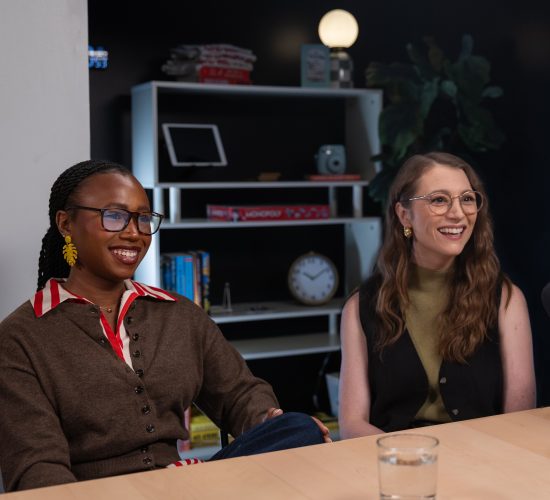
Hiring a photographer for your small business sounds like a simple decision until you are staring at a gallery of photos you cannot actually use. In this episode of The Localist podcast, host Carrie Rollwagen sits down with Katey Beck and Taylor Davis, producers at Infomedia Studios, to talk about what really happens on a shoot and how to get the most out of hiring a photographer for small business.
Katey is a chef turned producer who moved into food styling, creative direction and interview production. Taylor is a film major from Auburn University with a background in commercial acting, wedding videography and content production. Together they run photo and video shoots for small businesses and brands in Birmingham, and Carrie regularly goes to them for the questions she cannot answer herself: what to wear on camera, how not to freeze up on video, whether her Zoom background looks weird.
Katey and Taylor open with what really goes into a shoot. Why one hour of production equals about one minute of finished content. Why a full day realistically nets you 80 photos and maybe a 90 second video, not a highlight reel. Why hospitality matters more than gear, especially at a wedding or an interview shoot. What to look for when hiring a photographer for small business (lighting, focus, ability to direct posing, examples in your specific industry). When you actually need a stylist on set. And why food is the one category you always need one for.
The second half is a practical guide for anyone shooting on their own. What a shot list is and why the whole team needs one. Why brand shoots often fail because the photos were not planned against the content they would live in. Why you should not wear the same blazer in every frame. How to build a good background at your desk. Why the iPhone is a legitimate tool in 2026 and how to lock your exposure for better footage. They also answer listener questions on why video feels so much harder than photos, whether there really is a good side of your face, and what budget you actually need to hire a producer. If you are hiring a photographer for small business or building your brand yourself, this is a rare inside look.
Hiring a Photographer for Small Business: Topics Covered in This Episode
- Why one hour of production equals one minute of finished content
- What a full day shoot actually delivers (80 photos, maybe a 90 second video)
- How to make interview subjects feel comfortable enough to forget the camera
- Why hospitality matters more than gear
- What to look for when hiring a photographer for small business
- Why lighting and focus are the two things that cannot be fixed in post
- When you actually need a stylist on set
- Why food is the one category you always need a stylist for
- How to style your own desk for camera
- Why depth and layering matter in every shot
- DIY shooting with a friend and a Birmingham loop
- What a shot list is and why the whole team needs one
- Strategic posing and Katey’s ‘micro-angling’ technique
- Why brand shoots fail when the photos are not planned against the content
- Why wearing the same blazer in every photo is a mistake
- Bare minimum for a professional-looking DIY shoot
- Why the iPhone is a legitimate tool in 2026
- How to lock your exposure and shoot in natural light
- Why video freezes people up more than photos
- Whether there really is a good side of your face
- What budget you actually need to hire a producer
Mentioned in This Episode
Follow Carrie Rollwagen
Connect with Katey Beck and Taylor Davis
Katey Beck and Taylor Davis are producers at Infomedia Studios. Together, they run photo and video shoots for small businesses and brands throughout Birmingham.
Listen to The Localist on Spotify & Apple Podcasts
Thanks to Our Sponsor, Infomedia
The Localist is sponsored by Infomedia. They are a Birmingham-based web and digital marketing company. They help small businesses grow online.
Join Us at Localist Lab
Localist Lab is a free event series for small business owners. It meets on the third Thursday of most months at Saturn in Avondale. Each session covers marketing tips you can use right away. Free tacos and coffee, too.
Subscribe to Carrie’s Newsletter
Want more small business tips from Carrie? Sign up for her newsletter.
FULL EPISODE TRANSCRIPT
Below is the full transcript of this episode of The Localist with Katey Beck and Taylor Davis of Infomedia Studios.
Carrie (00:12): Welcome to The Localist, a podcast where we talk about the highs and lows of building community through small business. I’m your host, author of The Localist book, Carrie Rollwagen. The Localist is sponsored by Infomedia. Infomedia is a web strategy company where I work as Senior Vice President. At Infomedia, we help small businesses get big results online.
Carrie: Today we’re talking about how to get better photo and video. We run the gamut. We talk about how to get better video from your smartphone if you’re DIYing this for a personal brand, or if you’re a marketing manager with very little budget. We also talk about how to have a full-scale photo shoot for your business, and how to get the best results.
Carrie: Our guests today actually work with me at Infomedia. They are Katey Beck and Taylor Davis, producers in our photo video arm called Infomedia Studios. I always go to Katey or Taylor when I have questions. They’re my secret weapon: what should I wear on a podcast? How do I not look awkward on camera? I’m happy to share their expertise with you. Welcome.
Katey (01:32): Thank you.
Carrie (01:33): The reason I wanted to have you on today is because so many people listening are either business owners or trying to build their personal brand, and all of that at this point means you have to be on camera. Sometimes it’s as simple as a headshot for your website. A lot of times it’s speaking on camera, being on Instagram. Sometimes it’s a whole photo shoot. Sometimes it’s setting up your own shoot in your living room. I thought you were the perfect people to ask these questions.
Katey (02:27): We know the scoop already.
Carrie (02:31): Last time I was on a podcast as a guest, I made Katey help me pick out my outfit. I made Taylor come with me.
Taylor (02:40): I volunteered. I was like, I want to see this.
Carrie (02:44): So you’re my go-to people. Tell the audience how you got here and what jobs you’ve had in the past. Let’s start with Katey.
Katey (03:04): I’m a chef turned producer. It’s actually a natural fit. I was in a restaurant and a production crew walked in and asked if they could shoot a scene there. I got to know the producer well through the process, and I realized my skills as a chef could easily transfer to producing. It involves the same personality type: someone who is really good at multitasking, creative, can think of other options, can act quickly in a panic. All those things were easily transferable. I started from the bottom and worked my way up.
Carrie (04:05): You’ve done a lot of behind the scenes, producing, styling, getting everything ready.
Katey (04:13): Yes. Food styling, producing, creative direction, basically anything you can think of. A producer wears more hats than anyone in the field.
Carrie (04:27): Taylor, you have some of that experience too, but you also have behind the camera experience.
Taylor (04:33): I’ve pretty much stood in every position in production. I’ve done commercial acting. I’ve been the subject behind the camera memorizing lines. I’m a theater kid, so naturally I’m always into performing. Then I’ve held the camera woman position, especially with wedding videography, and other types of shoots. I started at a marketing firm, and I was a film major at Auburn University. I always knew I wanted to be in production, at least near a camera. That’s what got me into this role. I have the eye for setting things up and directing, and I have the behind-the-scenes knowledge of what it’s like to be in front of the camera.
Carrie (05:40): There are so many parts of this job that seem glamorous, and some are. You get to go to the beach on a shoot. Can you tell us about some of the things that are less glamorous?
Katey (06:02): I have a great example. Taylor and I went on a shoot to Rosemary Beach. You’d think it’s glamorous. We were on vacation, right? But we were in the sun on the beach, running, walking, squatting, standing in the water, out of the water. That was our day. When we go to an expense meal, it’s more like crashing and ordering DoorDash because we can’t move. But the picture looks great.
Taylor (06:37): It looks glamorous when you see the final product. Not understanding all the work that goes into the project prior to that. I was talking to someone recently, and they said every hour of production equals one minute of content. I don’t know if that’s accurate, but it feels right. You spend hours working, in the heat, getting every little motion perfect. You’re going to put in hours of work for just a little piece of content. That content’s going to be great. But it’s going to take a long time.
Carrie (07:13): That’s true even when you’re DIYing it. I work in a totally different part of the company than you. But I’ve had a weird background of assisting on shoots. I used to work as a copywriter for a catalog, and their last copywriter went on all the shoots, so I did too. My job was mostly to carry stuff, clean things. That’s what I tell people who want to get into the industry. I’ve also worked as a second shooter because I have friends who shoot weddings. That’s also carrying stuff, staying out of the way, making sure people have water. People think they’re going to get on set and be behind a camera, and it’s usually schlepping stuff and staying quiet.
Katey (08:12): You’re doing the prep cook’s job. You’re not the chef.
Carrie (08:20): I’m the one mixing food coloring into shortening. Fake ice cream.
Taylor (08:27): As someone who’s been in every position, the actor gets the most credit, or the product gets the most credit. All the work is behind the camera.
Carrie (08:37): I like what you said about one hour is one minute of footage. That’s another thing people are confused about, whether they’re hiring a professional shoot. There’s a lot of, why aren’t you getting one photo every minute? What is a reasonable expectation for a day-long shoot?
Taylor (09:25): In terms of output for a day of shooting, we typically say 80 photos maximum for a full day shoot. That means seven hours, the most your body will allow. Then maybe one video, maybe a 90 second video. If you’re doing social media content, you can maybe do a couple of short videos. But over five minutes of content in one day, that’s ambitious.
Katey (10:01): I agree with Taylor. A conversation I have a lot with clients: it’s always at least a 45 minute interview for maybe two to three minutes of actual delivery. Spending more time is when the editor goes in, you get more quality content compacted. You’re leaving off all the ums, stops, pauses, breaks. Clients say, why do you have to be here for eight hours? These people are going to die down. It’s not because it takes eight hours. You have to account for people being people. Maybe someone needs more time to get comfortable. When you walk into a shoot, there’s knowns and equally that many unknowns. That eats into time because on-set decisions have to be made and collaborated through.
Carrie (11:11): On The Localist, we had somebody who stopped filming because he had a runny nose. That happens. Katey and I have done a ton of interviewing. Taylor, you’ve done some too. Sometimes you get somebody who is scared or just very wooden on camera. Katey, you’re amazing at it. You get people to cry all the time. You’re the Barbara Walters of Birmingham area video.
Katey: I do take pride in the tears.
Carrie: As you should. It’s such an awkward thing to have a mic in your face and a camera crew. To have somebody actually connect with you, they’re not seeing all of that.
Katey (12:17): That’s what I live for. That connection where you forget you’re on camera. When people say I’m awkward on camera, you’re not awkward on camera. You’re paying too much attention to cameras. If you’ll connect with me and let us have a conversation and drown out the background, that’s where the real connection is. It doesn’t happen a lot, but when it does, as a producer or interviewer, that’s when you’re in it.
Carrie (12:50): Do you have any tips for someone interviewing? Say a marketing manager doing their own video and interviews. How do they get better content from the people they’re interviewing?
Katey (13:06): A lot of it is personality based. I always try to connect with the person before the cameras roll. Even just a greeting. My only goal when I enter an interview is to make someone feel comfortable. When they’re comfortable, they feel seen and heard. I make eye contact. I listen. I lean in when things are interesting. When they’re engaged with me and making eye contact, that’s when they’re their most comfortable. That’s a great tip: just connect before you start.
Carrie (13:50): I love that. One thing I don’t do on The Localist is if the guest starts telling me the story, I try to change the subject. So they can forget why they’re there, and when I ask them the question on air, it’s fresh. It always sounds stale when they’ve already told me. Eye contact for sure. I always do way more eye contact and way more head nodding, because you can’t talk sometimes, it will pick up the audio.
Katey (14:28): It’s hard to connect with someone when you can’t say, I know, I understand, I get you.
Carrie (14:34): You can’t say that because it comes up in audio. If somebody’s supposed to have life in their face, I smile at them more to the point that it’s awkward as an interviewer. But whoever you’re interviewing tends to echo or mirror what you’re doing. If they need to smile more, I’m like, yeah, let’s talk about that.
Katey (15:00): You have to set the energy for what you’re about to do. If it’s serious, you enter in a different emotional state than when it’s something fun.
Taylor (15:12): One thing that works often is setting the individual in a mental setting they’re comfortable in. For you, Carrie, I’d say talk to me like you’re just on your podcast. Or if there’s a CEO, I say talk to me like this is a team meeting and you’re giving people input on how the week’s going to go. They loosen up because they’ve been there. They may say, I’ve never been in a production environment, but I have been at my job giving a speech to my team or talking in front of people.
Carrie (15:47): What are some ways when you’re doing a wedding that you make people comfortable? Weddings are so interesting. Almost everyone in the industry has worked weddings at some point.
Taylor (16:01): There are a couple of ways I do it. One is through humor. Always making sure you’re doing more than your job. You can hold the camera and just press record. But if you say, girl, that same thing happened to me the other day, it warms people up. They realize you’re not here to just have a camera in their face. You’re here to connect.
Taylor: This is going to sound dramatic, but I mean it. It’s serving the people you shoot. Katey does a good job at this. She’ll have snacks and waters and these things with brides. I’m always doing more than holding the camera. Fluffing their veil. Are you thirsty, let me get you water. Holding their bouquet. People want to feel you’re doing more than what you’re paid to do. You’re more like a friend than someone trying to get content out of them.
Carrie (16:56): You show them by what they can see that you’re serving them. They’re trusting the photos and videos are going to look good, but they can’t know that on the day. And they’ll try to look at the back of the camera.
Katey: Yes, that’s when you pull it away.
Carrie: With weddings especially, I’m like, you’re paying me to make you look good. Don’t worry about this. We’re not going to get you an awkward photo.
Katey (17:28): Sometimes people are awkward though.
Carrie: We’re going to edit those out. For a wedding especially.
Taylor (17:37): It’s the best day of your life. I’ll give you some good content.
Carrie: When you know I’m awkward but they took care of me, gave me water, noticed my needs, it shows I can trust them.
Katey (17:56): You have to have a heart for hospitality. Hospitality is what makes people feel comfortable around you.
Carrie (18:10): If you were hiring a photographer for a shoot for your business, and Infomedia wasn’t available, what would you look for on the website or in their materials? And when you met with them, what are good signs and bad signs?
Taylor (18:38): If I were looking at their photography, I’d be looking at lighting and focus. Those are two things that are hard to fix in post. If a photographer doesn’t know how to get those right, there will probably be other problems to follow. In terms of personality, I’d look for someone who knows how to direct. People get awkward and stiff if they can’t tell you to loosen up, put your shoulders back, lift your chin. If you can’t direct the motion of the body on camera, you won’t capture a good photo. Every person is different. What works with someone six four might not work for someone five three with opposite color hair. Different angles for different people.
Katey (19:27): I’d look for a photographer that had examples of specific things I want for my business. Photographers all have their own style. What you’re looking for is what style represents me or my company. There are people that specifically take furniture pictures. Headshot photographers. Food photographers. Start with what is my industry and do they have examples, and how did those examples appeal to me?
Carrie (20:03): A lot of times if you’re working with an agency or Infomedia, we’ll have examples of different things. You use different photographers for that. If we’re shooting food, you’re going to choose someone specific. When do you absolutely recommend somebody have a stylist on set?
Katey (20:24): Food.
Taylor (20:26): Food for sure.
Katey: People think because it’s an add-on, from a restaurant they’ll say oh, it’ll come straight from the back to the plate.
Taylor: It actually looks terrible. Tastes great though.
Katey (20:47): I’m over there putting makeup wedges underneath it, building it up. That’s to get the shot. Even straight from the kitchen, someone on the photography team needs to touch it. It should be someone who knows how to get the right angles and style food.
Carrie (21:12): Most people who work on set have a tiny bit of styling experience. If it’s a warehouse shoot, anybody on our team is going to know we need to move these things around. Taylor, you did a great little reel for us on styling a desk. Can you tell people what you said if you’re shooting your office or your personal brand at your own desk?
Taylor (21:43): Take all your pens, put them in a cup. Take all the little tiny items. We always say if you’re looking at a desk and it doesn’t look cluttered, nine out of 10 times when you take a photo of it, it feels cluttered. Take those little items that feel normal and put them in one spot. Stack all your papers with sticky notes into one little stack. Add branded items to your setup, like a coffee mug with the logo. Put a hat with your logo on it. Add things that tell your user what this photo is saying and where it’s at and who you are and why you’re in the photo. A little more context.
Carrie (22:34): Those tips are things you don’t need a stylist for every shoot. A really good group is going to know some basics. Some things just take more styling.
Katey (22:49): Let’s say you’re a small company, maybe two or three people, you might work remote. A great investment is to find a producer or team that can find you a location and a stylist for even a couple of hours. Hiring a stylist in a space can get you probably five times the amount of pictures because they know how to decorate corners, spaces, places. You can utilize the shoot more by investing in someone who can help you get the shots.
Carrie (23:24): I see you do this all the time, where it’s one location, but the way you shot it looks like it wasn’t. Because it’s one location it can also look cohesive because the lighting is the same. Helpful for a website. It looked like a conference room but it wasn’t a conference room.
Carrie: Another favorite way I like to use Katey around our office is like a Zoom background. I just laid all my stuff on the table and was like Katey, help me. There were things you noticed that I never would have. I had a bulletin board and you were like, we need to get really cute floral paper and put it on the bulletin board. And I was like, that is the dumbest thing I’ve ever heard. And it looks great. I really did it. I trusted you. But I was like, I don’t see why that matters. Then it looks so good in the background. If you’ve watched my Instagram reels, if I’m at my desk, I’m always in front of that background.
Katey (24:30): Just a splash of paper, color, brand colors, little things. When you pull them into play, they all play together. Sit at your computer and take a picture of yourself to see what is around you.
Carrie (24:47): The DIY way is just keep taking the photo, keep going, maybe take stuff away. We all try to make it match, and it just looks like a mess.
Taylor (25:00): In terms of camera work, there’s always levels to the depth of the actual shot. You have the human in front, the chair right behind them, the shelving unit behind that, at an extra layer the window even further back. When people are looking at you, they’re listening to you, but their eyes are also traveling throughout the setting. If there’s only one layer for their eyes to travel, you may lose engagement. You may lose opportunity to hold their attention longer.
Carrie (25:30): On video, I’ve never thought of that. It’s true because the influencers you watch, either they have that in their setup, or they’re walking or doing something else. It’s worth doing if you’re shooting your own reels. It doesn’t have to look super produced. Authenticity is helpful. You designed my background and it’s a little bit of a mess, and I don’t fix it every time, but because I had thought put into it, it helps.
Carrie (26:26): Let’s transition to shooting with a phone. This is more for somebody who has to DIY their business. Maybe a marketing manager who can only afford a photo shoot once a quarter and has to shoot in between. Or somebody building their personal brand. Let’s talk about shooting people, specifically for reels, Instagram, TikTok, LinkedIn, short form video. What are some tips?
Katey (27:38): I could talk about the shoot you and I did together.
Carrie (27:40): Yeah. Those. I actually think that’s the best example for someone with an iPhone in a small business.
Katey (27:43): Carrie and I are friends, and we both needed some content. We mapped out a little Birmingham circle. Little half day, and we took turns with each other. A lot of times you need your hands overhead taking a picture down, or it’s awkward to be in a coffee shop and you want a picture of you drinking coffee looking cool at the bar, but you’re taking your own picture. That’s sad.
Carrie (28:20): It’s embarrassing. Everybody at this point knows what you’re doing, but it’s still awkward.
Katey (28:28): You can get way more content because you don’t feel awkward because your friend is doing the awkward things. You want somebody to hype you up.
Carrie (28:35): Some of those pictures were really great of you. The reason a lot of those photos were good is because we shot them at Pink Lantern. The light was great. They’ve set up a lot of vignettes. We got other good shots, but those were the best. So if you’re in Birmingham, you can go to Pink Lantern. Another benefit: you will not be the only person shooting photos there. Everyone’s there getting content.
Katey (29:18): There are places where that’s normalized. They have a cool mural or things that play with your brand that you can pop in and use for free. Free staging is basically what you’re getting out of your iPhone and a trip around town.
Carrie (29:34): It also helps to have a little shot list. Every place, let’s do this and this. For me, I’m usually posting about writing or reading. Me with a coffee, me with a book. I have a page of my journal that’s just fake writing. I am writing fake stuff so it can look like I’m writing. But if somebody sneaky zooms in, they’re not reading my actual journal. If they’re looking too closely, that’s on you.
Carrie (30:06): I had a mini shot list. Every one of these places, I want to get these shots. That helps when you’re feeling awkward. I know shot lists are super important on set.
Carrie: Talk about that. What is a shot list? Why does it matter?
Taylor (30:29): A shot list is a list of everything you’re shooting in that moment or that day. Labels to include: close up, long shot, medium shot, over the shoulder shot, group shots, one-on-one shots. You can sketch it out or write it out with words. Whichever works better. It allows you to go down the list and check things off as you go. When you get into the moment, you may freeze up and say, okay, I was thinking I’m going to write a blog about coffee, and I know I need a picture of coffee, but I didn’t think about the different angles I could get, or the different people I could have with the coffee. If you have a list, it allows you to say I got this perspective, I got this angle. That lets you use the same setting in multiple different ways.
Katey (31:47): It’s for the whole team. Not just the producer. It’s for the client. It’s for the photographer. When you’re discussing a shoot, you have to have a priority list. The shot list is the priority list. Anything outside of that is great. But if we stick to the list, we know it fits in our time frame and we can achieve the use for the photos. The most important part is the usage. You don’t want a gallery sitting there that you don’t know what to do with. Everything should have a place on the shot list.
Carrie (32:26): Even for a wedding, you’ve got to shoot the getting ready, the kiss, the cake, the bouquet. You have a standard thing, but then making sure. This is even more true if you’re shooting a business or something not as regimented. At a wedding, which family shots do you want? It is crazy how crazy everything gets on set.
Carrie (32:57): At a wedding for sure, but at a regular shoot, it’s like oh no, this was super important, totally forgot. Clients often say, can we go ahead and shoot this while we’re here. Maybe, but maybe we’re going to lose some critical things because we needed that time.
Taylor (33:19): If you’re new to making a shot list, emulate other people. If you have an Instagram account or there’s a video, take a screenshot of that photo you like and copy it. It won’t look exactly the same because you’re in a different setting, you’re a different human being. But if you like the angle, until you get the hang of it, just be a copycat for a little bit. It’s okay.
Katey (33:51): I do that same thing, especially if you have a shoot heavy on strategic posing.
Carrie (33:57): Describe strategic posing.
Katey (34:00): Taylor took my picture before. It’s like okay, I’m going to exaggerate my leaning forward. I’m going to exaggerate to create a triangle. It’s going to feel really awkward in my body, but it’s been planned because I know on camera that’s how it looks best. Those things need to be thought through, especially for companies that have large scale equipment. You have to think, I need you to stage this so I can figure out what is behind it. It’s always on the shot list to strategically think about the angle for specific things.
Taylor (34:57): Something to keep in mind is with camera lenses, there’s always compressing or expanding. When you feel like you’re super far from your torso with your arm, the lens being used could be bringing you closer together. It’s like an optical illusion. Even though it feels weird, you may see the footage and think, man, I felt so much more dramatic than what this is displaying.
Katey (35:22): A headshot tip I really like: every time I do it, I start with, this is going to feel really weird. Completely push your chin forward like this, and then tilt it down and leave it. You’re going to feel like your head is frozen in place and your shoulders are so far back. But it elongates your neck, and especially for people worried about wrinkles, it creates a shadow. Those things are really thought through when it’s time to take photos of people.
Carrie (36:03): Can you talk more about angles in the body? You put your hand on your hip, which makes a triangle. If you’re sitting down, crossing your legs can make an angle.
Katey (36:17): Scooching to the end of the chair. Posture. It’s mostly about, when we take a headshot of someone, we always get the left and right side of their face to see for ourselves what their better angle is. So you can start. I’ll invent another term: micro-angling people. When I take a headshot, I always start in position, take a couple shots, then start moving my head around, moving my body around. You want to be loose. That makes me more comfortable. Sometimes I’ll stand up and tell people to shake it off. Flip your hair upside down, shake it off, and let’s do a few more. Usually those are the best ones. Now that I’ve told you what the angles are and you feel uncomfortable, but when you shake it off and you can just do it yourself, you get the best results. The last photo is nine times out of ten the best one.
Taylor (37:27): I also tell people don’t squish. Don’t squish your hands together, don’t squish your arms to your torso, don’t squish your legs together. Rest your hands at a comfortable spot and just loosen up. Make sure your elbows aren’t tight to your hands.
Carrie (37:50): One of the photographers I used to shoot with, Kelly Cummings, she’s a wedding photographer. She always says fake laugh. Ha ha ha. She does it and has them do it, and almost everybody starts really laughing after. Sounds so weird.
Katey (38:09): It’s contagious. Like a yawn. Not a sneeze. A yawn. And that gets people laughing at each other. You’re all being awkward at the same time.
Taylor (38:21): It loosens them up. I’ve seen it happen in my training. Katey will crack a joke or break the ice, and you can feel everyone loosen up immediately.
Katey (38:35): I ask people to do that for me. That’s how I test what photographer I want to use. I say, tell me a joke.
Taylor (38:43): She’s into testing people. If I laugh, you’re in.
Carrie (38:50): I was recording a video, and the videographer told me to smile before I start talking. So I’d be smiling and then start talking and then smile. And also smile at the end. I felt so goofy but it made me seem happy. People were like, you seemed so happy in that video. I was feeling super awkward actually.
Carrie (39:20): Let’s get to audience questions. I asked for these on Instagram. Follow me on Instagram if you want to submit. First question: I always look stiff and awkward in photos. Is that fixable or is it just my face?
Katey (39:46): Email your face. Give me a picture of that first. Every person, unless you’re like Matt Damon, is awkward. It’s an unnatural situation to be in. There are ways, but I don’t think that’s the person’s job. The person shows up as relaxed and confident as possible. The day of a photo shoot is not the day you do a different makeup style, different hairstyle, decide you need a facelift that morning. Don’t come to the table with that. Come in and then trust that they will do their job.
Taylor (40:35): Another thing is constant movement. When I do wedding videography, the mother will be helping the bride get ready. I’ll say I need a shot of you getting her buttons right. They’ll grab the button and freeze. This is a weird video. If she were to actually button the dress, take her time, have that natural movement. If you’re getting photos, the photographer can up their shutter speed or snap away and get the middle motions with the main motions. There may be eight deletable photos in there. But you’re going to get that one that’s like, man, that looks natural.
Katey (41:16): The photographer should take a lot of photos while you move, so you catch a natural pose.
Carrie (41:31): Even when I’m shooting pictures of myself, doing selfies, I take a lot and change the angle. Kelly makes fun of me. She’s like, you know I’m a photographer, I could take that picture. I’m like, no, I’m my own muse. I need to see my face so I can be like, I hate these and I love these.
Carrie (41:51): Okay, so I’m fine in photos, but the second it’s video I completely freeze up. Why is that so much harder?
Katey (42:00): When you’re on video, that is true. People even feel weird about saying their own name out loud. It’s because you’re not used to communicating out loud while viewership is tuned in. One thing I do is I ask people to say their name and title three or four times. They get used to hearing their own voice, then you roll into the easiest question, then the harder question. It goes back to the team making you comfortable.
Taylor (42:39): There could be hesitation to mess up. When you become okay with messing up, and realize there are so many editing softwares that can cut out your mess-ups, you get more comfortable. The video isn’t hinging on every sentence. This podcast is more long form, so we may say something that doesn’t get cut out that we regret. But in terms of social media content, you can splice, you can move, you can adjust. Even a sentence you said before another sentence doesn’t have to stay there. You can cut them into two separate pieces and move them around.
Carrie (43:25): Even if you’re doing your own social media editing, the software is so advanced now. I’m really not good with the tech, but even I can do that. I also love Taylor’s tip to think of something you’re comfortable in and pretend you’re in a meeting.
Carrie (43:40): Next question: I paid for a whole brand shoot last year and I barely used any of the photos. What did I do wrong?
Taylor (43:59): Planning. In terms of a blog, if you plan your content out for that quarter or that year, you have a pretty good idea of what photos you need. If you don’t plan out what the photos are for, you’ll probably get the wrong photos. Then you’ll end up writing content and realize, goodness, I didn’t get a picture of a green tea, and I have a whole blog on green tea. You have to plan according to your goals for the year, or what you’re outputting in congruence with the actual content. You’ve got to know where it goes.
Carrie (44:43): With Infomedia, we used to do shoots primarily for social. So we were getting fun stuff, seasonal stuff. Now we’re shooting a lot for our blog, and almost all our blogs are about something that happens on a computer. So we need more pictures of someone using a computer. We did a whole shoot, a whole day of people using phones.
Katey (45:08): We’ll use those more than anything. If you know what the goal is and where it’s going to live, you shouldn’t have a lot of photos you don’t use.
Carrie (45:19): One of my things I see a lot is people wearing the same clothes. I’m on the editorial side, so I’m usually the one who gets a lot of photos and says, we can’t use these. Not from you all, we can always use yours. But a small brand invests in a shoot, goes to one place, and they’re wearing the same clothes. You can’t have a whole website full of you wearing the same blazer, or a whole social media feed.
Carrie (45:55): When Katey and I went to shoot, we had different blazers. We didn’t change our whole outfits, but we changed our looks a little bit. Different glasses, different blazers, accessories. So it looked enough like a different day.
Katey (46:08): I kind of thrift shop that way. Wear your exercise shorts and a tight t-shirt, and then you can try on over. It’s about layering. Start very base, jeans and a tee. Add vest, take away vest, add blazer. It can be really simple. That’s something we can always help with if anybody asks us. That’s styling.
Carrie (46:35): If you’re doing your own photo shoot, pack a few different looks. That’s super helpful. If you come to a shoot with me and you only have one thing and you’re like, is this okay? I’m probably going to say yes. When you have four things, I’m going to say that’s better, or let’s swap this out.
Katey (46:59): Especially when it comes to color. I know way more color details and theories than a normal person who just happened to grab a shirt.
Taylor (47:09): Don’t pack clothes you haven’t worn or don’t feel comfortable in. That whole I get stiff on camera problem is probably because in your day-to-day life you present as one thing, and then you’re like, let me take it up two notches for this video shoot. Of course you’re going to feel out of your element. This may be who you are, but it’s not your everyday look and feel. You may feel uncomfortable in your skin.
Carrie (47:38): I also see people shooting for their brand and having something they cannot show. They’re in a kitchen and not wearing hairnets, or they changed their branding and it’s an old truck. We’ve seen a lot of those through the years. Less now that we have an internal photo department. We used to use freelancers. It’s not their job to tell you that your truck is the right truck. We’re going to do that for our clients, but not everybody.
Carrie (48:09): Okay. I need new photos but I have basically zero budget for a big shoot. What is the bare minimum I can do that still looks professional?
Taylor (48:25): If I were to give a starter kit, technically you don’t need a light. You have the sun. Don’t buy a light if you can’t afford one. Find a solid wall. If it’s a product shoot or an environmental shoot, find a brick wall or some sort of depth setting. Grab your iPhone. I’m becoming more of a believer in the iPhone because their cameras are getting more complex. They allow for more depth. One thing I keep in mind is lighting on your iPhone. The lighting settings the iPhone naturally has are a little less conducive for the professional look people typically go for. Lock your exposure, then drag it down so you can edit the photo and raise the lights and colors after in whatever editing software you’re using. You need a setting, a phone, and sunlight. Don’t do it at nighttime. You get that grainy weird looking image. Everyone has the equipment at their fingertips as of 2026.
Carrie (49:40): Typically if you’re shooting people, they’re looking toward the sun.
Taylor: Right. Don’t have it behind them.
Katey (49:46): Unless you want to look like an angel.
Taylor: Backlight never hurt anyone.
Carrie (49:54): A professional photographer can make that shot look great. For me, I used to teach darkroom in college, but I didn’t become a photographer because I don’t understand light. Photography is almost all understanding light. I can say, I don’t really know why, but I need everybody to face this light. If I were shooting in a building, I wouldn’t shoot in our hallway because there’s no sunlight. I’d walk across the street because there’s a lot of natural light there. I can cheat it and it’s going to look a million times better.
Katey (50:32): I learned from the team, as soon as I walk in to do a scout, I find the rooms with windows. Do the same.
Carrie (50:40): Find the room with a window.
Katey: And do yourself a shot list.
Carrie: Turn the overheads off.
Katey: Always. No big lights.
Katey (50:52): Or connect with someone. Ask them if you could use their space. Get a little gimbal for your phone. You could really be great.
Carrie (51:03): A lot of it is trial and error. Seeing what works. I love the tip of getting example shots because you know the look but it’s hard to break it down when you’re not looking at it. Even when you’re hiring a photographer and doing a shot list, if you have a very specific idea of what you want, it can be very helpful to share. This is the kind of thing I’m looking for, instead of describing it with words.
Katey (51:28): I love a shared Pinterest board or Instagram. Send me inspo. I love inspo for anything we shoot.
Taylor (51:37): Being as specific as possible with your shot list is important. There’s this concept. If I ask for an over-the-shoulder shot, and I’m directly behind you versus pointing my camera over your shoulder at an angle up, it gives two different ideas. If I’m shooting upward, it’s a dominant perspective. If I’m directly behind you, I’m a creeper peeking over. It gives the viewer a different perspective on what they’re viewing.
Carrie (52:14): Last question. Is there such a thing as a good side? How do I figure that out?
Katey (52:27): Some people may have a good side. I have a side I prefer. It’s personal preference. From behind the camera, just as a general observation, it has to do with where your hair parts. My hair’s tucked on one side, so I would rather show this side because there’s more of my face than showing mostly hair. It’s more about angle, not good side, bad side.
Taylor (52:58): Agreed. It also depends on where the light source is. Your good side could be that side, but if it’s dark over there, it may make your face look different. That’s where test shots come into play. Even our photographer at Infomedia has a computer set up. It’s like, hey, look at this, and if we don’t like it, point your feet in the opposite direction, let’s see if we can get that look you’re going for.
Carrie (53:26): Moving around is a really good tip. I feel like we could go on forever. You should have your own podcast. Instagram account. Personal branding, we’ll have to get into that next.
Katey (53:43): I was thinking today, what is a good quote I could say? The only thing I would say is be as organized in everything you can, but also be equally open to chaos. That’s a producer’s job. To be in the center of that.
Carrie (54:13): Pre-production, super organized. Day of production, you have to roll. We have to. It’s going to rain.
Taylor (54:23): That’s a whole other episode. Rain. So many things.
Carrie (54:27): If somebody’s listened to this, tell them how to work with you, or follow you on social media.
Taylor (54:39): You can email us. Two ways to get in contact: through infomediastudios.com, our website where you can view our portfolio and work, or email us at katey@infomedia.com or taylor@infomedia.com. We can start with a conversation if you’re looking for any services. We customize things to what you need, for social media, your website, or anything else. If you want a podcast like this, we can make that happen for you.
Carrie (55:09): What kind of budget do you need? Like 5k, 10k? Where would you start if somebody’s like, I don’t know if I can even afford working with you at all?
Katey (55:21): You need to probably have $1,200.
Carrie (55:23): That’s lower than any of them.
Katey (55:30): If you invest in someone really good for two hours, the product you get in return is worth the investment. It may not be but 20 photos. But if you know where those 20 photos are going, and they are all perfect, that’s worth more money than hiring someone less expensive.
Carrie (55:52): Do you want people to follow you on social?
Taylor (55:58): LinkedIn. I put way too much work into my LinkedIn. So Taylor Davis, look for me.
Katey (56:10): I’m on Instagram at @kateylbeck. We’ll put links to all this in the show notes.
Carrie (56:15): If you’re listening while driving or doing the dishes, please be safe and look in the show notes later. Thank you guys so much.
Carrie (56:27): If you like this podcast and want to meet Katey and Taylor or me in person, Localist Lab is a great place to do that. Localist Lab is the in-person version of The Localist podcast. Every third Thursday of the month at 10 a.m. at Saturn in Avondale. We have free Lady Bird tacos from our sponsor, Lady Bird Taco. Free coffee. We deep dive into a topic relevant for small business owners. We hang out. Tickets are free, grab them through the link in our show notes.
Carrie: The Localist is written and produced by me, Carrie Rollwagen. Our showrunner is Taylor Davis, who you know from this podcast. Our outreach manager is Hannah Craigen. Our producer in the studio with us today is Emory Lambert. Thank you to Infomedia for sponsoring the podcast and making everything we do here possible. Whether you’re buying from a local business or running one, thanks for all you do to make our community stronger every day.