
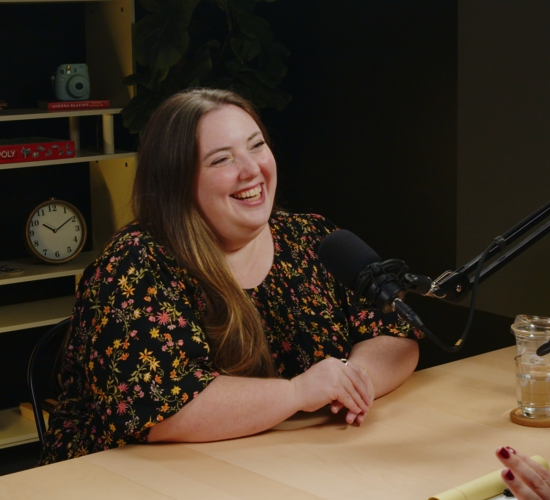
Is posting on social media a waste of your time? On this episode of The Localist, host Carrie Rollwagen asks Laine White that question. Laine is a Birmingham marketing strategist, a returning guest and “the friend who answers your marketing questions.” That is exactly what she does here.
So, is posting on social media a waste of your time? It depends. It depends on your industry, your goals, and how much time you have. Posting on social media takes real work, and Laine tells some businesses not to do it if they cannot keep it up. Visual businesses, like coffee shops, restaurants, and salons, have an easier time. So do businesses with a strong story or a person people like to watch. An HVAC company can post, but it probably will not be step one for growth.
Carrie and Laine also talk about the gap between posts that perform and posts that sell. Carrie remembers a blueberry cake post at Church Street that sent a customer straight to the counter. Laine explains why a carousel you can keep making beats a Reel you never post. She also says to test new features, like trial Reels, because the platforms want people to use them.
The second half covers hiring and production. Laine shares what to ask a social media manager, how to build a B-roll library your staff can shoot, and how studio-style short videos help experts look like experts. Then they go rapid fire through Instagram, TikTok, Facebook, LinkedIn, Threads, X, Reddit, and YouTube Shorts. They wrap with how often posting on social media needs to happen. Laine’s bare minimum is once a week. Her sweet spot is three times a week.
Posting on Social Media Topics Covered in This Episode
- Whether posting on social media is worth it for your business
- Why industry, goals, and capacity decide where to start
- Visuals, stories, and personalities that make social work
- Testing who on your team works well on camera
- Posts that perform vs. posts that actually sell
- When a trend is worth it, and when it is too late
- Least effort, most results: carousels vs. reels
- Separate carousel captions and Instagram trial reels
- What to look for when hiring a social media manager
- Measuring profile visits and link clicks, not just likes
- Why platforms want to keep people on the app
- How important video really is, and why it is hard
- Studio-style short videos and the white coat effect
- Building a B-roll library your staff can shoot
- Platform rapid fire: Instagram, TikTok, Facebook, LinkedIn, Threads, X, Reddit, and YouTube
- How often to post, and whether timing matters
Mentioned in This Episode
- “How to Use AI Without the Internet Turning on You” with Laine White
- “A Practical Guide to Influencer Marketing for Small Businesses” with Laine White
- Church Street Coffee & Books
- Paramount Birmingham
- Ohm Jiu Jitsu
- Uptick Marketing
- Infomedia Media Services
Follow Carrie Rollwagen
Connect with Laine White
Laine White is a Birmingham marketing strategist who helps small businesses with social media and content strategy. She calls herself the friend who answers your marketing questions, and she teaches a lot of it on Instagram.
Listen to The Localist on Spotify & Apple Podcasts
Thanks to Our Sponsor, Infomedia
The Localist is sponsored by Infomedia. They are a Birmingham-based web and digital marketing company. They help small businesses grow online.
Subscribe to Carrie’s Newsletter
Want more small business tips from Carrie? Sign up for her newsletter.
FULL EPISODE TRANSCRIPT
Below is the full transcript of this episode of The Localist with Laine White. This transcript is provided for accessibility and SEO.
_______________________________________
Carrie (00:11): Welcome to The Localist, a podcast for small business owners where we talk about the highs and lows of building community through entrepreneurship. I’m your host, author of “The Localist” book and small business consultant Carrie Rollwagen. The Localist is sponsored by Infomedia. Infomedia is a digital strategy company based here in Birmingham, where I work as senior vice president. At Infomedia, we help small businesses get big results online.
Carrie: Our guest today is Laine White. Laine has been on the podcast a few times before. I bring her on a lot because I think she has really great marketing advice for small businesses, and that’s what she does. If you look at her Instagram bio, it says she’s that friend who answers your marketing questions, and Laine is definitely that for me. She’s been that casually, but I’ve also hired her to look at my own social media, so I trust Laine’s advice a ton.
Carrie: Today we’re getting into whether or not it is worth it to post on social media. I know this is a huge pain point for business owners. You have so much to do as a business owner anyway, and then you’re trying to churn out these posts, and they don’t even seem to be working. So today we’re going to get into whether or not this is worth it for you, what platforms would actually be a good fit for your business, how to get things like video content, which are a real struggle, and whether or not you need to chase trends. Short answer: no, you don’t. We get into a lot more as well. I always love talking about this kind of thing with Laine, and I hope you enjoy this episode.
Carrie: I am super happy to have you. We’ve gotten a great response. I think your last episode might be one of our top performing on YouTube. I saw that this morning.
Laine (02:00): That’s so funny. I had no idea.
Carrie (02:01): You’re a star, Laine.
Laine (02:02): Okay, wow, that’s a lot of pressure.
Carrie (02:05): That’s what it means if you do well on The Localist. You’re a star. So, what we wanted to talk about today: I get this question from small business owners all the time, and as you know, we also get it from clients all the time. Is social media a waste of time for a business? That’s a very broad question, but I think people are asking it because the rules of social media seem to change all the time. People say, “I’m posting the way I always was, but I feel like I’m getting no results. So why am I even doing this?” So, first of all, is posting on social media a waste of time?
Laine (02:52): I hate to give this answer, but it very much depends. It depends on your industry, it depends on your goals, and it also depends on your capacity, because social media just takes a lot of time. You know this. You’ve talked a ton about your experiences posting. It is a huge operational lift, because there’s a big commitment to it, and putting out content that people actually care to consume requires some intentionality. So for a lot of businesses, I actually tell them not to if they can’t sustain it.
Laine: But it definitely depends on your industry. I think I said something similar when we talked about influencers a while back: if you have a business that can be visually interesting in any way, like a restaurant, a coffee shop, or a hair salon, or you have an interesting story or community that you can tease out, then that can be a good case for social media. But for an HVAC company, for example, I’m not saying it can’t work, but it’s not going to be step one for growing your HVAC business. Does that make sense?
Carrie (04:08): Absolutely. I think it’s really important to think about that. I’m going to make a weird analogy. When I was planning the video for the Kickstarter for my book, I needed to tell the story of “I wrote a book,” but that’s not a visually interesting story. So I actually started with what images I could get that would be interesting. I ran my coffee shop. I also knew a lot of small business owners, so I could hit up the Shindigs people and sit in their truck and pretend I’m driving a food truck, or I could go sit on the Skee-Ball machine at Paramount. I could be in small businesses, and those things are visually interesting. I started with that and then asked, okay, how do I tell the story? So many people think, “Well, I just have this to say,” but with social, like you’re saying, you have to have a visual element or a story.
Laine (05:08): Or a story, yes.
Carrie (05:09): Or maybe a personality.
Laine (05:10): That was going to be the third thing I was going to say. You see this a lot with people who are coaches or experts sharing their wisdom. Sometimes I’ll see this with a lawyer who is selling to clients but is also an expert in their field, or with doctors. That’s another great area. If you have somebody who can be a personality that people don’t hate listening to, then I think that can work. And to be clear, we’re not talking about rock stars here. You just have to be moderately interesting, talking about whatever you’re passionate about.
Laine: It’s sort of like the idea that everybody used to have a mascot. All the insurance companies have a mascot, because people are attracted to something or someone they can follow and connect with. So if you have the ability to have a personality associated with your brand, that can be very helpful. But for most businesses, that’s really tricky because of things like staff turnover, or maybe the natural person, like the business owner, CEO, or president, doesn’t want to do it or isn’t good at it. Some people just aren’t great at it, and that’s okay. But you kind of have to have somebody who can do that well.
Carrie (06:24): And I think you also have to test on camera, because the same person who can be really great in a room and sell to somebody can present really wooden on camera.
Laine (06:34): Yes.
Carrie (06:35): And the opposite is true. I tend to be pretty photogenic. People used to come into the coffee shop and say, “You’re very photogenic,” and I’m like, “That’s not nice when you’re looking at my actual face.” You’re saying I read better on camera. It’s hilarious. But some people are the opposite. They can really connect with people in person, but connecting through a screen is different. Social media is typically shorter, so you have to communicate what you’re communicating in a short amount of time. This is all a really special mix. You may have an HVAC company where the owner, or somebody who has a stake in the business and probably isn’t leaving, really connects great. But maybe not.
Laine (07:19): Yes. And I also think we have to be practical. Do you follow an HVAC company online? Probably not, because it’s boring. No offense to HVAC companies.
Carrie (07:30): Very important.
Laine (07:32): Yes, super important. Super hot. But there are industries like that that aren’t sexy industries. It’s not that having a social media presence for businesses like that is inherently bad or shouldn’t be done. It’s just, what are you really going to get out of it? To me, social media should be about either building and nurturing your existing community and audience, or expanding that community and audience to new business. That is what makes it practical for businesses to do. Otherwise, it’s labor. If it’s not a labor of love, then it’s just work.
Carrie (08:07): I think that’s true, and I think people get this wrong for small businesses because they’re looking at what performs online. The algorithms will often favor local. I think TikTok is doing that lately, especially. But it’s like, well, this performed really well, but did it sell anything? This was years ago, but I used to run blogs and social for a Southern Living company, and then we started Church Street, and I did social for Church Street. Immediately, I posted something like, “We just took blueberry cake out of the oven,” and somebody came in and said, “Give me that blueberry cake that just came out of the oven.” I was like, this is new. Nobody was running into Southern Living saying, “I want to buy this candlestick,” and we wouldn’t have let them in the building. That became so interesting to me: the difference between things that performed on social and what actually triggered people to buy. A lot of people wouldn’t even like it on social, but they would walk in and buy it, and that’s what I care about.
Laine (09:24): Yes, 100%. I think that’s a really tricky thing for a lot of people. Right now you’ll see businesses doing one of two things on social media. Either they’re posting all the trends and viral video concepts, or they’re posting very basic, PR-style photos of whatever they’re doing. I see this in the realtor space, for example. It’s a photo of a house. The end. Maybe you’re checking the boxes, and maybe you’re even getting traction or attention on those posts, but is it really doing anything for you? Probably not.
Laine: Whereas the people who I think are being really successful are serving their audience with content that’s valuable to them. It’s funny, because with the blueberry cake thing, some people are going to watch a video of a cake coming out of the oven for ASMR. I don’t know what ASMR stands for, to be honest. We should do this whole episode whispering. We’re not going to do that. But there is content that people consume purely for entertainment, and they’re not doing anything past that point. It’s your memes, your ASMR stuff, your behind-the-scenes content. Some of that is really just, we’re curious and we’re interested. It may not turn into anything else unless that becomes your bit.
Laine: Here’s a silly example. I have a 5-year-old, so this is particularly relevant to me. Slime has become so popular right now, and part of the reason why, I think, is TikTok and Instagram. It’s people making videos of someone else playing with something very tactile, visual, and auditory, and you don’t have to get messy, but it’s really fun to watch. I’ve gotten sucked into long viewing sessions of scrolling through someone’s feed of a bunch of absurd slimes. But it’s interesting enough that people eventually say, “Oh, I want to buy that.” So it’s doing both. They’re leaning into a bit, but also doing it to sell something.
Carrie (11:36): Can we talk about trends? Because I think a lot of people look at social as just trends. When does it make sense? Should we always be looking at what’s trending? How do we navigate this?
Laine (11:50): Okay, here’s a great analogy. You hear somebody tell a joke for the first time, a standard joke that anybody could tell. It’s not super personal to someone else. If you can retell that joke as if it’s your own, or you really nail the timing, you can use it as your thing you say at a party, too. That’s totally fine. Now, if everybody tells that joke at the party, it’s boring. Nobody wants to hear it anymore. It’s not funny, and they’ve heard it before.
Laine: I think a lot of social media trends are like that. If you can absorb it, make it your own, or recreate it in a way that feels authentic, then great. There’s no reason not to. But by the time everybody’s done it, if you’re doing it, then you’ve just caught up. Everybody else is doing this too. It’s boring now. So it’s not that you can’t do trends. Sometimes they’re good ways to engage your audience or capitalize on something we’ve seen perform well for other people first. But my question is always, can you do it authentically? And the biggest question I always want people to ask is: will posting this trend actually serve your business in some way, even if it’s just building community? Maybe it is just showing people, “We’re funny, we do silly things.” That’s great. But past that point, does it do anything? Does it sell anything for you?
Carrie (13:16): I agree. I think it’s what we talked about before. If you happen to have the person who’s great for this, go for it. If you happen to have somebody on staff, or a social media manager who’s really on top of it and can say, “This just happened, we can turn it out in three days,” you’re hitting that perfect crest of the wave. But most of us are not going to hit that crest of the wave. By the time I know about a trend, it’s made its way to Instagram, which means it’s kind of over. Also, producing trend videos can be very difficult, especially if you’re not used to doing a manufactured type of video.
Laine (13:57): And it can really date you if you’re not careful. Social media is the kids’ platform. It always will be and always has been, because the most social we all are is when we’re teenagers or in college. There’s a reason Facebook was born from college kids. So the young people set the trends, and by the time a trend gets to business owners, sometimes it’s really outdated. You have to be careful not to look performative or silly when you’re leaning into a trend.
Carrie (14:37): The way to not be cool is to try to be cool.
Laine (14:42): Yes, exactly.
Carrie (14:44): I think it’s better to just naturally not be cool. And I feel like you get a little extra window on trends if it’s something that has a good parallel. When everybody was doing the business owner doing the Gen Z trend, we had our founder do one. I think he’s maybe 82 this week, so he was around 80 at the time. It was a little late, but not crazy late. People were still doing them. And because John is so engaging and so funny, it’s a comfort video to me. I still have to watch it.
Laine (15:24): I was literally about to bring up that exact video, because to me it was a good example. You had someone who was going to be great at it, and he landed it really well. If you haven’t seen the video, it’s so funny. You have to link it in the notes. It was a great example of doing something silly. It is a trend, but people loved it and loved to share it. Did that sell a lot of services? Probably not. But that’s not really the point of that video. That was about building community. And honestly, I think a lot of social media can be about talent acquisition, too. When you share that video and someone sees it, future young people who might work for you might say, “Wow, they have such a fun culture. That’s hilarious that they did that.”
Carrie (16:08): I agree. So there’s wiggle room. But there have been plenty of trends our social media manager will pitch, and I’m like, that’s way too much effort for social media. Like you pointed out, Infomedia sells digital services and websites. We aren’t usually selling based on a video. So the juice isn’t worth the squeeze, as the tech guys like to say. It would be cool, but it’s going to take so much, and it means getting somebody who’s not used to it to perform on camera. I hope that’s calming to business owners: it’s about leaning into what you can present authentically, not about chasing every trend or trending sound.
Laine (17:01): Because so many people hate the idea of posting on social media for that reason. They either don’t get it, it’s not funny to them, or they feel like it’s all very performative. A lot of people get the ick about social media. I’m often jealous of my friends who don’t work in the social media space and can just delete their apps for three months. That’s not a luxury I have.
Laine: One of my biggest bits of advice for business owners, or marketing teams within businesses, is to think about the least amount of effort you can put forward for the most results. I’m not saying be lazy with it. You’re going to have to put in some work to do social media well. But do the things that are strategically lower effort, and make those choices based on what you can accomplish, as opposed to starting with the dream and then trying to build up to it. I’ll take Instagram as an example. Reels are much harder to produce than a carousel, because for a lot of people, getting on camera, recording themselves talking, and landing it is much harder than editing some text on a couple of images. Both reels and carousels perform well. So do a carousel this week if reels feel impossible or overwhelming. Posting something is better than not posting. I would rather you commit to something you can keep doing than force yourself into something that’s way harder or more miserable for you.
Carrie (18:40): I do want to talk about frequency of posting, but before we get off carousels: a carousel, if people aren’t familiar, is posting several photos that people swipe through. And now on Instagram you can write a separate caption for each photo in the carousel. Do you have recommendations? Should people do that? Should it be one caption? How many photos should be in a carousel?
Laine (19:08): Great question. One of my biggest rules of thumb with Instagram specifically, but really any platform, is that if they come out with something new, you should probably use it. If you think like the owner of Instagram, they need data to know if people like what they’re doing, so they’re incentivized to show posts that use new features to see if people resonate with them. That’s literally how it works, particularly for Instagram. They’re testing stuff all the time. It’s why some people get access to features before others: they beta test with groups of people. So when you can, I always recommend dabbling in it if you feel comfortable.
Carrie (19:53): It’s a nice time to do it, because you’re not necessarily doing it wrong. Nobody really knows. Nobody has set the trends yet.
Laine (19:59): Exactly. One thing I would think about with carousels, and I’m not positive they’re still doing this, but I think they are: one of the benefits of carousels is that Instagram will show the first image in someone’s feed, and then later show the second image if the post didn’t get enough traction on the first pass, or if the person just didn’t see it. So you want image one and image two to be able to stand alone and catch people’s eyes, and I would carry that into the caption as well.
Laine: Having different captions for different slides is a whole new thing. It may pan out. It may not. But if they’ve announced it, which they have, they intend for it to go somewhere. Honestly, I think it probably stems from people doing photo dumps, where they post 10 random photos from a month and want to say what each photo is, as opposed to what we’ve all been doing, which is slide one, slide two, and a long caption. Other than that, just play with it. Give it a shot. Like you said, there’s no sense in not doing it. Share it to your stories. Give it a good try.
Laine: Another newer feature is trial reels, where Instagram shows your reel to non-followers before your followers. It helps you and Instagram know if your content is landing with a cold audience. They’re also doing some of that with your existing posts as a way to test, from an algorithm perspective, whether your content is going to perform. How your content performs when you first post it is a signal to Instagram about whether to keep showing it. That’s why you should play with those kinds of things if you can.
Carrie (21:56): I like that you’ve used the word play a lot, because if it doesn’t feel like play to some extent, the audience can feel it, and it’s not going to work that well. I totally understand why it doesn’t feel like play for a lot of people. It doesn’t for me, typically, just because of the overwhelming amount that’s out there. But when I’m actually working on something, like when I was building reels for today’s episode, I enjoyed it. I really liked what the guest said. I liked cutting it so it’ll perform well on Instagram, which is slightly different than how it’ll perform as a podcast, and writing captions and all of that. That’s fun. It’s not fun to jam it in with everything else. But I do think if it doesn’t feel to some extent like play or creativity, it’s probably not speaking to people well.
Laine (22:59): It’s going to fall flat.
Carrie (23:00): Which is frustrating, because it’s like, I have to do this, and now I’m supposed to enjoy it? That’s even worse in some ways. So, I know a lot of people are hiring a social media manager, and I’m going to ask your opinion, but it’ll be obvious from the way I say it. A lot of people’s method is: “I’m going to find a very young person who I don’t have to pay very much, and surely they know how to use these platforms, and I’m just going to let it fly.” How is that as a method?
Laine (23:36): Knowing how to post, how to edit a reel, how to use an Instagram sticker, or how to caption a TikTok is not the same as being good at it. That’s the biggest issue with just hiring a young person. I’m not saying we shouldn’t use young people, absolutely not. In fact, I often encourage local brick-and-mortar businesses that employ younger people, like college kids or young folks who want a part-time job to supplement their income, to use them. Those are probably the best people to help with your social media. One, they’re already in the business. They already get what’s going on and know your culture. And they know how to post on social media.
Laine: But notice I started with knowing your brand and your culture before the social media piece. Often I’ll see brands get an intern, or find so-and-so’s daughter to post, and they post a lot of trendy content, and maybe some of it’s funny, but it does nothing for selling. That’s just not great. You shouldn’t be posting if it’s not serving your business in some way, because at the end of the day, it is an expense, even just in labor hours.
Carrie (24:50): And it’s a risk, because you put stuff out there. There are things people don’t think about. At Church Street, when I was posting, I had to be careful in the kitchen. Of course we always followed the health department, but is everybody following the letter of the law at every moment? Did somebody grab something before they washed their hands, and it’s in the video? That stuff getting out there, and even worse, stuff that people think is funny but doesn’t read as funny, can actually be pretty risky for your business.
Laine (25:20): It is very risky, and if you aren’t sure about those rules and details early on, it could cause more damage than help. If you’re going to do that, you need really clear guardrails for whoever that person is. It’s okay to test and see how things perform. But for me, the marker of someone who’s going to be good at social media is, one, someone who stays up to date on how the platforms work and on the trends, because you do need to know about them to be relevant. But also someone who understands analytics, and that is a very different side of the world and a very different brain. In some ways, I’m asking you to find a unicorn. But these people exist.
Laine: I was talking with a business owner recently. I did a session with him about his social media. He was working with somebody who was posting, and they had a business telling people they were good at social media, but the content was falling flat. They were using AI to generate some things, which isn’t inherently bad, but it was sounding very inauthentic.
Carrie (26:23): We have a whole episode on that. We’ll put that in the show notes.
Laine (26:26): They ended up replacing that person with someone else who’s doing an exceptional job. What’s funny is the content now is a little rougher around the edges, a little more handwritten, a little more scrappy, and it’s landing so much better. It’s really telling the story of their community and what they’re going for. I’ve been really impressed, and I think this person is actually cheaper than the previous person. You just have to know what you’re looking for. So when you’re interviewing somebody, ask them, “How do you determine which posts perform the best?” It’s not just about views and likes. It’s also about how many times people click the links to your website, or how many times they visit your profile because of your content. A lot of details like that really matter.
Carrie (27:11): I know Uptick, our sister company, does this a lot. They ask, what are you actually going for as a business? I know you ask that too. I’ve hired you to look at my social media, and it’s, “What do you want?” Because it’s so easy to go after something that’s not what you want. If you’re working as an influencer on social media, you kind of want the same thing the platform wants. You both want more traffic. But if you’re a business, or even like me building a personal brand, I want people to go read my work or listen to the podcast. That’s not what Instagram wants. They want people watching my stuff on Instagram. So Instagram and I are compromising.
Laine (28:03): It’s actually why Instagram hasn’t traditionally allowed links in captions. They don’t want you to leave the platform. They want you to stay there.
Carrie (28:10): Pretty much all platforms don’t want you to leave.
Laine (28:13): LinkedIn is supposedly prioritizing content with links in the posts now. That’s what they say. But a lot of platforms just don’t want you to leave. It’s why TikTok doesn’t let you have a link in your bio until you have something like 1,000 followers. They want to keep you on the platform.
Carrie (28:29): So you’re a little bit at cross purposes, most of the time. I think it’s about finding a happy medium. Even for the podcast, I’ve finally started posting more reels. I should have done this years ago, and I think you probably even told me to. I hire Laine to give me advice, and then I’m too busy to take any of it. But now I’m posting more reels, because there are plenty of people who are never going to listen to the podcast, but they may watch four or five reels of my content, and they’re still connecting with me and with my guests. Eventually, they may make the leap to the podcast. I forgot where I was going with that.
Laine (29:13): Well, this is not where you were going, but I’m going to add this. One of the things you’re doing well with your podcast reels is that they’re bite-sized, consumable content. Each one has an open and a close. It’s not a story, exactly, but a moment that I can consume that’s valuable to me. You’re always very strategic about clipping them that way, which is smart, because even if someone never listens to the whole podcast, that moment is valuable on its own. That’s the kind of content I want businesses producing: something that, in and of itself, is valuable or interesting. And yes, you can hook people to go further. I want you to do that. But each piece of content needs to do something for someone on its own first. That is the test.
Laine: I’ve said this on your podcast before, but just posting a review for your business is kind of boring. We also used to worry about our feeds being super aesthetic, and everybody had all these templated posts. Every other post was a template. That gets really boring unless what you’re saying in those templated posts is super interesting. We’re moving away from those patterns and into more authentic, more helpful, more serving content, and yes, a little more playful, too.
Carrie (30:29): That makes so much sense, and I know it’s been a hard transition for a lot of businesses, because some people still think it has to be super branded. I know video is a huge part of what performs, and also of what looks more authentic. How important is video to social media? I like that we have the carousel as a backup, but is video overplayed, or is it really important?
Laine (31:06): To me, it comes down to your ability to produce it. You can have an effective social media presence without ever producing a video if you really want to. But video is easier to gain traction on. It’s visual and auditory, so there’s more information for people to go off of, and the platforms are really prioritizing it, too. So it’s possible to be successful on social media without ever doing video, but video is a tactic for being successful.
Laine: I’ll say that I’ve tried videos in comparison with carousels for some of my own content, and you really have to land that video. Sometimes I’ll be saying something really interesting in a video, and people just aren’t into it, and that’s okay. The thing I always tell people about video is that it takes longer to produce. It’s more complicated than you think, unless you’re clipping it from a longer-form piece like you’re doing, which is still complicated, to be clear. Making video is a lot more involved than most people imagine. That’s why I sometimes push people toward other formats to start with. They’re easier, with fewer dimensions to deal with.
Carrie (32:28): And like you mentioned with play, if you enjoy shooting and cutting video, you’ll go farther. But it’s still hard.
Laine (32:37): It’s hard. I hate video editing, for the record. The only videos I produce are talking-head videos, because I try to nail it in a couple of sentences and then do an intro and an outro, and even then, I hate editing it. I can’t wait for the day I get to pay somebody to do that for me.
Carrie: When we’re all rich and famous stars.
Carrie (32:56): I don’t do as many talking-head videos now, but I did a year where I posted on TikTok every day, and it was pretty much all talking head, so I got a system for it. But even when I nail it, there’s still editing. It’s TikTok, so I’m taking out all the pauses, cutting extra words, and talking as fast as I can.
Laine (33:17): You also have to have cover images and things like that, which is tricky. It’s just the most involved option there is. With a carousel, you’re often editing multiple pieces, too, but video is very involved. All that to say, I do think video is performing really well, and there’s a lot of reason why people are pushing it. Look at YouTube Shorts and, of course, TikTok. AI is pulling a ton from video content. We just like it, and it’s a little easier to produce now than it was years ago. But it is a heavy lift.
Carrie (33:51): You can definitely use AI to fake a video, but that’s harder for small businesses to do. So I think video reads more like a real person, and that’s what people are hungry for right now. They don’t want polished AI.
Laine (34:08): I think that’s also why talking-head videos are so popular right now. Psychologically, we resonate more with a human face. We connect more. That’s why you see faces in ads a lot of the time: people are attuned to stopping and engaging with a human being. It’s easier to relate. If you’re trying to do the personality-driven brand angle, you’re going to have to do some video. It is what it is.
Carrie (34:32): I don’t usually do this on the podcast, because we don’t promote Infomedia and Uptick, necessarily, but I’m going to pause on that, because I wanted you to talk about the podcast-style videos that we do. I think you’ve sold some of them and worked with more clients on them. Can you tell people what that is?
Laine (34:56): Sure. We actually use the studio we’re in right now. This is obviously a real podcast, but a lot of people don’t have the time, energy, and capacity to produce a whole podcast. What we’ve learned from all the people who are podcasting well is that these short-form videos perform well. It’s not just a thing we’re doing here. There’s a studio in Nashville that does it, and Lord knows LA is probably covered with studios like this. People want to show that level of expertise, as if they’re doing a digital interview, but they don’t want the hassle of a whole production.
Carrie (35:34): Being a podcast is a lot. Doing a couple of sessions is very different from coming up with something every week. And honestly, that juice is not usually worth the squeeze for a lot of businesses.
Laine (35:46): Right. You’re doing this weekly, but a lot of business owners can’t contribute that much time. So we film them in one day for a couple of hours. We film six long-form videos, and then we clip each one of those into short-form videos that can be published on a schedule. You get about six months’ worth of content if you post one video a week that way.
Laine: The reason it’s really great is that people are primed to associate some level of expertise with an environment. It’s the white coat effect. There have literally been studies where people walk in wearing a uniform, even a non-branded one, like a green jumpsuit that makes you look like a worker somewhere, and they get through lines and behind the scenes because people assume, “Oh, they’re dressed like a professional. They must be going somewhere.” The podcast setting is the same thing. When you see someone talking in a video like this, who knows who we are? We could be some randos off the street. But it seems like we know what we’re talking about because we’re in front of a microphone in a fancy studio setting, so people inherently assume you’re an expert.
Carrie (37:06): I’ve benefited from this for years. People say, “Oh, I saw your podcast,” and I want to say, “Do you know that I decided to give myself a podcast? I sent it to Apple. They didn’t choose me.” I don’t connect those dots for them. But people do think you’re worth listening to because you have a podcast. I’m like, well, I think I’m worth listening to. That’s literally all it is. But you do get that “Oh, you’re a professional” effect.
Laine (37:32): Yes, and that’s really what we’re going for. Expertise can be shared anywhere, but sharing it in a studio setting, or a place that feels very professional and curated, gives you some level of reputation. Clout, as the kids would say. That goes a long way, because once people are paying attention, they’re more likely to listen to what you actually have to say, which is why you’re doing it.
Carrie (37:56): And you can DIY this, of course. You could set up your iPhone and do a batch recording, but that’s a lot harder than it seems. It helps that the lighting is right in here. The most basic stuff. If your hair looks weird, we’re going to tell you your hair looks weird. The setup is good, and you have somebody asking you questions, which is a lot easier to respond to.
Laine (38:23): It’s so much easier.
Carrie (38:24): As somebody who does talking-head videos where I set up the camera myself, which I usually do in here because the lighting is already set up, it’s really difficult to hit a 30-second or one-minute clip and get everything in. Responding to a question is totally different.
Laine (38:45): And we curate the content to be basically FAQ content: the biggest questions you get asked, or the most important things you need to talk about. To your point about how much easier it is to answer questions, what we’re really trying to do is help people who aren’t inherently great on video. Most of these people have some level of charisma, to be clear. But people who maybe wouldn’t be great at holding the camera up in front of themselves can have a really authentic conversation, and that’s actually what they’re great at anyway. We’ve done this with a lot of doctors and lawyers who have very honest, earnest conversations with their clients every day. We actually had a podiatrist in recently doing something similar, and we told him to wear his scrubs and talk to people just like he would when he’s seeing patients. That’s really natural and effortless, and that’s what people want on social media. They want real.
Carrie (39:43): I think that’s a great product. Obviously, we invented it. But say my husband Russell, who owns a jiu-jitsu gym, doesn’t necessarily want to do talking-head videos. He wants to gather a bunch of content of people rolling, which is basically fighting. Can you hire somebody for that? What should you look for in hiring a videographer to come in?
Laine (40:09): Great question. Having a library of what videographers call B-roll, just footage of your business, is going to go so far. A lot of social media content doesn’t have to be exactly related to the video behind it. A lot of businesses take some behind-the-scenes video and put text over it that may or may not be relevant. It doesn’t really matter, and that’s easy content to produce. When I talked earlier about making social work for you operationally, that’s the kind of thing I’m looking at.
Laine: So if you hire a videographer, you want a diverse amount of content. It can’t all be the same shot. It has to look different to someone who doesn’t know the space really well. If it’s 100 videos of people fighting, that’s going to look the same to people who don’t know the sport. They won’t know which move someone is using. I don’t know enough about that. Sorry, Russell.
Carrie (41:14): Our producer does jiu-jitsu. Emory can show us leg locks.
Laine (41:21): The key is to change up the angle, change up the colors, night and day, whatever. The more diversity you have in that footage, the more you can use it. And the same goes if you can’t hire a videographer. Remember, I said earlier to get your young staff to do it. Give them the phone and say, “Just shoot a bunch of video for me.” We do that at a bridal shop I consult for. We don’t ask all the staff to make reels. That’s a lot of work, and not all of them would be naturally gifted at it. But they all know how to shoot a quick video or take a quick photo, and we get them to compile all of it in one place. Then Jillian, who does our social media, can pull from those individual pieces and put something great together. That’s how you make it all work for you.
Carrie (42:07): I love that: training your staff to do just a quick video. It does take a little training, even for somebody who’s native to social. It’s still, “This spot gets good light. This one doesn’t.” What’s nice is you know your shop, or your space. I had a bookshop, so I call everything a shop. You know your space, so you can say, “This is always going to be good lighting. This is always going to look weird.” You can train them on that. I think that’s a great tip.
Carrie: You can also mix professional footage from a shoot day with stuff you shoot yourself. Russell normally shoots his own stuff, but he did have Infomedia come do a shoot day, and we did a mix. We did some talking to the camera. We did some shots from outside of people coming in, to show what it looks like, because there isn’t a lot of variety in a jiu-jitsu gym full of mats. They shot that two or maybe three years ago, and he’s able to remix it, particularly in ads. He has the best-performing ad he’s ever had, and it uses footage we shot about three years ago, because we shot a variety. Part of the point of B-roll is that it can be used over and over. It’s not that it disappears; it’s more of a chameleon that can be mixed into different things.
Laine (43:36): 100%. That’s a good way to describe it. One of my best tips for people is that you’re already producing content, whether you know it or not. You’re writing blogs or newsletters, or having conversations with your clients every day. Turn that into content. Don’t feel like you have to create a whole new medium. Take the things you’re already saying to people, the messages you already put out, the tips and tricks and DIYs you already share, whatever it may be, and repurpose that for social media. Share it in a format that’s relevant to social media, but you don’t have to create a whole new thing.
Carrie (44:16): We do that with those videos in the studio at Infomedia. We schedule people and ask them questions they answer every day. That’s a helpful tip for social, and also for your website and your FAQs. I always tell people to ask their customer service people and their staff what they get asked all the time. When we had Church Street, I was doing the website and finally asked the staff, “What do people ask about?” They said, “Oh, the breakup cookie,” which is the most popular thing Church Street has. I had it on the website, but it wasn’t a big deal. Then I realized, oh, it is a big deal. So asking them helped. Also, what do people ask you at parties? When you talk about your job, what are their follow-up questions? Those are great sources of social media content.
Laine (45:07): 100%.
Carrie (45:08): We’re running out of time, but I want to list some social media platforms. Not necessarily for tips, although if you have tips, give them, but more for what kinds of businesses you think would perform there. Kind of rapid fire. Because you can’t be everywhere, and that’s what’s exhausting. We’ve mentioned Instagram a lot.
Laine (45:39): Y’all can tell I really love Instagram, which is why I talk about it a lot. But it’s also a good framework for talking about all the social media platforms, and demographically, many people are on Instagram. That’s a great point, though. I would start with where your audience is. TikTok skews a little younger than Instagram. That’s not to say there isn’t a wide variety of ages, but we think very big picture, statistically, when we talk about demographics for social media platforms.
Laine: TikTok is really great if you’re selling individual products, because TikTok Shop is a wild world. TikTok is also pretty great for hyperlocal content that is very experiential, like food. I’ve mentioned hair salons just because that’s another visual one. Food is really, really big on TikTok. I could have a whole spiel about that.
Carrie (46:31): That’s a little different than it used to be. It used to be the opposite, years ago, but they’ve dialed in the algorithm.
Laine (46:39): That’s a great point. TikTok is also really good for niche content. If you’re not on TikTok, there’s all these communities, like BookTok, a whole community centered around books. You probably have JiuJitsuTok, too. I’m making that up, but surely it’s there. Niche content is really, really great on TikTok.
Carrie (47:04): One of my best-performing posts is about how to stream the 1985 “Anne of Green Gables” movie. That’s my TikTok: it’s BookTok. I think that post would totally die on Instagram, because my Instagram is just different. But on TikTok, people were like, “Oh my gosh!”
Laine (47:29): Right now, if you’re a restaurant or a coffee shop, I do think it’s time for you to be on TikTok. Sorry. Instagram, I’ve already talked about. It’s pretty general.
Laine: Facebook is an interesting world right now. I don’t want to say it’s fully dwindling, but if you talk to the youngest generations, they’re not on Facebook, and I think we’re seeing a bit of an aging out. That’s why I think Meta has put a lot of eggs in the Instagram basket. But Facebook is still really great for demographics who grew up with it, and Facebook community pages are really big. For local businesses, those community pages can be a great way to earnestly connect with your community. My husband owns a car detailing business, and when he has a slow season, every once in a while he’ll pop into the community pages and introduce himself. Just follow the promotional rules of those individual pages, of course. Past that point, Facebook is getting really covered up with AI junk right now, and really long-form writing that isn’t based on who you know. It’s kind of exhausting me, and I think they’re making some bad moves with that, but we’ll see how it plays out.
Laine: LinkedIn is its own beast. LinkedIn is very focused on the professional world, and please, I’m begging you, keep it that way. I think a lot of people are going way too personal. I’m not saying you can’t share that you had a baby. There are certain personalities where that’s appropriate. But LinkedIn is more about sharing knowledge and expertise, connecting with people, and of course sharing job and life updates. Brand pages on LinkedIn have been struggling for a while. I’m not saying none are successful, but individuals are really the most important thing. So if you want to put your business on LinkedIn, you’ll need to lean into your individual people, because brand pages just don’t perform as well.
Carrie (49:31): We’ve definitely done that more at Infomedia and Uptick.
Laine (49:35): That’s a great example. If you want a good example, check out what the Infomedia team does. The Infomedia page posts, and that’s fine, and you should do that. But the Infomedia staff also post individual content, or they share what the brand page posts. You want to use your network on LinkedIn.
Laine: We haven’t talked a ton about X and Threads, and Bluesky is also a thing. Threads is actually having a bit of a moment right now. Threads has been around for a while, but I’m hearing about a lot of people, especially in the influencing space, gaining traction on Threads because it’s become a little more neutral, and because Instagram has sort of forced everyone to have a Threads account, and you get all those notifications in Instagram. So Threads can be a fun place.
Laine: X is one of those platforms that can be very polarizing. There’s a pretty distinct demographic that is very vocal on X. To be clear, there are lots of different people on all these platforms, but X skews a little more male, and there’s some shock-value content on X. I haven’t encouraged a lot of businesses to get on there recently, partially because it’s one of the riskier platforms lately.
Carrie (50:55): It has a distinct personality. When it was Twitter, it felt like everybody had an account, so you would link it for your business. It isn’t like that anymore. That doesn’t mean X wouldn’t have any value for any business, but it’s going to be a very specific business that aligns with the personality of the platform.
Laine (51:13): Yes. If you’re in a political space or a sports space or something like that, I can see X giving you a place to get some traction. It’s shorter-form content anyway. We’ve been steering people away from ads on X, because a lot of the businesses running ads there are very specific types of businesses that many local businesses don’t want to associate themselves with. I don’t really know what’s going to happen with X, and supposedly there’s a new Twitter-like platform happening, too. Who knows what’s going to happen there? X and Threads are the lowest on my priority list for now. I would almost rather you know what’s going on on Reddit, if you’re a small business.
Carrie (52:00): Can you participate in Reddit if you’re a small business? How does that work?
Laine (52:04): Reddit is a pretty protected space for individuals and authenticity. Reddit people don’t like businesses.
Carrie (52:13): You definitely don’t want to go in and be promotional. But if you’re a coffee shop and somebody asks, “What’s the difference between dark roast and light roast?” you could answer that question.
Laine (52:25): And I think it’s better coming from an individual who discloses that they work for the business. Something like, “I own Church Street,” would have been an appropriate way to do it, and then you have a good conversation there. Reddit can get a little spicy, so you’ve got to be careful. People can get a little feisty. We’ve talked about the Birmingham subreddit on this podcast before. It can get pretty extreme pretty quickly. It’s also lower on my list of priorities, but it’s not insignificant. It’s actually a great place to look and see how some people perceive you. Not everyone, of course, but some people.
Carrie (53:00): What about YouTube Shorts?
Laine (53:03): YouTube is a whole other thing. YouTube Shorts are super underrated. They actually get great watch rates, but a lot of the people posting Shorts are YouTubers, and that can be a tough barrier to entry for a lot of people. We have started posting on it, because AI especially is pulling from a lot of YouTube Shorts, and there are people watching a ton of them. The tricky thing is, I’m not saying you can’t post just Shorts on YouTube, but the best thing to do is probably to have long-form content on YouTube as well. It’s a better SEO play. YouTube is a space with very niche content, and very long-form content from creators people really love. That’s how a lot of people consume YouTube. I think YouTube has more streaming time than almost any other platform. It’s very popular with businesses, but I do think it’s a harder lift. It’s harder to get long-form content out there.
Carrie (54:06): I think so, too. If you have a podcast or something, like you said, it makes sense. This isn’t what I do, because I’m very limited time-wise, but I think it would be better to say, “I have the podcast, so I’m going to post five or six Shorts for it,” because YouTube wants you to stay on YouTube. My podcast is on YouTube, so the Shorts are a direct feeder to the long form.
Laine (54:33): Exactly. That’s the issue with exclusively posting Shorts. People are like, “Well, where do I go next?”
Carrie (54:40): Whereas on Instagram, they’re probably just staying on Instagram. They’re not necessarily expecting that to turn into something bigger.
Laine (54:46): I also really love YouTube for content you’re going to reuse over and over. I keep some of the podcasts I’ve done with you linked in my bio, because some people do want to consume long-form content, and I don’t have a website, so it’s a great place to send people. That’s another benefit of YouTube: link your website videos to your YouTube content and let YouTube do its own thing as well. FAQ videos, or introduction videos that explain who you are in a helpful way, are great to live on YouTube. Please put them on YouTube instead of Vimeo. Let them get you some SEO benefit and some AEO benefit. Embed them on your website. Share them with people, and you will get some traction. You may not go viral, but that’s not really the goal.
Carrie (55:35): This is a weird last question, but I realized I brought it up and never came back to it. Can we talk about frequency for a minute? How much do you have to post?
Laine (55:46): If your audience goes stale on any of these platforms, meaning they stop engaging with or seeing your content, then your content gets deprioritized for them. So you have to post enough, and post content that’s engaging enough, to signal to the platforms that people want to see and consume your content. A bare minimum, if you can barely manage social media but need to do something, is one post a week. That’s better than nothing. For people who are really doing social media, I usually default to three posts a week, ideally five. You can post five times a day if you really have the capacity, but I wouldn’t unless you’re making lots of cash off those individual posts. Three times a week is a good sweet spot. You’re staying top of mind, people see your content enough, and you have enough relevant recent content that people can scroll through it. I mentioned this with the slime videos: with some creators, you just get stuck and want to watch their content over and over. You want to give people stuff like that to consume.
Laine: Timing is a little trickier. I think it’s kind of overblown. If you have hundreds of thousands of followers, then yes, timing can matter. But for the most part, a lot of these platforms will tell you the best time to engage with your audience. Instagram, for example, has really great metrics on that. It’ll tell you your audience is particularly active on certain days and times, so sure, shoot for that. I always say, just don’t post at a dumb time. Do you wake up at 1 a.m. and watch a post that just went live? Probably not. I did when I was taking care of my infant, but the vast majority of us don’t.
Laine: You do want to think about when you first post your content, because that first window of time, and I don’t want to give a specific number because I don’t know exactly how the algorithm is set, whether it’s the first few minutes or the first hour, is really important. It determines whether your content gets shown to more people. So I like posting at a time when I think people are going to check. On LinkedIn, for example, I’m not going to post on a Saturday, because a lot of people aren’t scrolling LinkedIn on a Saturday. But they are procrastinating getting started on a Monday morning. So sometimes I’ll post at 7:30 a.m. on a Monday, because when someone rolls into the office with their coffee and doesn’t want to open their computer yet, they’ll hop on LinkedIn for a minute. So think about when you scroll social media, but don’t obsess over those details. Done is better than perfect. Some is better than nothing. Just give it your best shot. Consistency matters more than quantity.
Carrie (58:44): Thanks for coming on. I think this is comforting to small business owners, to get some actual answers. There’s so much we’re told, and if you try to learn from influencers, they’re teaching you how to be an influencer. That’s not really what a small business needs to do.
Laine (59:07): Businesses are not influencers.
Carrie (59:08): Thanks as always for coming on.
Laine (59:12): Thanks for having me.
Carrie (59:13): We’ll put the link to your Instagram in the show notes. Is Instagram the place to follow you?
Laine (59:22): Instagram, and LinkedIn for sure.
Carrie (59:24): I would definitely say follow Laine on Instagram if you’re a local business owner, because you post really good content about things like how to pin a post or how to work with an influencer. You do a lot of teaching in a really engaging way.
Laine (59:39): It’s really fun for me. I don’t go for super aesthetic stuff, but I just really love it. I always joke that it’s class time. I’ll go on a little rant about something cool you didn’t know. So I’d love for people to follow along there.
Carrie (59:51): It’s I’m Laine White, right?
Laine (59:53): Yes, I’m Laine White, with the letter M.
Carrie (59:54): We’ll put the link in the show notes, too. Thank you.
Carrie: The Localist podcast is written and produced by me, Carrie Rollwagen. Our showrunner is Taylor Davis. Our outreach manager is B.J. Eadie, and our sound engineer in the studio with us today is Emory Lambert. Thanks to Infomedia for sponsoring the show and making the work we do here possible. And until next time, whether you’re buying from a small business or running one, thanks for all you do to make our communities stronger every day.