
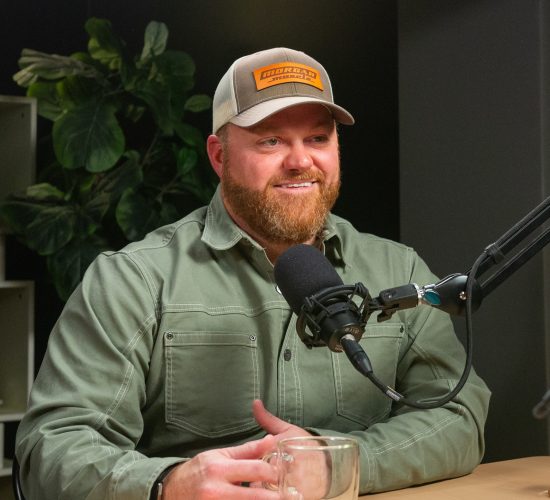
Show Notes
In this episode of The Localist, host Carrie Rollwagen chats with entrepreneur Jarrod Morgan, co-founder of ProctorU, a tech company that revolutionized remote test proctoring. Jarrod shares the origin story of ProctorU, how it grew from a university side project to a global business—especially during the COVID-19 pandemic—and the wild stories that came with it, from cheating scandals to FBI investigations. He also offers insight into how AI is reshaping education and how customer perception drastically shifted when ProctorU went from being an option to a necessity during lockdowns.
After selling ProctorU, Jarrod took an unexpected turn into blue-collar entrepreneurship. He now runs Tuff Dog Coatings, which enhances concrete surfaces, and Morgan Muscle, a dream car restoration business. Jarrod explains how he applies tech-industry rigor and customer-centric thinking to these hands-on businesses. From embracing swag and communication touchpoints to building processes that prioritize customer delight, Jarrod shares the deep value in making physical products and creating memorable experiences. His journey offers inspiration for anyone looking to pivot or bring innovation to traditional industries.
Mentioned in this episode:
Formerly Meazure Learning (Proctor U former) Website – https://www.meazurelearning.com/
Tuff Dog Coating Instagram – https://www.instagram.com/tuffdogcoatings/
Morgan Muscle Cars Instagram – https://www.instagram.com/morganmusclecars/
Episode Transcript
Carrie
Welcome to the localist, a conversation with local makers and independent entrepreneurs. I’m your host, author of The localist book and former small business owner, Carrie Rollwagen, our guest today is Jarrod Morgan. So Jarrod Morgan is going to talk today about several businesses. He currently has two businesses, Morgan Muscle, which is a vintage dream car business, and also he has Tuff Dog Coatings, which does coatings that are tough on things like garages, home gyms, but also porches. I think they also work with restaurants and things too. So those are the businesses that Jarrod is involved in now, but he started his career with a tech company. So proctor you existed to monitor test takers remotely, and the company started before covid, but during covid, things really ramped up, as you can imagine, when all learning went remote. So Jared actually gets into the pros of that, of growing their company so quickly, and also the cons of that. We talk about that, and then we talk about why he eventually sold the company. He’s still involved and on the board, but he sold the company to a larger company. Why that happened and why he actually made the switch from a tech company, essentially, to building muscle cars and putting coatings on floors. I think that’s a really interesting pivot. And Jarrod describes exactly why, in a way that I think is really relatable and really interesting. He also gets into a lot of why project management is so important to business, why having a local B to C business is actually incredibly valuable and rewarding, and how we can really look at the customer experience of any business to differentiate ourselves and really end up with very, very satisfied and happy clients. So there is so much in the podcast today. I enjoyed our conversation a lot. I think there was more to be had, but we did have to keep it to an hour, and I hope you would do too. I think you will. So here is Jarrod. So welcome to the podcast.
Jarrod Morgan
I’m thrilled to be here. Thanks for having me. Carrie, yeah,
Carrie
I feel like yours is such an exciting story, because it’s good. It goes many different places. So you have several businesses I kind of want to talk. Start with start at the beginning. So can you tell people just briefly what proctor you is, and then or was, and where this idea came from? Because you weren’t a business guy, right? You were, were you more in development and coding? Or am I getting there?
Jarrod Morgan
I think I was. I was a C student, and like a computer science student, right? So not, not super great. I found that I was way more interested in sort of the business applications of technology, rather than just the tech itself and and so I had, I guess, decided at a young age that I really I wanted to run a business, but entrepreneurship was almost like a dirty word where I came from. I grew up in Pensacola, and love that place.
Carrie
Great. I went to high school in Pensacola, Pensacola, Christian.
Jarrod Morgan
So we when the word entrepreneurship, you know, the joke was like, it’s a euphemism for unemployed, right? Which is, you know, so that’s kind of the framework I grew up around. And I thought, you know, but I just really love to create, and I like the idea of creating organizations and finding a mission and having a broader mission and things like that. So I just kind of always had that interest. And I landed in Birmingham in 2005 came here to take a job, decided I hated the job and loved the city, and decided to keep the city and just sort of figure it out and proctor you came about when I was working at a college. Here was a small online college, and we had a problem where the students that we had, because we were online, they were going places to take tests. They’d go to a library, or they would go to like, you know, a minister locally or something, and they’d be watched taking their test. And it was clear to us at the university, we would see that they were cheating, even though there was supposed to be someone watching them. And so we decided that we needed to come up with a better way to do it. And so we created this little process where we could watch a person take an exam over a web CA, we could actually watch them remotely. And this was 2008 so yeah, yeah, it was, it was, frankly, a weird idea. Yeah, and a couple of other people were trying to do some things like that. Nobody had really figured out how to get it off the ground. And I think what there was, there was a business lesson in that, because we were uniquely positioned to get it off the ground better than anybody, because we were actually using it for ourselves, and we were building it for our own students. And so. Lot of the competitors that we ended up having that had started before we did, were way over complicating the process and trying to over engineer it. And we really just sort of understood that we needed to make something happen where we could watch the person and make sure that they were, you know, who they said they were, and not cheating. And that was kind of a revolutionary thing in and of itself, too. Because when we got started, nobody could actually define what proctoring a test properly meant. I asked a bunch of people, what do you no one could say. So we actually invented our own definition. And it was that you had to see the student, see what they were doing, and know who they are. And as long as we could do that technologically, as well as in person, you know, we were the same thing. So we started that little business inside the school, and it attracted some interest from other schools to have us actually do it for their programs. And so that became its own kind of became its own thing after that.
Carrie
So when did that? When did you go from this is part of another company to like, I’m taking this on my own. So that was, I mean, how long was it like, a couple months or a couple years?
Jarrod Morgan
So we started at the very beginning of 2008 by the end of the year, we had attracted enough interest from other schools that we thought we had to make it its own entity to sort of do that. And so we spun it out of the school that we were. It was a for profit school that was a that’s a whole nother story, that I need some different kind of beverages to tell that story like it was. It was really a mess to do that. But once it became its own entity, it kind of became sister companies with the school, and eventually got bigger than the school over time, because we, we sort of created this thought that we would just go around and we would take any class, no matter how small, we would just strap on backpacks and go to colleges and knock on doors and say, Hey, we got this tool. Would you like to use it? Yeah, and that kind of ground and pound gorilla tactic, really, that was born out of the fact that we didn’t have a lot of money, is what really got us big quickly, while everybody else that was trying to solve this problem was doing it, trying to sign $3 million deal. Million dollar deals with schools in one shot, and we were just constantly taking one more class, one more class, one more class. And you look up in a couple of years by 2011 you know, we had probably say at that point where six or 700 schools using it, and you know, we’re doing 1000s and 1000s of tests, and had figured out a lot of things because of that. We’re still small scale, yeah, but we had figured a lot of things out, and that made us really start to catch on.
Carrie
Yeah, are there interesting cheating methods that you were surprised by?
Jarrod Morgan
You wouldn’t believe. You would not believe things that we saw through the years, people you would want to say, like, isn’t it just easier to study? Yeah, like, we had people fly a drone in like, so you’re sitting at the thing. Here comes a drone behind him, trying to look at the test questions, to take pictures of them. We have just all sorts of people. We had, you know, a female, blonde female, taking a test, and then, like, intentionally knocks something off her desk, goes, Oh, let me pick it up. Yeah. And then comes back up, and it’s a man with a blonde wig, and he’s like, now we’re not gonna see that, right? You don’t have that facial recognition to see you suddenly have a beard. So, I mean, it was, it was crazy. We had, we had some cheating rings that we busted that ended up in like, FBI raids and crazy stuff like we you just wouldn’t believe, yeah, the amount of shenanigans that happens when people are trying to take tests. And it’s more than just people trying to pass the test, we also would have, like, criminal rings that their whole Mo was to get on to, like, if you had a certification exam. Yeah? They would try to get people to take the test and steal the content, because if they could reverse engineer the test, they could sell it for lots of money, yeah. And so there’s, like, these whole black market syndicate groups that do that and sell them online. And so it’s just a it’s a mess. There’s a lot more that goes into just not just, like, written on their hand, like, it’s a whole thing, yeah.
Carrie
Are you glad you got out of that before AI became a whole thing? Or is that?
Jarrod Morgan
Well, okay, so AI, while AI becomes a bigger problem in terms of cheating, AI also gives the people on the other side of the equation new tools to sort of combat it. So it is definitely a new day and age. And I think that the concept of what cheating is is evolving. Like, what does it mean to know something now, if I know that chat GPT, can similarly, like, think about how we evolved with math, like it used to be when I was in elementary school, like, if you memorized all these things, like, your times your times table, yeah. And now I just have, how valuable is that if I just have a calculator and calculator and in one second I can get that answer? So our evolution, we’ve kind of evolved into what it means to know something. I think that’s happening again with AI, like, what does it mean to know something if AI can just write a really nice, you know, term paper, for me, How valuable is that skill anymore? And I don’t think. You know the answer to it. I think everybody, like the the knee jerk reaction is, like, it is valuable, right? Yeah, but I think time will tell, and society will tell us how valuable
Carrie
that is, yeah, definitely. I mean, it’s a complex like, what? Yeah, this isn’t what the podcast is about. But, like, how much of writing, how much of writing is critical thinking, also, how often does AI get things wrong? Hallucinate for sure, and where are we going to be? Is that a now problem? Is that still going to be a problem in five years or not? But it is a interesting territory.
Jarrod Morgan
I think, if you’re if you’re a small business owner, you’re anybody, yeah, and you have not begun to consider how AI can change what you do currently, like you’re already falling behind.
Carrie
Yeah, I think my personal thought with tools and technology and things is like, once it exists, it’s not going anywhere. So of course, there’s that conversation about, what are the implications and things, but I think so often we don’t understand something. The knee jerk is kind of like, bury your head in the sand. And that’s just to me, it’s like, I feel like that’s the useless thing, because it’s like, it’s not going anywhere, it’s here now, yeah, the only thing I can do is at least embrace it enough to understand what it’s doing, what it can do for me and or not, and kind of learn how can I guide it in a way that I do think is valuable.
Jarrod Morgan
I was talking to some students the other day. They asked, they asked, they were asking me a question about, you know, hey, all these new tools with AI, is this a good thing? Yeah. And I, my response to them is, like, it doesn’t matter. Yeah, it’s so it’s here. And so you have to, yeah, consider how things have changed and react to it. And I think, you know, I’m a millennial, I’m an older millennial, and so I’ve been at the I’ve been at the ground zero of several of these waves, like the first wave, like the personal computer, and then the internet, and then social media. And now AI throw the mobile phone in there too. Like each one of these sort of sea changes, kind of changes everything. And this one, I think, really changes everything, like everything is going to get touched by this technology at some point?
Carrie
Well, what do you think that you’ve learned in some of those previous iterations that you’re kind of bringing to that, like, business wise, or just personally, because it does feel like, I think, in some ways, like I’m a little less scared of AI than maybe somebody who is just entering the workforce, and this is the first major technology switch, you know, but it does seem like, if you go back 20 years, it’s like sea change after sea change. And I do understand this is a bigger one, but I think there are things we can learn from.
Jarrod Morgan
I think they all sort of follow a pattern, yeah. And I don’t think I’m intelligent enough to write the pattern down and making, make a book about it. But I, like, in my mind, I can see it, because if I remember how the Internet tell me which one. But you know, if you remember when the when, when the like, the.com phenomenon happened, right? There was this wave of, like, the early adopters, and it’s something you just kind of hear about, and then everyone’s like, Oh my gosh, this is the thing. It’s happening everywhere. So then there’s this rush to, like, everything has to have a.com on it. Pets.com, groceries.com, everything. And it is this rush that then it becomes, then the pendulum swings too far in the other direction, where it becomes a fad. And everything you remember, you know, at the end of 1999 2000 like the.com crash. It was, it was just too much, too fast. Yeah, well, one of the things that didn’t make it was grow. Was it groceries.com? Like, grocery delivery? Was this thing we tried to do in 2000 it was not that that was a bad idea. It just wasn’t time yet. Yeah, there wasn’t broadband, there wasn’t broader adoption like that. We would do things that way. And so I feel like technology. Same thing happened with social media. So it was this thing you heard that your friend your friends did, and then there’s social media, you know, there’s a social media site for dog walkers and every different kind of thing you can think of in the world. And then it crashes. And then, like, the third kind of wave is when you start to see, okay, this is what the technology is actually useful for. It wasn’t like something we were out of the phase where it was your cousin talked about it, yeah. We’re out of the phase where everybody thinks it has to go everywhere, yeah. Now you really start to find the usefulness of that. And I think we’re in the fad phase of AI right now. Like, yeah, everyone’s freaking out about it. Everyone’s got to use AI. There’s going to probably come a moment where everyone goes, Oh, yeah, that wasn’t really a big thing. It’s for it’s for nerds. It’s not and at some point, then you’ll start to realize, like, oh, okay, it’s really applicable over here. And that’s kind of where we’re at.
Carrie
Yeah. But I also think, and it seems like you’re doing this, like being involved at the beginning, and at least using it enough to know what it is, I feel like by the third wave, typically, those things have big benefits, like being involved at the beginning, even though it’s changed, I feel like you kind of understand why it’s changed the way it has, and like you understand it on a different level than if you’re just getting in on the third wave.
Jarrod Morgan
Yeah, I think this one’s unique in the sense that the AI the AI wave, in that I don’t think you can sit this one out. Yeah. A human as a human being.
Carrie
I got advertised an AI powered mattress the other day, so I feel like it’s everywhere. First, I thought it was a terrible idea, and I was joking about it at work. And then they were like, well, maybe it doesn’t let you get out of bed if you haven’t slept enough. I was like, maybe that’s exactly why we need AI you’re so tired.
Jarrod Morgan
You know, the like, the old trope is that, okay, it’s gonna be like, you know, the Terminator movies, and it’s all gonna take over and, like, and I’m not plugged in enough to know whether that’s a real threat or not. I don’t know it’s I know it’s not an imminent threat at the moment, but I think that you can’t, what I mean by you not can’t sit this one out is like, this one to touch everything. And if you wait till the third wave, when it really starts to get traction on real things you’re already kind of behind. Yeah, if you haven’t started to play around with it and consider like, how can I use this tool in my own life? And it’s never AI has been is the easiest one to use of all that when I think about personal computers and then the internet and then social media and then mobile phones like this one is the most user friendly technology revolution that’s happened, because you can literally talk to it, and you can tell it I don’t understand, yeah, and it’ll explain it better to you in plain language, yeah, yeah.
Carrie
I I keep thinking of things that where I want to go, but I’m like, we need to tell your story. But I’m like, we could just do a whole podcast. So with proctor you, you’re building that business, which I don’t want to discount, because that’s a huge thing, but then you got to a point where you decided to sell the business. How did that happen? Were you thinking, I would you want to get out for a reason? Did somebody approach you? Were you just thinking, I have other opportunities because you’re entrepreneurial, and I do think that is something that is hard when you when you have ideas that you’re so vested in one you’re just like, I want to do other stuff. Like, but was it a mix? Or what happened?
Jarrod Morgan
Man, you know, some that process is, like, the experience is really a mixed bag, because on one hand, you sort of think about it, and you go, you know, man, I’d really like to do other things. But then you look at some people, like you had Michael sellers on your podcast recently, right? The guys from good people who’ve been so successful and are so smart, those guys have stuck with their one thing for a long time, and that just, it just keeps building and building and building and building. And if you tear it down and start over, you have to kind of build back up to where you were. You can’t just snap your finger, yeah, and get back to, you know, where you were. And so it’s a little bit of a trade off. I mean, with proctor you, that business was founded and, oh, eight, we took some venture capital in around 2014 2013 and once you do that like you’ve kind of already signed the papers on what the eventual outcome of that business has agreed to. Because, no, typically, venture capital is not putting money into something that’s not going to produce a return, right? And maybe they will if it’s going to do dividends or things. But that really wasn’t the aim. It was. It was a business it was going like that. And so, you know, and typically you don’t see founders stay in a technology business as long as, I mean, yeah, I was in it. We sold that business in 2020, so a 12 year run, yeah, is a lot longer than people typically stay in a technology business. And the reason that happened was it just never was the right time. I mean, there was, there was always something else that we needed to build. And it took so long, I think, for the broader market to really wrap their head around, you know, what we were as a business and whether it was viable. We knew from the very beginning. Hey, this is, not only is this a viable business, it’s viable way to take a test. There’s all these things, and it is going to be the disruptor that really changes the way people, you know, test for knowledge on the internet. But it took a long time for people to really wrap their head around that there was some really entrenched players in the space that had a vested interest in testing centers, physical places. You know, we were very much the block the Netflix to their blockbuster right, and so there was a lot of resistance in that. But when we finally got to, you know, around 2019 we had built a nice business. I mean, we were, I think, I think we had eight offices at that point, and probably had about 1200 employees. And so it was, it had gotten to be a really nice sized business headquartered right here in Birmingham. We were in Hoover, actually, so Metro Birmingham. And we were really proud of, like, this little Alabama company that had gone to toe to toe with, like, Silicon Valley companies in Boston. We had won, we were the biggest one in our space. And we had really gotten to a place where, if the business was going to evolve into the next phase, somebody really needed to come in with, you know, deeper pockets to invest and better connections and a broader kind of leveled up vision of what this business could be, because we were a piece sort of the last mile of the testing process, the security, like the questions, had already been written and put in a system we knew it was going to, you know, test for the things we were looking for, and we were just involved in the last little piece. Yeah. So. There was we started to build out a broader thing where not only could we test the test at the end, but we could actually create the content for you and put it on software to deliver the exam and grade it and score it and give you all that sort of becoming so that we were a bigger platform. And that’s why they, you know, evolved the name from Proctor you into measure learning. Yeah. And so there we had met with our investors and around 2019 and said, you know, hey, I think we’re thinking about, you know, maybe that, maybe the time is right, so let’s start to talk about what that would look like. And and then I remember being in a board meeting in January of 2020, and we were talking about that, and thinking, Okay, what would that look like, and what’s that process look like? And I get a phone call, and I look at my iPhone, and it was a customer that I had been working on for a long time, and I just usually, I send those a voicemail if I was in a board meeting. But I said, Hey, let me step out and take this. And I step out in the hallway, and the guy says, Hey, have you heard of this coronavirus thing? And I was like, I think so. I mean, early January, yeah, okay, yeah, that year. And I was like, I think so. Like, what’s that got to do? Anything? He’s like, Look, our whole, all of China has been shut down for testing, and that’s one of our largest revenue drivers of this test. All of our revenue is generated from delivering these couple of tests, and China is one of our largest markets, and we’re dead in the water. Can you, how quickly can you spend proctor you up to serve China? And so I walk back in, I’m like, hey, I need to start on this. And then within seven days, he’s calling back and he’s going, can you spin this up for the whole world? Because we’re as we know, right? What happened with
Carrie
I know that’s also the pandemic side, but just business wise, that’s so that can service China like that’s a big question.
Jarrod Morgan
It was, and it was and but the whole world was a whole nother thing. So what, what happened was, we found out that we were one of maybe five companies in the world that had the technology to deliver a test in that really weird time of existence, right, when nobody could go outside. Yeah, and everyone that we had ever spoken to in 10 years was calling us and trying to spin up. So the company grew drastically over that year, tripled in size, and we were having to, you know, it was a massive test of the abilities of our team under pressure. So, I mean, not only like, are we doing this business thing, but we also can’t leave our houses, so we’ve set up war rooms and our own houses, and we’re on Zoom meetings all day and hiring employees and stress testing technology systems, and doing all these things and scaling up to where by the end of the year, we were one of the last companies standing. A lot of our competitors didn’t make it Yeah, and that run. And so by the end of that year, we had a lot of folks that were calling and looking really interested in purchasing the company, because it was one of those things where you had seen, like it had been proven that Yeah. Not only was this a viable Remember, I said, people were wondering, is this a viable way? Yeah, yeah, because it had to be Yeah. So you had people had to lose all their biases from before, because this was the only way to test and it proved that it was solid. It proved that it was the it was a good way to do that and and that it achieved the objectives that we wanted to. And so all of those discussions about, hey, we could hand this to a partner that could take it to another level. Really got an opportunity to take something that had just had the best case study ever about how this concept can really transform the way people test for knowledge. So by the end of that year, we transacted to a group out of San Francisco called Griffin investors. And it was, it was awesome. It was another it was interesting because it was, it was another big hit for Birmingham. But there was so much craziness in the world that it kind of just, it just sort of happened, and yeah, and then everybody moved on. And it was, it was great, but it was, it was a that was a wild year. Yeah, as you can imagine, spinning up that many facilities. We had to open new facilities that we can actually physically go to sometimes. And it was, it was wild.
Carrie
Well, how did you, I mean, you can’t get into all of this, but even like hiring people and building your team that way, like, how did you expand that quickly while, again, while everything is shut down and,
Jarrod Morgan
well, we were really fortunate that we had a awesome team, like our leadership team at Proctor you was just phenomenal. And we had a great CEO local guy, Scott McFarlane, that was just very experienced, very seasoned, cool under pressure. And we had just a team of really, really talented people here locally, that everybody kind of just rallied around each other. We had, we had done the hard work before this crisis to really invest in the unity of our team, so we spend a lot of time together. We had really developed a lot of personal friendships and things. And I just think that stuff is so important and often forgotten. Yeah, but we. Didn’t just like when the pandemic hit, everybody, okay, guys, we got to all trust each other, and we had already built those relationships, and the leadership team trusted each other, which then said, you know, a level down, those people started to trust each other. And so when you had that level of trust, it made it so that you could trust that the decisions being made two or three rungs down were in line with the way we saw the world, and we were trying to do that. So we were just very blessed with a with a great team. Yeah, the craziest thing that I think happened during that time was the public perception of what we were doing changed, even though, even though nothing had changed fundamentally about what we were doing. So from 2008 to 2019 this, anytime there was a media article about proctor you, it was always like, look at what this cool little company in Alabama is doing. Yeah, there’s people all over the world using it. And isn’t that neat? Look at those old rednecks down there. They figured it out right?
Carrie
Computers in Alabama, right?
Jarrod Morgan
But in 2020, in 2020, when the pandemic hit and we started getting pushed everywhere because of necessity, the narrative around it changed, and suddenly it was, Who are these people? Are they? They’re not watching you take a test. They’re spying on you, yeah. And who is this person? And it just this, like weird narrative developed around the business that was not rooted in anything that had changed. We were still the same company that everybody thought was great. We’re still just these like honest, earnest people, you know, in Alabama, that were trying to do the best thing. But now there was this weird talking point that had sort of bubbled up around us, and it after a lot of reflection, we realized it came from the entire run up of Proctor you prior to 2020 we were an option. So like, if you went to college, people would say, Hey, listen, you can drive to campus, or we’ve got this thing where you can take it on your couch, yeah, service. And people are like, Oh man, I’ll take the couch, yeah, all day. But the perception changed when it was like, you have to use this thing and you’re going to be in your house, and you’re going to turn it on, and you’re going to interact with the person, and they’re going to be able to see you, and you’re going to be able to talk to them. That changed people’s perspective, and they’re like, Well, I don’t trust this because they didn’t choose it. It was the the only thing that had changed was the perception of it, because they didn’t choose it. And once they didn’t choose it, then all of this, like weird narrative and suspicion came in that it meant that we had to hire PR teams and we had to get involved in politics and make people understand who we were. And that was when people ask, like, Why did I eventually get out of the tech industry? That era just grounded out of a lot of us that it was we had worked so hard for so long to build a great company and then to kind of get to the apex of the story, and have so many people just making things far more difficult than they really needed to be. Yeah? Based on things that really were just perception issues, no real changes to what we were doing. Yeah?
Carrie
Well, I would also think you are, you had a company that could be the face of the problem. Like the problem is I would think in a lot of things, I don’t I want to be going somewhere to go to school. I don’t want to be in my house all day. I don’t want to be learning from my couch. But here is somewhere I can put that also. I think at that point, even the news cycles, were it looking for problems like every all the news was bad. It seems like there weren’t. It was so I think even the tone of the stories people were publishing was at that time just like problem, problem, problem.
Jarrod Morgan
And there was just a massive amount of distrust in everything, particularly in businesses, and so you didn’t have to do anything to earn that mistrust. He just was inherently given in that time period. Yeah, you know, it was a real challenge, and it forced us to do a lot of a lot of work that was just unnecessary.
Carrie
You know, at the same time as you’re trying to scale massively,
Jarrod Morgan
The same time that and things are breaking, right? I mean, that’s, that’s, that’s a part of, I mean, things break, yeah, people get frustrated. You know, wait times are much higher than we wanted them in certain areas and certain, certain, yeah, you know, points time in that process. But ultimately, we were really the only company that pulled it off at the level that we did, yeah, we there was a couple other companies that did well, too. But for us to have, you know, we had the majority of what we were doing were interactions with actual people. So it wasn’t like an AI bot thing, yeah, interacting with we had people that we employed that would help administer the test, and hiring those people, training those people, managing those people, quality. Can control the availability those people. Like it was, it was quite undertaking. It seems like a really neat little tidy business, but it’s one of the most complicated businesses. Oh yeah, I’ve ever been around, and I only blame myself, right?
Carrie
Because, well, I think that’s a good segue to see. Way, because, how did you like, because you pivoted to a couple of different businesses, so was Morgan Russell first? Or was tough dog first? Or, or did you did you sell? I think you sold and stay, you’re still on the board, right? So it wasn’t just kind of like, I’m done, see you later, right? But did you know, like, I do want another business, and this is it, did you have some ideas you wanted to do first? Or, how did that?
Jarrod Morgan
I think there was a real interest for me in thinking about, you know, I learned so much in building that business that I thought would be really fun to apply again. But I I saw an opportunity, kind of the blue collar businesses that if you took kind of the rigor of the process in technology and, you know, the techniques and the systems and the project management and kind of all of that, and applied it to other areas of the economy, I just felt like there was a real opportunity to build a great company, because not criticizing, I mean, there’s, there’s lots of great companies in the blue collar space, but I would say that they’re not the norm. They’re probably the exception rather than the rule. And so we felt like we could go into some spaces. And so with tough dog, we’re in concrete coatings, which sounds definitively boring and whatever. It’s not, by the way, we make concrete beautiful like
Carrie
you would. I mean, your social media is actually really addictive to watch. Well, thank you. Like the you did a you did a great job with that, with the coding and watching the process, and it is.
Jarrod Morgan
It’s a very gratifying process. Yeah, exactly. We’re trying to make sure that people understand they can Yeah, you don’t have to have dirty you deserve better than dirty, cracked old concrete, like we can make it pretty for you. And so that’s kind of the thing. But even just what we just did there, I mean, there are a lot of companies in the blue collar space that do great work like that, but if they don’t do the work to try to make it tangible for people, the average person is just like, oh, you know, that’s a plumber. Oh, that’s a they don’t understand the art and the value behind kind of what they’re doing. And so we we’ve worked really hard with tough dog to make sure that we are really thinking also about like, how do people use these products? And so we didn’t just say, hey, we coat concrete like we have started to create coating specifically made for porches, specifically we’re working on one for certain types of restaurant applications and things, and so that people we can, instead of walking in and saying, Hey, man, we can make your concrete pretty like, we can walk in and speak to things like cleanliness in a restaurant and the kind of actual end use cases that people would buy it for. And that’s kind of a unique perspective, but that comes from our background, being in the tech industry, not that people in other industries don’t have that, but we just thought that the brain damage that we got from Proctor you ought to be worth something in the aftermath, right? And, and we’ve been, we’ve been doing great. I mean, we’re bringing like, you know, KPIs and project management and things to tough dog, and then with Morgan Russell, like, we’re building classic cars, and that, that, you know, that business came from just a personal passion. My brother, Steve and I grew up with our my dad, Larry, would always be building cars. Yeah, always had some kind of hot rod in the garage. He was, he was a mechanic, yeah, and it was great. I didn’t. I could never, I mean, I was never the car guy that I was the end user. I was the guy that, like, understood how to get behind the wheel and do all that, but in terms of, like, actually working on the car, yeah, my thing. But we just were fascinated with it and with the car thing, you know, we we found a local shop that we were actually bringing our little hobby cars to, and had a chance to acquire that business, and really went on a journey to figure out, like, what, what’s happening here, and what is this just going to be a hobby, or can this be a great business? And what we found is, yes, it’s a great business. And the reason it’s a great business is because very different than proctor you, and then, which is, this is an interesting thing, in the sense that people can’t wait to be our customer at the car show, yeah? Whereas with Proctor, you, no one like to talk about us. We used to, you know, we’d have, like, our polo shirt on, and we always would joke that we would go through the drive throughs and cover up our logo my burger, because we represented taking a test. And no one likes taking a test, right? Yeah, we were the dentists of learning like, you know, no offense to dentists, right? But we, it’s a well documented thing that people don’t a lot of people don’t like having their teeth worked on, yeah, they also don’t like taking a test, right? Yeah. And so we represented that with Morgan muscle. We represent the opportunity for a lot of people that have dreamed about having this car, you know, maybe it was a my granddad drove this truck. Or, you know, man, I’ve always wanted a Chevy Camaro from, you know, 1980s or I grew up watching Mustang Fox bodies drive down the road all the time, and always wanted one. And when someone gets to a point in their life where they actually have the disposable income to do that, yeah, to be. Are in a place where we can help them achieve that dream, yeah, and help them figure out, like, what he wanted to look like, and actually put a project plan together to get them their car. Because that the classic car industry is riddled with a lot of like, well meaning folks that don’t actually deliver projects in any kind of timely manner, and that was the big thing that we wanted to focus on with Morgan muscle, was customer experience. I don’t think anybody in the country thinks about that when they think about fixing old cars, but we are obsessed with it. And, you know, I’ve said many times, we can, we can put ourselves up against a lot of car builders in the country, and we’re friends with a lot of them, and I don’t know that we’re ever going to get on the same level as the kind of cars that like Iron Works customs and California does, or Dutch boys does up north, those guys are great. They make incredible, award winning cars. But what we want to focus on, we think we can be the best in the country at customer experience. So if you choose to come build your dream car with Morgan muscle like the process is second to none, and you get a chance to choose this, and you’re getting updates about what’s happening, and you’re getting to take pictures with your car while it’s being built, and all these little things that kind of bring you into the process with us. We just haven’t seen anybody do that. And there’s this whole new generation of people that are finally getting to the age where they’re like, Hey, man, I always wanted to get my dream car, and those cars are now, like, when I grew up, it was like, 60s Camaros and 70s, whatever. Now it’s like, I want an 88 GMC truck, or I want to, you know, a 90 early 90s Bronco, yeah, or something like that. And, and that’s great. And like, so we’re, we’re setting our business up around the dreams of the people that we’re looking
Carrie
to serve. Well, all right, can you share any more of those? Like, taking a picture with your car while it’s being built? I think is like, again, like, probably pretty easy to accomplish, ish, but pretty brilliant, because you want to be sharing that stuff. Is there anything else that you do that you can share that
Jarrod Morgan
is like, Yeah, I mean, so we, we one big thing is, is swag, right? So, everybody loves good swag, right? So we’ve, we got a bunch of cool T shirts and things that we’ve come out with it say crazy things, like legalized burnouts, wild stuff. But, and when you have somebody that maybe, you know, sometimes these people are spending 100, 150 grand, you know, building these cars. I mean, give them a hat, yeah. I mean, like, give them a couple T shirts. Like, what are we talking about here, right? And so we have started to make sure that we’ve got lots of that kind of built into the process, and then, and then updates, where we’re making sure that they understand what’s going on with their car. And then the biggest thing, and the thing that I think is hardest to accomplish in that industry, for a lot of folks, is getting, don’t bring their car in until you have a plan to give it back to them. Like, that’s our mantra, right? Yeah, is, and I don’t are we? Are we as good at it yet as I’d like us to be? No, we’re always going to be trying to get better, but creating a process where I don’t engage with the customer and bring them in until I know that I’m going to get them their car back, and they’re going to be happy with it. And we have a process to do that, and we’re going to bring them along. Through the way of doing that, there’s so many people that come to us with horror stories of taking their car to some guy and man, this is my dream car. This guy’s had it for six years. It’s still not done. It’s sitting in the back. He hasn’t touched it. He took my money. He won’t give the money. There’s a lot of that.
Carrie
When we can see that on almost any business where, even if you’re running it, well, you typically have somewhat of a cue. And so with if the client already feels like they’re engaged, and then two, three months down the road, they’re like, Well, what’s going on? And then you have to tell them nothing you’ve been waiting. That’s a much harder conversation, right then, this is great. We can get you, like, keep your car right now. We’ll bring you in when
Jarrod Morgan
we’re right. So we have a waiting list now to engage with Morgan Russell, and that is a novel concept, believe it or not, because a lot of the ways that it would be done in the past and with other organizations would be like, yeah, just bring it by mail, drop it off, give me your deposit. We’ll tuck it back. We’ll start working on it. Well, the truth is, you’re probably not going to work on it, maybe until eight months. Who knows when? Right? That’s maybe so for us. Like, if I’m not going to be able to touch it for eight months, don’t bring it in for eight months, right? And so that when you bring it in, you bring it in, you know, like we’re on it and we’re gonna stay on it until we get it back to you. If you look at our social media like, you’ll see, yeah, how elated people are to get that back. And I’ve been trying to make sure that our team stays plugged into that fact that, like, if you get this right, look at, I mean, we had a guy named Corey that had brought his Mustang to a different shop. Kind of had his money taken from him, or whatever is his story. He brings it to us. We put it on a plan, we get it back to him. So he and his wife come to pick up this cool green Mustang, yeah, and they’re literally, like, hugging each other and crying as they see this car. And I’m finding out that this is the car he learned to drive in, that it was his grandmother’s and like he was, remember. Bring his grandmother as he’s in there, and now he’s ready to, you know, put it in drive. And remember the first time he did that with her, and what she told him about, like, that’s like, a human experience. And I want to make sure that our guys who are super talented and working on cars, yeah, never lose sight of the fact that they’re not just turning wrenches, yeah, and, you know, bolting on fuel injection and things like that. Like, they’re unlocking memories for people old ones and making new ones, and that that’s a truly like human experience for people that are getting these cars.
Carrie
With both of the companies that you have now, how do you identify those points? Do you look at the I think, Gosh, I think it was power of moments that has like, the Yeah, the friction points and the like, they kind they are, I think they’re the whole thing. I’m not gonna say the right words, I don’t remember, but like, it’s like, look at the peaks and pits. I think they call them like the pits, like the bat, the worst parts of the experience, and then the best parts of the experience, and their whole thing is, like, hone in on those parts. Do you take kind of like that approach, or are you just thinking, like, what would I want? Or how does that,
Jarrod Morgan
I think so this is an evolution, right? And so I think we’re kind of at the point where we’re identifying those moments. And again, kind of going back to the car shop too, like the process, I think is so there isn’t a defined process for a lot of folks, yeah, right, the shops, like the ones I mentioned earlier, Iron Works and Dutch boys and those guys. I mean, they their process with the cars. They’ll stay on it until you cannot believe this car when you see it. Right. Everything is absolutely pristine and perfect, or whatever. Not everybody’s trying to build a car to that level. I mean, you might have a million dollars invested in somebody’s Mustang situations, but they don’t really have a process either. They just sort of stay on it until it’s until it’s great. Yeah, it’s perfect, right? You know, for shops that are trying to run through customers the way we are, and serve a lot of people, there wasn’t a defined process. There’s a little bit of one. But, you know, maybe you take some from here, like you look at collision shops, and you look at oil change places, and you look at people that are doing things from other industries, sort of borrowing things that work there, and and the pits and peaks, like you said, the pits were always the moments where people didn’t know what was happening, or they there was a there was a gap in time where they didn’t have any information about what was going on with their car. And so we were car. And so we’re really focused on making sure that we again, using tools and technology. There’s AI, there’s all sorts of things. Everything doesn’t have to be a phone call, it could be a text. It could be photos that are sent out that show the progress, so that people feel like they’re along for the ride as this project that they’re having us work on is evolving. Yeah.
Carrie
Well, how do you find the pits and peaks? Or is it similar with tough dog, with the coatings?
Jarrod Morgan
You know, those are, those are those projects don’t really take as long. I mean, a long project for that would be two weeks, right? And we could sort of get in and do something for a couple of weeks. The the peaks and pits with those is, you know, I think people don’t, one of the things that we mistake, that we made early on at tough dog was we really, you know, we had people bring us some products that we could use in that space. And the way that it was positioned to us was that this product that you were going to be using is so much better any of the other price. And it just went super in the weeds about like, the tensile strength and that. And the reality was, for a residential consumer, someone who’s trying to put this in their garage, man, they don’t care. Yeah, right. How pretty is it? How much does it cost? How long is it going to last? Is it easy to clean like those are the things that they really cared about it. So we spun our wheels for the first year, sort of aiming the talk track at things that people didn’t care about, and learning from customers, like, Hey, man, I’m buying this not because it has eleventy billion pounds of pressure, you know, strength or like, I’m buying it because it’s pretty. It’s going to make my garage look great. It’s not going to make my feet feel chalky when I walk over it. I don’t slip when I when I walk over it, it hides all these ugly cracks and oil stains and things. That’s why they’re buying it. And so we had to go back to, kind of our roots, from what we did with proctor you, and really understanding, like, why is somebody buying this? What’s motivating somebody to buy and then you work backwards from that, from sort of everything, how you, how you run your process, how you sell it, how you, how you build for it. How you, you know, install it, how you talk to people about the process, you work backwards from what people care about, yeah, instead of, like, starting with, here’s what I have and here’s what it does, and let me go in search of someone who cares.
Carrie
Was a classic mistake that so many businesses make. It’s just like, This is why we’re great. It’s like, that is not the point meet. That was the
Jarrod Morgan
customer one, and no one cares. Yeah, no one cares. What they care about is themselves. When you realize that as a business, and by the way, like we are working on that in our own businesses now, so our little current tagline at Morgan muscle is we build dream cars, right? And that is our thing, that we want to but, but the problem I have with that, I haven’t figured this out yet, but. It’s that should be inversed in the sense that I don’t want to say the words we, because no one cares about we care about you, right? There was an analogy that was that was given to me one time. I thought it was so good. If you think about when, when Hillary Clinton was running for president, she had all of these shirts, and everybody was putting out all these things, and it said, I’m with her, right? And I forget, I wish I could name drop the marketing person who said this. That was brilliant, but they said one of the key mistakes that she made when she was positioning that was, it shouldn’t have been, I’m with her. It would have been way more powerful if her shirt said she’s with us, yeah, yeah, she’s with us, rather than I’m with her. Yeah?
Carrie
The classic story brand we take the dream car. Is like, you deserve your dream car, correct? Instead of like we make, we make dream cars. You deserve a dream car, or whatever, kind of like, over done, the story brand, it is actual words. I think the concept is really
Jarrod Morgan
concept works because, because it taps into, like, a universal truth with people and that, like, as I’m walking around in my day, and I’m just trying to get from breakfast to supper. Yeah, you know, I’m worried about myself and what I’m worried about and whatever. I’m not worried about you. I’m only going to worry about you to the extent that it matters, because we all are walking around in a world with businesses that are all going, Yeah, trying to get our attention, whatever. So if you can just speak to like you, what you Yeah, and that’s and then, and then I provide that. It’s just so much more. It’s so much easier to get through that process of getting people to
Carrie
buy in, yeah. And I think I saw you reference signing Simon Sinek golden circles at some point. And I feel like, in some ways, that tells the same story as story brand in a shorter video, story brand is a little more how to execute. But I was like, when I found that video was like, this is, it’s like, the thing that you do when you’re building a business. And it was, it’s so good because he explains it so well in like, if you get the why correct, you can sell different products. Like Apple can sell different products because they’re connecting with that. Why? But if you only focus on the product, you’re going to be gateway computers that, yeah, it doesn’t exist. Yeah,
Jarrod Morgan
I totally agree. And I think not that we’re super great at that, but like, I believe in the Simon Sinek stuff at the core, yeah, and so that’s why you hear us when talking about cars, we’re not just talking about hot rods and the bigger such, such cubic inches and, like, I love all that stuff, right? But there’s a whole bunch of people out there that love cars that don’t and they just want a cool car. And we’re actually not. Most of the a lot of people that know all of these little, like, in the weeds, things about cars can probably work on it themselves, but there’s a whole bunch of people that just remember the memories and the romance of, like, for me, it’s like a 2001 Pontiac Trans Am, yeah, that’s like, I used to see those in high school. I’m like, look at that. Yeah. And so, like, one day, and even me, I’m in the business, one day I’m gonna get one of those. Yeah, dark blue, yeah. And everybody, I say everybody, lots of people have that. And we realize, for Morgan muscle, we’re not in the torque business or the horsepower business or the I mean, we are, but that’s the means to an end. And the end is we’re in, like, the dreams, business, memories, business, right? The emotion. Business, yeah, when you connect that, like, we have all these, we’re putting a lot of stuff on social media, but one of the things that I’ve seen that is that that connects with me, right? Yeah, the new fad is old trucks, by the way, like you get an old truck that runs and drives like a new one, but looks kind of beat up. And I saw this social media post that was following a guy who’s driving in an old truck, and it has one of these bench seats, right? And his wife or his girlfriend or whatever is sitting in the middle, yeah, not on the side, yeah? And they were like, This man has it all right? And it was because, if you grew up in Pensacola, where I grew up, if you’re if your significant other is sitting in the want to sit close to you’ve won. Yeah, right, you’re winning. And so just being able to tell those stories and unlock that emotion for people with something that’s just is fun.
Carrie
That’s awesome. Well, it does seem like it’s fun to hear you talk about your businesses, because it seems like you’re having fun talking about them. Yeah, it’s good.
Jarrod Morgan
It’s good. It was, it was not fun to talk about project. It just wasn’t right.
Carrie
No, exactly. And it does seem like, because when I looked at your story, I was like, how, where did this come from? The pivot of like coming from like a tech founder to like, I work on cars, you know, the flooring side as well, like, but it is cool to see. And also I was interested in that journey from a digital product primarily to a physical product, yeah, because sometimes it’s easier to run a digital product, you know, like when I was running a coffee shop, I had to work with spoiled milk, or the cafes flooded, or whatever. And in infomedia, it’s kind of like. Something’s wrong on this page. Let’s fix it now. It’s right, you know, it’s like a different thing. So going to the more physical products, or the B to C products, is an interesting journey, I feel like.
Jarrod Morgan
So it’s a true like, the grass is always greener kind of thing. Because, like, I remember going to your coffee shop, by the way, and would go and sit in there and just kind of dive into whatever my thoughts were and write down a lot of plans for our business and stuff. And those are great environments to do that. Yeah, I will tell you. I can remember being very jealous of small business owners that had a coffee shop or a physical manifestation of the work you were doing. Yeah? And there’s something, there’s something wonderful about that, yeah, right. And so at Proctor, you even at its height, where we had, you know, 10s of millions of dollars in revenue and all sorts of stuff coming in, you know, 1000s of employees or whatever, was there ever really a physical place that you could go to feel the presence of the work that you had done there really wasn’t right? We had that. We had the great office in Hoover that was like 25,000 square feet, or whatever it was, and it was cool, or whatever it was, like a little beehive, you know, but you didn’t really see the magnitude of kind of what we had done. Whereas, if you’re building cars or you’re running a coffee shop or you’re doing anything else, like being able to feel and touch the things that you’re building, there’s something timeless about that. And that was really interesting to me, as we were sort of, you know, sort of thinking about post Proctor, you like, what I want to do the rest of my career. I was 42 and, you know, what do I want to do? And I was just really enamored with the idea of, like, you know, there’s, there’s, I had to learn this lesson myself, but if anybody’s listening, and they need to, and they need to, hey, it’s real money. Yeah, there’s real money in these other space. Yeah, you can actually pay a mortgage with the same dollars you made in a plumbing or electrical business that you can in a tech business. Yeah? And quite frankly, there is a a much more rational path from zero to hey, I’m making a living doing this in some of these businesses than there are with some of these, like tech companies that are lottery tickets or, you know, Hail Marys, that maybe this works. Maybe this is a complete failure, and everyone loses money, and I’ll go do it again somewhere. And there’s certainly value in that. But there is so many people. There are so many people trying to do build these, like, earth shattering businesses. And everything is not everything is not always a sea change. Earth shattering business. Like, it’s okay to build something that just becomes a nice business where people make money and people can make a living, and you make a difference, and all these other things. And, like, I don’t see a lot of that in tech. Like in tech, everyone’s trying to build something that’s just, like, massive through the roof, right? And that’s great. And certainly there are people that are successful in that, it’s what moves society forward, yeah? But there’s also space for like, Hey, can you just solve a problem really, really well and create jobs for people, and, you know, wealth for yourself and all
Carrie
these like, you’re contributing to community, yeah? And I would also imagine you’re less you have fewer predators, in a way, like it’s harder to start a competitor, a competing like muscle car company that is going to be directly competing with you in this town, it’s pretty easy to com, to create a competing tech company, and just all of a sudden be like, because you can do that from anywhere in the world. So then your competition is anywhere, yeah, instead of your competition being the greater Birmingham area, tri state area,
Jarrod Morgan
we are, we are we like to say we serve the southeast, from Alabama, USA, but yeah, we know, I agree, like, you’re totally right. And it’s, it’s, I also think that in a lot of these spaces, a lot of these blue collar spaces, there’s so much green space, it’s not a zero sum game. So like, for us at Proctor you, like it really felt like in a lot of eras, it was a zero sum game, like when we were primarily operating in higher education, like, if somebody else was operating with one school that was one less school that we got a chance to operate with, right? And in tough dog where we’re doing concrete coatings, that there’s so much concrete being poured everywhere in Alabama, Georgia and Tennessee and Florida and all these places that we are, but all over the country too, that there’s just room for lots of companies to be doing this and be doing really, really well. And whether, like, if I spike and triple in size, does anybody, does any of my competitors in the space feel it maybe not, probably not, yeah, yeah. And that’s just a different kind of thing. And that’s what I mean, where real money to make in these spaces, right?
Carrie
Yeah, I love that. I love this. So we can keep talking forever. Obviously, we need to start our own podcast, but, but in the meantime, because we have to wrap up, wrap up, I do want we’ll include your social media links, because I also think it’s helpful to follow your social links just to see how you’re doing that, because I think you do it in a really smart way. Thank you. Um, and how else should people engage with you if they’re listening? So
Jarrod Morgan
social is probably the best way. So social for Morgan must. Is at Morgan muscle cars on Instagram, on Tiktok, we’re starting to do more on YouTube. Next year we’re going to really start to focus on long term, excuse me, long form content, yeah, where we can start tell some of these stories of people like talking about grandma’s car. Like, I just think it’s really interesting, right? Yeah, and tough dog similar. It’s tough dog coatings at tough dog coatings on social media, you can look at us at tough dog coatings.com. Do all sorts of stuff again, anything that’s concrete, we help make it pretty. And we love if you have a dream car that you’ve been thinking about for your whole life, like I specialize in midlife crisis, come on. We will, yeah, we will work it out. That’s kind of what we do.
Carrie
Awesome. I will put links in the show notes to all that too. So if you’re driving or washing dishes or something, thank you so much for coming
Jarrod Morgan
on. Yeah, I appreciate it. And if you’re driving, you could be driving something cool. You should be driving. You deserve to be driving something cool. I like it. It was good to see you. Carrie.
Carrie
You to. Thanks. It was so good to have Jared on today and talk about all of his businesses and all of his business advice, which was really cool. I thought the localist podcast is produced here at infomedia studios. So if you have a podcast that you’re interested in doing, or even if you want us to just shoot some social media clips so you have more to share on your socials, we are happy to do that. If you’re interested, head to infomedia.com and fill out the contact form we would love to help. The localist podcast is written and produced by me Carrie Rollwagen. We have a team here at infomedia studios who helps us put that together, including our showrunner, Taylor Davis, Hanna Craigen in our outreach manager and Paul Bryant, who is here in the studio with me today, working on photo and or working, yes, photos and video and sound engineering. If you’re interested in any links we talked about today or more information head to carry rollwagen.com and you can find me on social media pretty much anywhere at sea Rollwagen. So until next time, here’s to thinking global by acting local and putting small shops before big box.